

Event Has Passed - See You Next Time!
Event Details
Date
to
Location
Sants neighborhood, Barcelona, Spain
Barcelona, Spain
Price
Free Entry
About This Event
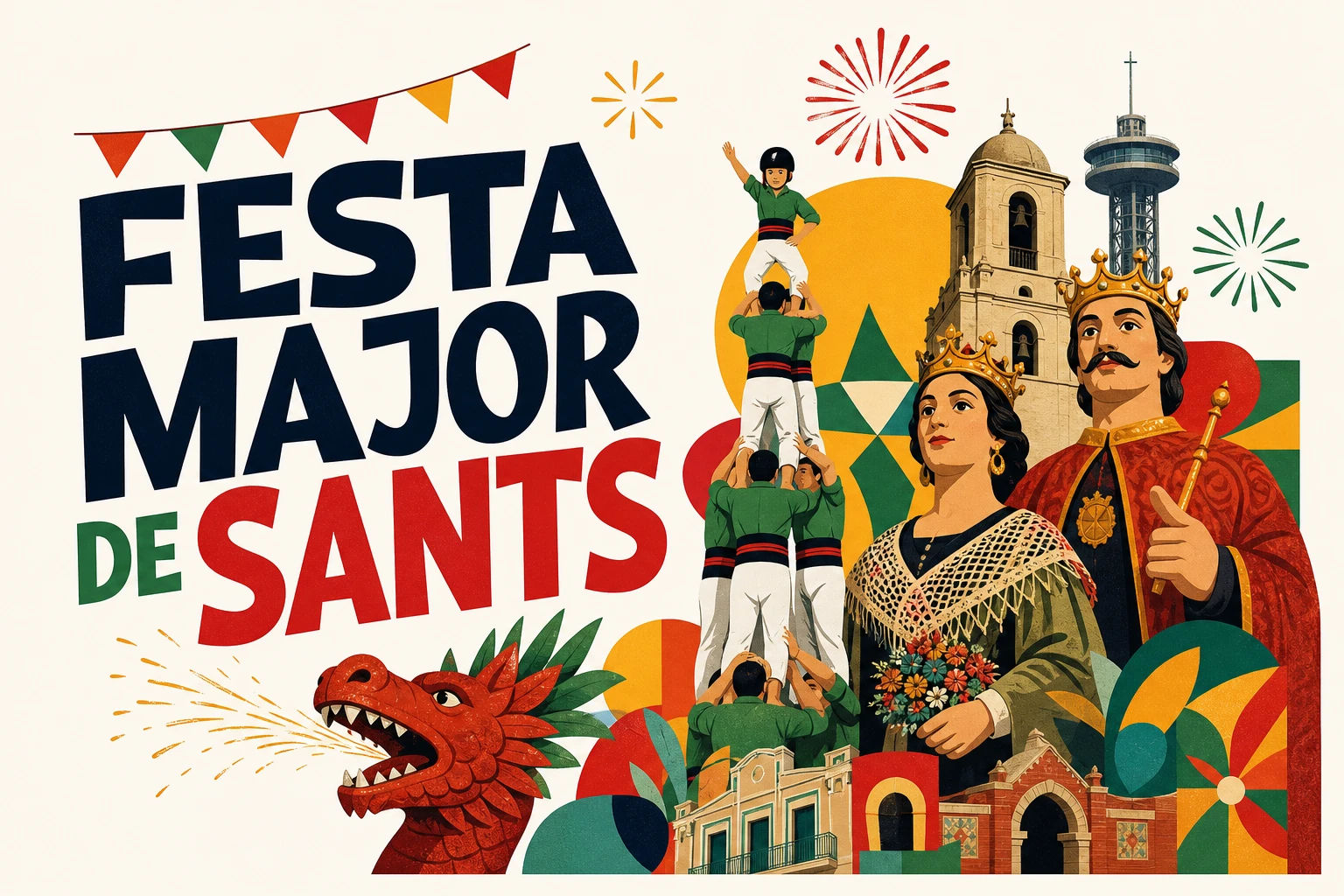
Late August in the capital of Catalonia brings a very special energy. As the intense mid-summer tourism begins to soften, local neighborhoods prepare for their most authentic annual celebrations. While most international visitors crowd around the beach boardwalks of Barceloneta or queue outside the Sagrada Família, those in the know head west toward a historic district full of community pride. The highly anticipated Festa Major de Sants 2026 Barcelona is set to take over the city from Saturday, August 22, 2026, to Sunday, August 30, 2026.
This week-long street festival turns an ordinary working-class residential quarter into an absolute explosion of color, sound, and artistic imagination. Following immediately after the famous festivities in nearby Gràcia, the Sants celebration offers a much more local, down-to-earth, and community-driven alternative. For travelers who want to escape commercial paths and submerge themselves in genuine Catalan culture, this festival is a dream come true. From towering human castles to fire-breathing dragons, the entire neighborhood unites to showcase its open-minded perspective on modern urban celebration.
The Rebirth of a Village: History and Evolution of the Sants Festival
To truly appreciate the incredible atmosphere of the Sants neighborhood festival, it helps to look back at its fascinating origins and its growth into a cornerstone of Barcelona lifestyle. Sants was not always an integrated part of the grand metropolis. For centuries, it flourished as an independent industrial village defined by massive textile mills, agricultural fields, and a fiercely independent working-class identity. The town was officially annexed into the expanding municipality of Barcelona in 1897, but its tight-knit community spirit remained entirely intact.
The historical timeline of the festival is anchored by several important cultural milestones:
- The Patron Saint Legacy: The festival is celebrated in absolute honor of Saint Bartholomew (Sant Bartomeu), the patron saint of the historic village. His official feast day falls on August 24, which serves as the emotional anchor for the weekly schedule.
- The 19th-Century Inception: Organized street decorations and communal banquets began gaining structure during the mid-1800s, matching the rise of local choral societies, mutual aid networks, and labor unions.
- Reclaiming the Streets: During the dark decades of the Franco dictatorship, public displays of Catalan identity, language, and culture were strictly censored. The festival survived as a quiet act of resistance within interior courtyards.
- The Contemporary Renaissance: Following the return of democracy in the late 1970s, neighborhood associations officially reclaimed the public squares, rebuilding the festival into the radically inclusive, open-air spectacle enjoyed by millions today.
A Canvas of Recycled Dreams: The Themed Decorated Streets
The absolute hallmark and primary visual draw of the Festa Major de Sants 2026 Barcelona is the spectacular street decoration competition. Every single year, roughly a dozen streets and public squares within the Sants district participate in a friendly but highly competitive race to build the most creative, immersive themed environments.
What makes this display so unique is the foundational reliance on sustainable, recycled everyday materials. Neighborhood committees spend an entire year planning concepts, gathering items, and building structures. Plastic bottles become elaborate sea creatures, old newspapers are molded into massive historical figures, cardboard boxes transform into grand medieval castles, and discarded aluminum cans form shimmering celestial skies.
When you stroll through the neighborhood during the final week of August, you will experience several distinct atmospheres:
- Walking beneath a dense canopy of hand-painted paper mache lanterns that block out the summer sun.
- Stepping through a portal that transports you directly into a futuristic cyberpunk metropolis, a deep-sea wonderland, or a nostalgic retro arcade.
- Meeting local neighbors who stand proudly beneath their creations, eager to share insights about their building process and the history of their specific block.
- Enjoying a wonderfully authentic street party environment, where festive paper chains rattle gently in the evening breeze above rows of wooden dining tables.
Thrills and Catalan Pageantry: Exploring Traditional Folk Highlights
While the stunning decorations provide a beautiful backdrop, the true soul of the festival is revealed through a series of high-energy public spectacles. Sants serves as a primary stage for traditional Catalan folk arts, giving visitors an unforgettable look at the region's cultural heritage.
Castellers: The Monumental Human Towers
The construction of Castells stands as one of the most emotional, breathtaking displays of human unity and physical engineering on earth. On Saturday afternoon, elite teams of hundreds of individuals gather at the historic Plaça de Bonet i Muixí to build massive human towers reaching several stories high.
The process requires absolute trust, rigorous timing, and flawless coordination:
- The Pinya: A massive, tightly packed ring of hundreds of strong men and women forms the solid foundation at the base to support the vertical weight and absorb falls.
- The Troncs: Agile, lean climbers quickly scramble up the backs of their teammates to build the vertical tiers of the tower, layer by layer.
- The Pom de Dalt: The emotional peak occurs when the anxaneta, a brave young child wearing a protective helmet, climbs to the absolute summit of the tower, raises one hand to signal completion, and immediately slides back down safely.
The Correfoc: The Thrilling Fire Run
As darkness settles over the neighborhood, the atmosphere takes a dramatic, high-adrenaline turn with the arrival of the Correfoc. This event turns the narrow streets into a fiery arena.
Local groups dress up as elaborate, terrifying devils and demons, carrying pitchforks packed with spinning fireworks. Accompanied by massive papier-mâché dragons and serpents that breathe real sparks, they dance through the streets to the primal, synchronized beating of traditional drums.
Spectators are highly advised to follow safety guidelines:
- Wear old cotton or denim clothing that fully covers your arms and legs; avoid synthetic materials like nylon that melt easily.
- Bring a wide-brimmed hat, protective glasses, and a cotton scarf to shield your face and neck from floating sparks.
- Keep a safe distance if you are traveling with young children, or attend the specialized children's fire run held earlier in the afternoon, which features gentler sparklers and a slower parade pace.
Gegants and Capgrossos: The Parade of the Giants
For an experience that delights visitors of all generations, the morning Cercavila features a grand parade of the Gegants (Giants) and Capgrossos (Big Heads). These monumental papier-mâché figures, some standing over four meters tall, represent historic kings, queens, legendary folk heroes, and symbolic local characters.
The giants are masterfully spun and danced through the streets by skilled handlers hidden beneath their grand skirts, accompanied by the acoustic sounds of traditional flutes and marching drums. It is a whimsical, old-world procession that beautifully illustrates the storytelling roots of the Catalan community.
Nocturnal Beats and Family Days: Activities at the Industrial Park
The focal point for large-scale musical entertainment and late-night socialization shifts toward the spectacular Parc de l'Espanya Industrial. Situated immediately behind the main Sants Train Station, this unique urban park features watchtowers, a wide boating lake, and a massive, iconic iron dragon slide.
During the festival week, the park transforms into a multi-genre cultural hub:
- The Live Music Mainstage: Open-air stages host a non-stop rotation of popular Catalan pop artists, alternative rock bands, and underground electronic DJs.
- The Night Market Bazaar: Festive kiosks and boutique fair stands line the park pathways, selling handmade artisan crafts, vintage clothing, and local artwork.
- The Massive Festival Bar: A centralized refreshment zone keeps the party crowd fueled with ice-cold local draft beers, traditional vermouth, and non-alcoholic alternatives.
- Daytime Children's Workshops: During the sunlight hours, the park lawns host free kids' activities, storytelling sessions, puppet shows, and interactive pottery classes.
Savoring the Flavor: Tasting Regional Catalan Delicacies
Exploring the neighborhood stages is bound to work up a massive appetite. Fortunately, the festival functions as a premier gastronomic milestone, filling the air with the rich aromas of traditional cooking. Independent food stalls, neighborhood association grills, and historic corner bistros offer an array of authentic local treats.
When navigating the marketplace stalls, make sure to sample these highly recommended regional options:
- La Botifarrada: Indulge in a traditional gathering centered around grilled botifarra, a rich, spiced Catalan pork sausage served hot inside a rustic crusty bread roll, often paired with creamy garlic aioli.
- Pa amb Tomàquet: Enjoy the foundational staple of Catalan dining, featuring rustic slices of toasted bread rubbed generously with fresh ripe tomatoes, drizzled with premium virgin olive oil, and dusted with sea salt.
- Flemish-Style Patatas Bravas: Crispy, golden-fried potato cubes tossed inside a dual sauce pairing of spicy red chili oil and rich garlic mayonnaise.
- Local Artisan Vermouth: Sip on sweet, aromatic fortified wine infused with local herbs and botanicals, traditionally served over ice with an orange slice and a green olive.
Practical Travel Tips and Transit Guide for Visitors
Navigating your journey to the Sants district during the high-energy festival week is remarkably simple thanks to Barcelona's world-class public transport network. To guarantee a smooth, entirely stress-free travel experience, keep these practical guidelines in mind:
- Rely Entirely on Public Transit: Driving a private car or motor vehicle anywhere near Sants during the last week of August is highly discouraged. Dozens of streets are completely closed to vehicles to make room for decorations and stages, and street parking is strictly nonexistent.
- The Plaça de Sants Metro Gateway: The absolute best transport link to reach the heart of the participating streets is the Plaça de Sants metro station, which serves Metro Line 1 (Red) and Line 5 (Blue).
- Sants Estació Main Hub: If you are traveling from outer districts or arriving from regional Catalonia, you can take any Rodalies train or metro line directly to Sants Estació, the city's primary railway station, which sits just a short five-minute walk from the main festival hubs.
- Rely on Cash Balance for Street Carts: While larger neighborhood association bars and established restaurants accept modern debit cards and mobile wallets, many small independent craft kiosks and mobile street food carts operate on a strict cash-only basis. Carry a sufficient balance of small Euro notes to avoid long queues at neighborhood ATMs.
- Respect the Neighborhood Rest Hours: Keep in mind that Sants remains a real, functioning residential neighborhood where working families and elderly citizens live. While the music and street parties are legally permitted to run until 2:00 AM or 3:00 AM on weekend nights, visitors are highly requested to keep their voices down when walking through residential alleys after hours to respect local rest.
Step Into the Living Spirit of Sants
The return of the Sants neighborhood street festival this August represents a profound celebration of artistic freedom, community solidarity, and living Catalan heritage. Standing beneath a spectacular canopy of hand-made recycled paper decorations while the pulsing rhythms of live music echo through the historic alleys and a warm crowd dances together under the summer stars is a rare, life-affirming privilege. It is an experience that perfectly bridges the gap between ancient folklore and modern urban creativity, leaving an indelible mark on your summer memories of Spain. Gather your closest friends and festival family, map out your perfect transit route through the old town, and prepare to submerge your senses entirely in the unforgettable, welcoming energy of this premier cultural milestone in the heart of Barcelona.
Verified Information at a Glance
| Detail | Information |
|---|---|
| Event Category | Public Neighborhood Street Festival, Cultural Carnival, and Live Music Gathering |
| Official 2026 Dates | Saturday, August 22, 2026, to Sunday, August 30, 2026 |
| Admission Pricing Details | 100% Free public admission to all decorated streets, public squares, performance stages, human tower shows, and fire runs (No entry tickets or advanced reservations required) |
| Primary Venue Locations | Distributed across the Sants neighborhood, Sants-Montjuïc district, 08014 Barcelona, Spain (Core hubs center around Plaça de Sants, Parc de l'Espanya Industrial, and Plaça de Bonet i Muixí) |
| Core Traditional Highlights | Castellers human towers, Correfoc fire runs, Cercavila giant parades, and the traditional floral offering to Sant Bartomeu on August 24 |
| Main Music Hub | Open-air concert stages located inside the Parc de l'Espanya Industrial |
| Primary Transit Hubs | Plaça de Sants Metro Station (L1, L5) and Sants Estació Central Train Station |
| Official Festivities Platform | festamajorsants.cat |
Frequently Asked Questions About Festa Major de Sants
Is the Festa Major de Sants suitable for international travelers and tourists?
Absolutely. Sants is widely celebrated for its exceptionally warm, inclusive, and welcoming neighborhood atmosphere. While it draws fewer massive tourist crowds compared to the high-profile Gràcia festival, local neighbors are incredibly proud to share their traditions, culinary treats, and custom street decorations with international visitors. No specialized registration or neighborhood passes are required to join the open-air parties.
What is the exact date of the Castellers human tower show in 2026?
The main Castellers human tower exhibition is traditionally scheduled for the premier Saturday afternoon of the festival week, which falls on Saturday, August 29, 2026. The breathtaking event unfolds in the historic heart of the quarter at the Plaça de Bonet i Muixí, usually commencing around 6:00 PM (18:00). It is highly advised to arrive at the square at least 45 minutes early to secure a safe viewing spot with clear sightlines away from the dense center crowds.
Are there any specific safety guidelines for watching the Correfoc fire run?
Yes, because the fire runs involve spinning fireworks that spray real sparks into the surrounding crowds, proper preparation is key. Spectators planning to stand near the front lines should wear protective clothing crafted from thick, natural fibers like cotton or denim; avoid flammable synthetic materials like polyester or nylon. Wear long sleeves, a hat to shield your hair, closed-toe walking shoes, and protective glasses to shield your eyes from floating embers.
How do I travel to the participating festival streets using public transport?
The absolute quickest and most reliable method to reach the center of the festivities is to take the municipal TMB metro rail network and disembark directly at the Plaça de Sants Station, which connects Metro Line 1 (Red) and Line 5 (Blue). Alternatively, you can take any national, regional, or metro line straight to the Sants Estació central hub, which sits just a convenient five-minute walk behind the primary decorated avenues.
Can I visit the decorated streets during the daytime, or is it strictly a night event?
The decorated streets are open and fully accessible 24 hours a day throughout the entire festival week, making daytime visits highly recommended. Strolling through the blocks during the morning or early afternoon hours allows you to appreciate the intricate details of the recycled paper mache art and take stunning photographs with clear natural lighting. The evening hours transition into high-energy social spaces packed with live music stages, tapas bars, and dancing crowds.
What options are available for storing large suitcases or travel gear near the festival?
The temporary neighborhood association tents and open-air street stages do not provide any public storage lockers or cloakroom facilities for oversized backpacks or heavy rolling travel luggage due to safety regulations and strict space limits. Travelers arriving directly from regional hubs or the airport are highly advised to utilize the automated luggage storage lockers available inside the Sants Estació central train station before heading toward the festive neighborhood streets.
More Events in Barcelona
Event Has Passed - See You Next Time!
Event Details
Date
to
Location
Sants neighborhood, Barcelona, Spain
Barcelona, Spain
Price
Free Entry