

Event Has Passed - See You Next Time!
Event Details
Date
to
Location
Barcelona city centre, Barcelona, Spain
Barcelona, Spain
Price
Free Entry
About This Event
Early summer in the Catalan capital brings a spectacular, high-octane transformation. As the bright July sun illuminates the grand Modernist avenues of the Eixample district and sparkles off the turquoise waters of the Mediterranean Sea, the entire city shifts into an unprecedented sporting rhythm. The historic cobblestone alleyways of the Gothic Quarter fill with international cycling fans, the open-air terraces of El Born buzz with lively conversations, and the coastal roads of Poblenou become a sanctuary for world-class athletes. While the municipal calendar is widely celebrated for its rich design, fashion, and maritime heritage, the upcoming cycling season introduces a historic milestone that will capture the imagination of millions across the globe.
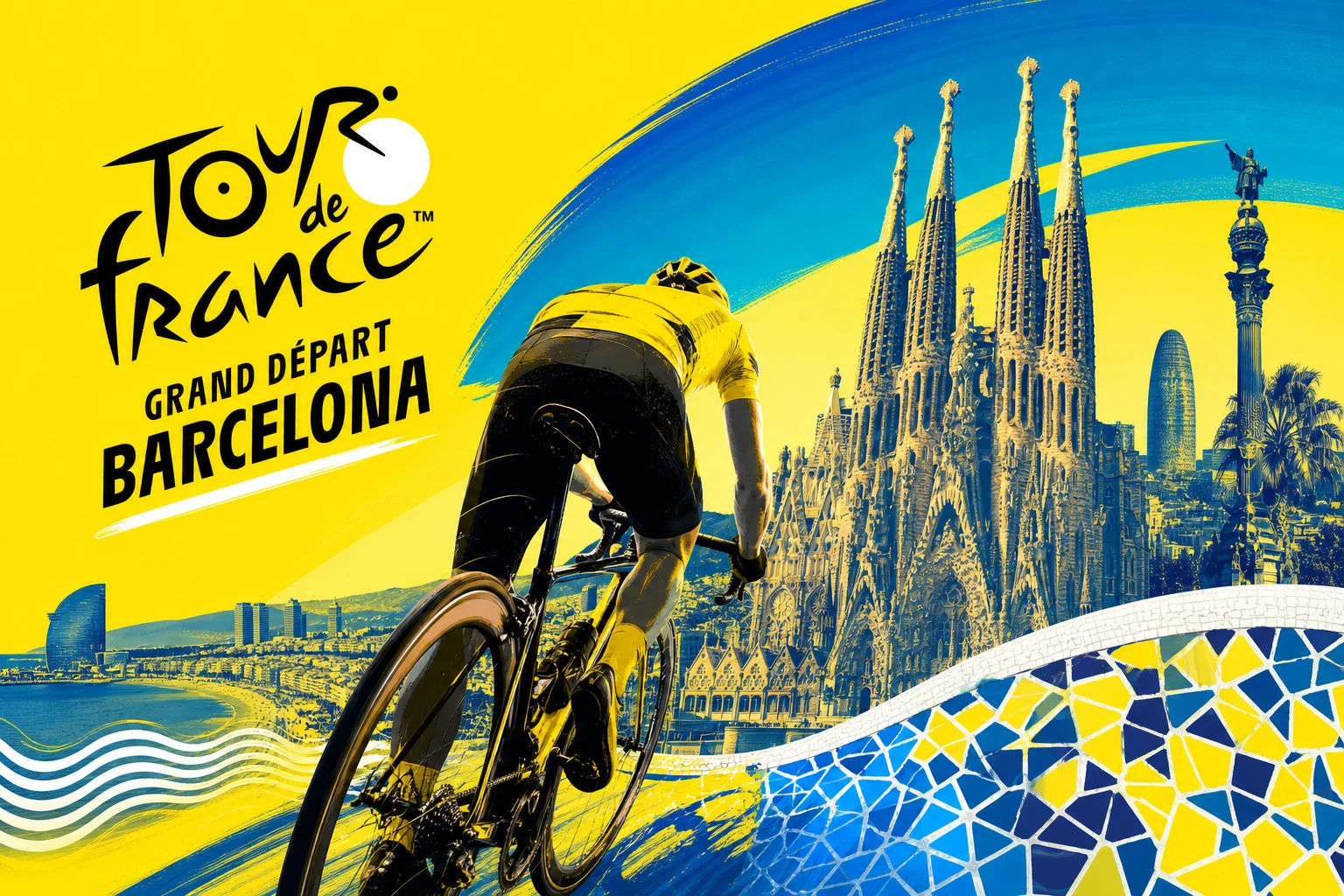
The spectacular Tour de France Grand Départ Barcelona 2026 Barcelona represents the absolute high point of international sporting culture. Scheduled to take over the metropolitan landscape across multiple action-packed days from Thursday, July 2, 2026, to Monday, July 6, 2026, this legendary opening weekend serves as the formal launchpad for the 113th edition of the world's most famous cycling race.
By welcoming the official Big Start, Barcelona achieves an incredible cultural status. It becomes the only city in the world to have successfully hosted four of the planet's greatest competitive milestones: the FIFA Football World Cup in 1982, the Olympic and Paralympic Games in 1992, the America's Cup sailing championship in 2024, and now the Tour de France Grand Départ in 2026. For local residents, cycling purists, and lifestyle travelers planning a spectacular summer holiday to Spain, this weekend promises a thrilling blend of athletic history, urban tension, and festive camaraderie.
A Historic Union: Barcelona and the Legacy of the Tour de France
To fully appreciate the intense anticipation surrounding the Tour de France Grand Départ Barcelona 2026 Barcelona, it helps to explore the rich historical background that binds the French grand tour to the capital of Catalonia. While the three-week race is deeply rooted in French heritage, the organizers have occasionally chosen to launch their epic journey from prominent international cities to foster global unity and test riders across non-standard terrains. Spain has previously hosted the coveted Grand Départ twice before, initially in San Sebastián back in 1992 and more recently with a roaring, mountain-infused edition in Bilbao in 2023.
The relationship between Barcelona and the Tour de France is actually steeped in historic milestones. The professional peloton has visited the city on three separate occasions over the past several decades:
- The 1957 Excursion: The race first crossed the Pyrenees to stop in the capital, staging an individual time trial that captured the hearts of local sports fans.
- The 1965 Circuit: The professional field returned for a high-stakes transition stage, weaving through the historic central avenues.
- The 2009 Masterclass: The most recent visit unfolded in 2009, when legendary Norwegian sprinter Thor Hushovd sprinted to an iconic victory on the rainy slopes of Montjuïc hill.
The 2026 edition, however, represents the first time in history that Barcelona acts as the formal starting nest for the entire three-week race. The massive scale of this global production is backed by incredible real-world statistics, with over 150 million viewers in Europe alone tuning in to follow the live broadcast, while close to 2,000 accredited international journalists arrive to report on the action from a dedicated press center stationed inside the majestic Palau Sant Jordi.
The Grand Unveiling: The Team Presentation at the Sagrada Família
The public festivities launch officially on Thursday, July 2, 2026, with the magnificent Tour de France Team Presentation. This highly photogenic, free open-air spectacle drops the traditional boundaries between fans and elite riders, transforming one of the world's most iconic architectural marvels into a high-tech stage.
The presentation takes place directly fronting the soaring, intricate stone facades of Antoni Gaudí's masterpiece, the Sagrada Família. Worshippers of cycling and architecture alike gather in the surrounding public parks as all 22 professional teams are introduced to the crowd.
Riders roll down custom-built runways, sharing their seasonal strategies, showcasing their new team kits, and interacting directly with the passionate local crowds. The juxtaposition of high-performance modern cycling technology against the timeless, organic stone spires of Gaudí creates a breathtaking visual display that sets an emotional, reverent tone for the competitive stages that follow.
Stage 1 Breakdown: Speed, Sea Breezes, and the Olympic Stadium Finish
The competitive racing kicks off with immense energy on Saturday, July 4, 2026, with Stage 1, a lightning-fast 19.6-kilometer Team Time Trial (TTT) that takes place entirely within the urban center of Barcelona. This stage re-affirms cycling as a beautiful collective sport, requiring absolute trust and synchronized physical execution among all eight riders of each squad.
The route serves as a spectacular visual tour of the city, slicing through iconic neighborhoods and past major landmarks:
- The Seafront Launch: Teams depart at high speeds from the modern Parc del Fòrum area and the beaches of Port Olímpic, flying along the wide, flat asphalt of Avinguda del Litoral.
- The Boulevard Sprints: The course enters the city grid, taking riders down straight, fast boulevards like Carrer d'Aragó and Carrer de Mallorca, passing directly beside the Sagrada Família at full throttle.
- The Modernist Crossings: The route sweeps down the elegant, tree-lined Passeig de Gràcia, allowing spectators to watch the peloton hammer past architectural jewels like Casa Batlló and La Pedrera.
- The Plaça d'Espanya Gateway: The course rockets through Plaça d'Espanya, channeling the riders directly onto the lower avenues of Montjuïc hill.
- The Technical Climax: The final kilometers challenge the teams with a dual-tier climb, featuring a 1.1-kilometer ascent at a 5.1 percent gradient up Passeig de Santa Madrona, immediately followed by an 800-meter sprint at a steep 7 percent gradient.
- The Olympic Crowning: The race finishes directly fronting the legendary Estadi Olímpic Lluís Companys, finally bounding the world's greatest cycling race to the grand legacy of the 1992 Barcelona Olympic Games, where the first yellow jersey of the 2026 tour will be proudly awarded.
Stage 2 Breakdown: Hilly Circuits and the Grueling Castle Ascent
On Sunday, July 5, 2026, Stage 2 steps up the tactical tension significantly, delivering a grueling 168.5-kilometer hilly route that starts in the historic maritime city of Tarragona and finishes back in the heart of Barcelona. This stage promises the first major shoulder-to-shoulder battle among the general classification favorites.
The first half of the route offers a scenic, deceptively flat journey along the Mediterranean coast, passing through popular beach resorts and tracking past the golden cliffs of Sitges, often called the Saint-Tropez of Spain. However, once the peloton reaches the intermediate milestone of Castelldefels and Gavà, the geography changes dramatically. The riders head inland to tackle the challenging Côte de Begues climb, a new addition to the tour route that rises to 399 meters above sea level.
The true dramatic highlight of Stage 2 unfolds as the race enters the final urban circuit inside Barcelona. The peloton must conquer the tough, technical ascent to Montjuïc Castle three consecutive times. This punishing 1.6-kilometer climb features a brutal 600-meter wall that reaches a staggering 13 percent gradient, shredding the field and forcing strategic time gaps before an explosive, uphill finish back at the Olympic Stadium.
Stage 3 Breakdown: Leaving the Capital for the High Pyrenees
The final phase of the Catalan opening loop takes place on Monday, July 6, 2026, with Stage 3, a monumental 196-kilometer mountain transition stage that carries the professional peloton out of the capital province and into high mountain territory.
The starting line is stationed in Granollers, an active, sports-centric city located on the northern outskirts of Barcelona, known globally for its rich handball heritage and its close proximity to the Circuit de Barcelona-Catalunya Formula 1 racetrack. After departing the Granollers start gates, the riders head directly north, cutting through the spectacular vineyards and rolling hills of the Catalan countryside.
This stage serves as an exceptional window of opportunity for breakaway specialists and elite climbers, as the terrain scales steadily higher toward the majestic peaks of the Pyrenees. Worshippers line the rural mountain passes for over a hundred kilometers, cheering on their favorite riders one final time before the race officially crosses the border into the French mountain resort of Les Angles.
Public Fan Zones: Soaking Up the Energy at the Tour Festival
For travelers who want to experience the buzz of the Grand Départ without standing directly on the roadside barriers, the municipal authorities organize the extensive Tour Festival. Operating continuously throughout the opening weekend, this vibrant, free cultural fan zone takes over a massive public square in central Barcelona.
The festival grounds offer a spectacular array of interactive experiences and entertainment:
- Massive open-air LED projection screens broadcasting the live race coverage, team radio chatter, and expert analytical commentary in real time.
- Interactive cycling exhibition pavilions where fans can test their physical fitness on virtual reality stationary trainers or race against the target times of real professionals.
- Official tour merchandise megastores selling limited-edition yellow jersey kits, custom cycling caps, and unique team souvenirs.
- A vibrant gastronomic bazaar lined with independent local food trucks serving up authentic Catalan tapas, fresh seafood fideuà, and local craft beers.
- Live evening entertainment, including multi-genre music concerts, local DJ sets, and celebratory drone light shows that paint the night sky with animated images of bicycles.
Practical Travel Tips and Mobility Guide for Visitors
Navigating a massive city-wide sporting milestone that blocks major central thoroughfares requires careful preparation and local insight to ensure your vacation flows smoothly.
Smart Public Transport Navigation
Driving a private rental car or relying on standard taxis within Barcelona during the July 4 and 5 weekend is highly discouraged due to extensive roadblocks and security safety zones. Rely entirely on the city's exceptional public transport network:
- The TMB Metro Advantage: Utilize Metro Line 1 (Red), Line 2 (Purple), and Line 3 (Green) to move flexibly through the city core. Stations like Espanya, Plaça de Catalunya, and Fontana provide direct access to primary spectator zones.
- The Marina Tramways: Take the modern tram lines to access the seafront start zones around the Poblenou and Parc del Fòrum areas smoothly.
- The Montjuïc Funicular railway: For Stage 1 and Stage 2 finishes, take the indoor funicular link from Parallel station directly up the mountain slope to bypass the road blocks easily.
Essential Comfort and Etiquette Guidelines
- Arrive via Major Transit Hubs: Traveling fans arriving via international flights will land at Barcelona-El Prat Airport (BCN), which connects directly to the city center via high-frequency Aerobús shuttles or Metro Line 9. High-speed regional trains land at Sants Estació, a short metro transfer from the main race paths.
- Prepare for the Summer Climate: July in Catalonia brings gorgeous, hot sunshine with high humidity. Wear a wide-brimmed hat, apply high-factor sunscreen constantly, and carry a reusable water bottle to take advantage of free municipal tap fountains.
- Expect Neighborhood Street Closures: Keep in mind that heavy pedestrian and road closures will impact the central beachfront, the streets surrounding the Sagrada Família, and the entire hill of Montjuïc during the weekend, making an early arrival at your chosen roadside viewing spot essential.
Share in the Magic of Cycling History This July
The arrival of the Tour de France Grand Départ in the city of Barcelona represents a profound celebration of human identity, athletic endurance, and shared community joy. Standing along the sun-drenched coastal boulevards or packing the steep, historic slopes of Montjuïc hill while the global peloton thunders past in an explosion of color, speed, and sound is a rare, life-affirming privilege. It is an experience that perfectly bridges the gap between old-world European heritage and modern creative showmanship, offering the absolute perfect artistic soundtrack to a gorgeous summer holiday in Spain. Gather your closest friends and family, map out your perfect neighborhood transit route through the old town, and prepare to submerge your senses entirely in the unforgettable, welcoming energy of this premier global cultural milestone.
Verified Information at a Glance
| Detail | Information |
|---|---|
| Event Category | International Grand Tour Professional Cycling Championship and Cultural Street Festival |
| Official Confirmed Dates | Thursday, July 2, 2026, to Monday, July 6, 2026 (The full three-week race runs through Sunday, July 26, 2026) |
| Admission Pricing Details | 100% Free and open to the general public across all roadside spectating zones, team presentation areas, and the Tour Festival fan zones (No entry tickets required) |
| Confirmed Stage 1 Blueprint | Saturday, July 4, 2026; 19.6 km Team Time Trial starting at Parc del Fòrum and finishing at the Montjuïc Olympic Stadium (Barcelona, Spain) |
| Confirmed Stage 2 Layout | Sunday, July 5, 2026; 168.5 km hilly road race starting in Tarragona, passing Sitges and Begues, and completing three final laps of Montjuïc Castle before finishing at the Olympic Stadium |
| Confirmed Stage 3 Structure | Monday, July 6, 2026; 196 km mountain stage starting in Granollers and heading north across the Pyrenees to finish in Les Angles, France |
| Primary Public Transport Links | Metro lines L1, L2, and L3, Tram Besòs network, and the Montjuïc Funicular railway |
| Official Information Hub | letour.barcelona and letour.fr |
Frequently Asked Questions About the Grand Départ Barcelona 2026
Do spectators need to purchase a ticket to watch the race from the roadside?
No, the Tour de France Grand Départ Barcelona 2026 Barcelona is completely free of charge and open to the general public. Worshippers can find a spot along any public sidewalk, coastal boulevard, or mountain pass along the official route to watch the riders pass by without any admission fees or ticket requirements. Paid entry options apply exclusively to private corporate hospitality pavilions stationed at the immediate finish lines.
What options are available for individuals with limited mobility to watch the finishes?
Ensuring an inclusive and welcoming environment is a primary structural priority for the municipal government and the race organizers. Dedicated, barrier-free viewing enclosures equipped with ramps are set up near the finish lines at the Montjuïc Olympic Stadium specifically for wheelchair users and spectators with limited mobility. Furthermore, modern transport links like the Montjuïc Funicular railway are fully accessible to ensure a comfortable arrival.
Which metro station is best for accessing the Stage 1 Team Time Trial?
Because Stage 1 covers a diverse urban loop, the best station depends on your preferred viewing environment. To watch the explosive take-offs along the coast, utilize the El Maresme | Fòrum station on Metro Line 4. To capture the highly photogenic urban sprint, use the Sagrada Família station (Line 2 and Line 5). For the decisive, high-intensity final climbs, transfer through the Espanya station (Line 1 and Line 3) to head up Montjuïc hill.
Are family pets and dogs permitted along the roadside spectator barriers?
While pets are technically allowed on public municipal streets under standard park rules, it is strongly recommended to leave your dogs safely at home during the race days. The combination of dense crowds, roaring support caravans, loud helicopters overhead, and professional cyclists flying past at speeds exceeding 60 kilometers per hour can easily cause severe anxiety, distress, and physical risk for animals.
What are the main taboos and safety rules for standing near the peloton?
When spectating at any grand tour cycling race, safety is paramount. Never step past the metal barriers or onto the asphalt of the road to take a selfie or photograph a rider, as the peloton moves with immense speed and quiet density. Keep a secure hold on young children at all times, never wave large flags or banners near the handlebars of passing athletes, and always respect the directions of the marshals and local police officers.
What happens if it rains heavily during the opening weekend in July?
Traditional road cycling operates as a rain-or-shine outdoor sport, meaning the team presentations, time trials, and mountain stages will proceed exactly as scheduled through summer rain or passing coastal storms. In the rare event of extreme, hazardous weather like severe lightning or dangerous flash floods, the race directional committee coordinates closely with local emergency services to temporarily adjust times or shorten sectors for safety.
More Events in Barcelona
Event Has Passed - See You Next Time!
Event Details
Date
to
Location
Barcelona city centre, Barcelona, Spain
Barcelona, Spain
Price
Free Entry