

Event Has Passed - See You Next Time!
Event Details
Date
to
Location
Kobuleti / Batumi, Georgia
Batumi, Georgia
Price
from €195
About This Event
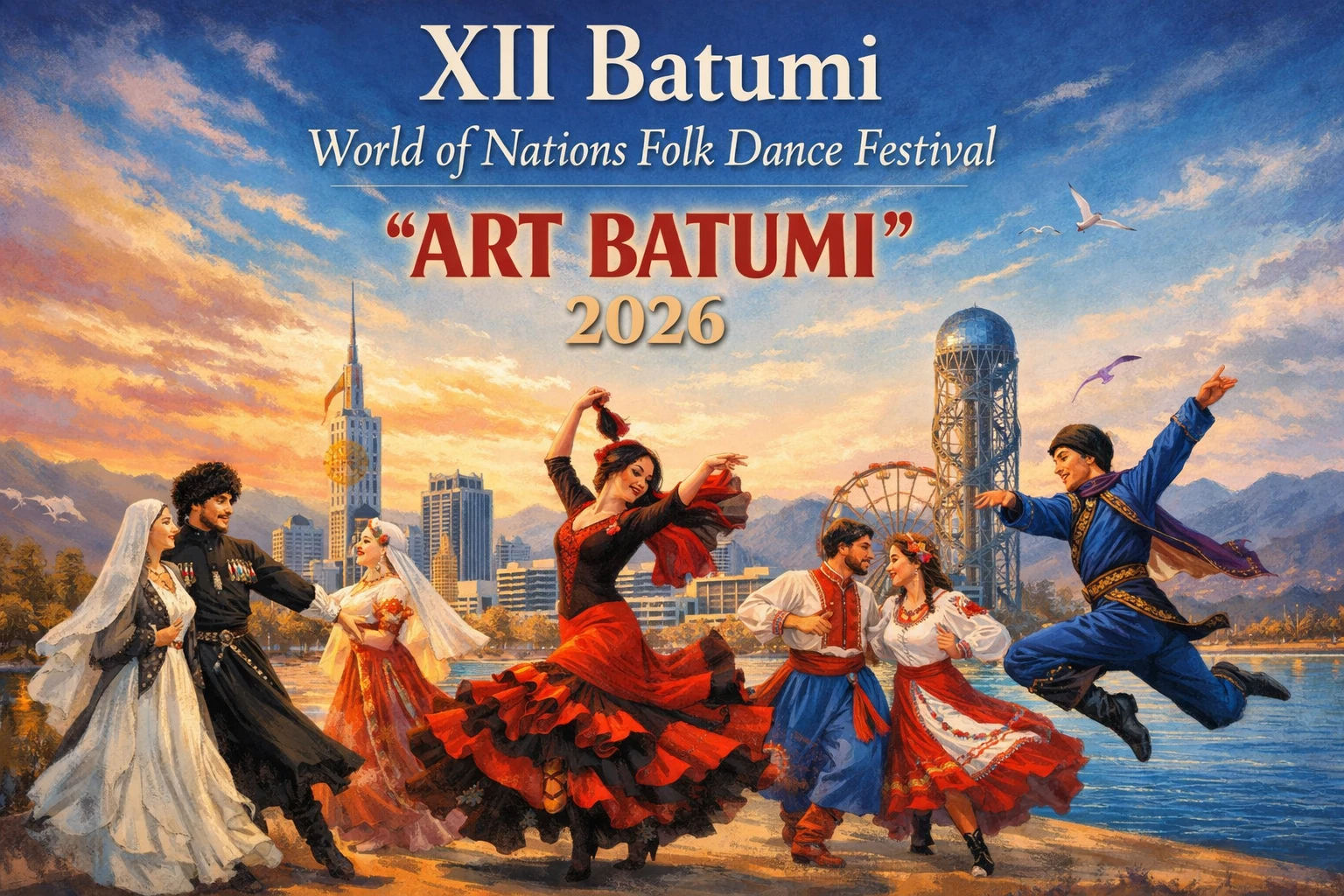
XII Batumi World of Nations Folk Dance Festival "ART BATUMI" 2026: Where the World Dances on the Black Sea Shore
There is a particular electricity in watching a dozen different national flags arrive in the same city on the same afternoon, each carried by a dance ensemble that has rehearsed for months for exactly this moment. Batumi, Georgia experiences that electricity every July — and in 2026, it arrives again on July 2 at noon, when folk dance groups from across the world check into their Batumi hotels for the XII edition of the Batumi World of Nations Folk Dances Festival "ART BATUMI".
Running from July 2 to July 6, 2026 — five days and four nights on the Georgian Black Sea coast — the ART BATUMI festival is one of the most focused and well-structured folk dance festivals in the South Caucasus: a dedicated competition and celebration event for folk dance ensembles of all ages, organised by the E.M. & O.S. & WOFA team, and open to children, youth, and adult groups from anywhere in the world.
The package is straightforward and genuinely value-dense: from €195 per person, participants receive four nights in a 3-star Batumi hotel, full board (three meals daily), competition entry, an official attendance certificate, and access to possible excursions covering Batumi Boulevard, the Alphabet Tower, the Botanical Garden, and boat trips along the Black Sea coast. For folk dance ensembles planning an international competition experience in a city that understands and celebrates their art form, ART BATUMI delivers one of the most complete packages on the European folklore festival circuit.
Application and deposit deadline: May 15, 2026.
Twelve Years of ART BATUMI: A Festival Built for Folk Dance
The Batumi World of Nations Folk Dances Festival "ART BATUMI" has been running long enough to have built a genuine international reputation in folklore festival networks. Now in its twelfth edition, the festival has refined its format through over a decade of experience hosting folk dance ensembles from across Europe, Asia, the Middle East, and the Americas — producing a structure that works practically and artistically for groups regardless of where they are coming from or what tradition they are performing in.
The festival's positioning within the broader WOFA (World Organization of Folklore and Arts) network gives it access to a global participant community that includes groups who travel the international folklore circuit regularly and who choose their summer festival dates based on a combination of competitive standard, logistical quality, and the quality of the host city experience. Batumi consistently scores high on all three.
The decision to build ART BATUMI as a folk dance-focused event — rather than a broad arts competition covering every discipline — is a structural choice that shapes the experience in tangible ways. Every group that arrives in Batumi for ART BATUMI is a dance ensemble. The competition is judged by dance professionals. The concerts feature dance. The audience that fills Batumi's outdoor performance spaces for the festival evenings comes specifically to watch folk dance from around the world. That specificity creates a depth of engagement and a quality of competitive comparison that broader festivals sometimes dilute.
The XII edition in 2026 places the festival in the middle of Batumi's extraordinary summer cultural calendar — arriving on July 2, the same day Art Folk Fest July Part 1 closes, and running through July 6, just before the Golden Fleece competition opens on July 8. The Batumi Summer Theatre and the city's outdoor performance venues are fully operational across this entire period, supporting multiple simultaneous festival events with the infrastructure and experience of a city that has been doing this for over a decade.
Who Can Participate: Folk Dance Ensembles Welcome
The XII ART BATUMI has a clear and focused participant profile: folk dance ensembles, in all age groups from children through adults.
Participant categories:
- Children's folk dance ensembles
- Youth folk dance ensembles
- Adult folk dance ensembles
Age requirement: Dancers must be between 8 and 60 years old. Accompanying persons (coaches, directors, parents, technical staff) are excluded from the age limit but are included in the overall participant count for accommodation and catering.
Performance requirements:
- Each group prepares a programme of 5 to 10 minutes in duration
- Live music is preferred but recorded music is also accepted
- Groups must bring their national flags
- Groups must prepare at least two different performances (for different concert rounds)
- Groups must arrange their own international transport to Batumi
The "two different performances" requirement is worth noting because it rewards artistic range — a group that arrives with only one rehearsed piece will be limited in what they can contribute to the concert programme, while groups that prepare distinct sets (different compositions, different regional traditions, different musical arrangements) offer more to both the judges and the audience.
Group bonus: One free participation per 25 dancers — meaning a group of 25 registered participants receives one complimentary place. For larger ensembles, this is a meaningful cost reduction.
The Competition Structure and Awards
While the full ART BATUMI 2026 jury panel has not been announced, the festival follows the standard WOFA competition format: independent adjudication by professional folk dance specialists, with awards issued per age category and performance level.
Awards include:
- Gold, Silver, and Bronze prizes per category and age group
- Grand Prix for the outstanding overall performance of the festival
- Official Attendance Certificates for all registered participants
The attendance certificate is worth noting as a specific item included in the package — for ensembles, conductors, and choreographers who build competitive CVs and apply for grant funding, an official WOFA/EAFF-recognised participation certificate at an international festival is a practical credential with real value beyond the trophy.
The festival's competitive standard has attracted international groups who take their folklore competition seriously — groups with experience in national championships, European folklore circuits, and CIOFF/IOV-affiliated events regularly appear on the ART BATUMI participant list, and the presence of experienced competitors raises the standard for everyone in the room.
Five Days in Batumi: The Festival Programme
The July 2–6 programme follows a structure that balances competition concerts with free time and city exploration — recognising that international groups come to Batumi for both the competitive experience and the cultural immersion.
Day 1 — July 2: Arrival at 12:00
Groups arrive at their Batumi 3-star hotels by noon, complete check-in, and receive orientation materials from the festival directorate. The afternoon and evening are typically free — most groups head directly to the Batumi Boulevard for their first encounter with the Black Sea, the palm-lined promenade, the cafés, and the city's distinctive mix of 19th-century European architecture and contemporary glass towers. The warm July evening air, the sea sound, and the festive atmosphere of a Batumi summer night make for the kind of first impression that confirms the decision to come.
Day 2 — July 3: Opening Concert
The festival opens formally with the Opening Ceremony followed by the first competition concert. Multiple groups from different countries perform in sequence — folk dances from different national traditions on the same stage in the same evening. For audiences and participating groups alike, this cultural juxtaposition is one of the festival's most specific pleasures: watching Georgian dance followed immediately by a Bulgarian horo followed by a Japanese bon odori ensemble is a kind of cultural education that no classroom can replicate.
Day 3 — July 4: Competition Rounds and City
The second day of competition includes additional concert rounds at the Batumi Summer Theatre or outdoor city venues. Free time in the afternoon and morning allows groups to explore the city independently — the Old Batumi Piazza district with its ornate Belle Époque facades, the Batumi Bazaar market, the beachfront, and the city's growing restaurant and café scene are all within walking distance of the central hotel zone.
Day 4 — July 5: Excursion and Evening Concert
The festival includes possible excursions: the Batumi Botanical Garden (8 km north, 108 hectares of subtropical plants, Black Sea views from the hillside, entrance approximately €3), the Alphabet Tower (one of Batumi's most distinctive modern landmarks — a helical tower incorporating the 33 letters of the Georgian alphabet, illuminated at night), and boat trips along the Black Sea coast that offer the most direct experience of Batumi's seafront from the water.
The evening returns to competition at the main festival venue — with the knowledge that the following morning means departures, groups bring their best performances to the Day 4 concerts, knowing it is their last chance before the Gala.
Day 5 — July 6: Grand Gala and Departure at 12:00
The festival closes with the Grand Gala Concert and awards ceremony — prize presentations, Grand Prix announcement, diplomatic speeches, and the specific Georgian ritual of collective farewell that festival veterans describe as one of the most warmly human moments in the international folklore circuit. Departure is at 12:00 after breakfast.
The Venues: Batumi's Outdoor Stages Under the July Sky
The ART BATUMI festival uses Batumi's established outdoor and covered performance infrastructure — the same venue network that supports the city's broader summer festival programme.
The Batumi Summer Theatre — the covered outdoor performance space in central Batumi — is the primary competition venue: a proper theatrical stage with lighting, sound, and tiered audience seating, situated close enough to the boulevard that the sea breeze reaches the stage even on the warmest July evenings.
Batumi's outdoor public spaces — the Piazza, the seafront Stage on the Boulevard, and the city's parks — complement the Summer Theatre for the larger public-facing concerts that the festival stages as part of its city programme. These open-air concerts attract Batumi locals alongside the participating groups' own delegations, creating the mixed audience of local and international that makes a Batumi summer festival night feel genuinely shared rather than organised.
The venue quality is one of the practical reasons ART BATUMI has maintained international participation across twelve editions. Groups performing at a proper theatrical stage in front of a real audience — not in a hotel conference room or a converted gymnasium — perform differently, and their competitive results reflect that difference.
ART BATUMI in the Context of Georgian Folk Dance Culture
Georgia's relationship with folk dance is deep, technically sophisticated, and nationally significant in a way that is difficult to convey to audiences from countries where folk dance has become primarily a heritage preservation exercise.
Georgian folk dance is a living performance tradition with extraordinary technical demands — particularly the male forms, which involve acrobatic jumps, spins, and warrior-derived movement vocabularies that take years of dedicated training to master. The Sukhishvili Georgian National Ballet, founded in 1945, has toured over 80 countries and is frequently cited as one of the world's finest national dance companies, with training standards that approach classical ballet in their technical rigour.
The State Academic Dance and Song Ensemble Arsiani — based in Batumi — represents the Adjarian regional tradition within this broader Georgian folk dance heritage, with a repertoire that includes specifically Adjarian movement vocabularies alongside pan-Georgian forms. International folk dance groups attending ART BATUMI are performing in the city where Arsiani trains and performs — encountering a folk dance tradition from the inside rather than from a tourist distance.
The UNESCO recognition of Georgian polyphonic singing (added to the Representative List of Intangible Cultural Heritage in 2001) gives international visitors a direct reference point for the depth of Georgia's intangible cultural heritage — but Georgian folk dance occupies an equally central position in the country's cultural identity, with dance schools in every region and a continuous tradition of national dance competitions that keep the art form technically demanding and artistically vital.
For international folk dance ensembles, the opportunity to compete and perform in this environment — rather than in a culturally neutral venue in a Western European conference hotel — adds a layer of artistic meaning to the festival experience that participants consistently describe as transformative.
Batumi as a Destination: What July Looks Like
Arriving in Batumi on July 2 for ART BATUMI places participants in the middle of the most event-dense two weeks in the city's annual calendar.
The Black Sea Jazz Festival runs in mid-July (expected July 11–13 in 2026, based on the 2025 dates) — close enough that ART BATUMI participants with a few extra days in the city can stay for the jazz concerts. The Golden Fleece folklore competition opens July 8, the day after ART BATUMI closes. The Tall Ships Races occupied Batumi's harbour in the weeks just prior. The city in July is genuinely buzzing — not just with festivals but with the organic energy of a seaside city in peak summer that has decided to take cultural events seriously.
Batumi in July:
- Average high temperatures of 28–30°C with warm evenings around 23–25°C
- Black Sea water temperature 23–26°C — warm enough for genuine swimming pleasure
- Subtropical climate with brief afternoon thunderstorms typical — pack a light rain layer alongside your summer clothing
- Batumi Boulevard alive with evening walkers, cafés open until 2 AM, the rotating Ali and Nino statue drawing photographs at every hour
Food: Adjarian khachapuri — the boat-shaped version with egg, butter, and local cheese — is the essential Batumi dish. Fresh Black Sea fish (dorada, mullet, catfish), walnut-based sauces (satsivi, bazhe), Georgian wine (Saperavi red, Rkatsiteli white), and the grape spirit chacha round out a food and drink culture that ranks among the most genuinely pleasurable in the Caucasus.
Beyond the city: The Makhuntseti Waterfall (26 metres high, 30 km from Batumi), Gonio Fortress (12 km south, Roman-era, 1st–4th century), and the Ureki magnetic black-sand beach (15 km north) are the three most rewarding half-day excursions in the immediate Batumi area.
The Package: Practical Information for Participating Groups
The ART BATUMI 2026 participant package is confirmed as follows:
What is included:
- 4 nights accommodation in a 3-star hotel in Batumi (arrival July 2, departure July 6 after breakfast)
- Full board: 3 meals per day throughout the stay
- Festival registration and competition entry
- Official Attendance Certificate for each participant
- Possible excursions (Batumi Boulevard, Alphabet Tower, Botanical Garden, Black Sea boat trips)
- 1 free place per 25 dancers in the group
Pricing: From €195 per person (as listed at festival-association.eu for the XI edition; WOFA sources confirm the same structure for 2026)
What is not included:
- International transport to Batumi (groups arrange independently)
- Visa costs where applicable
- Personal spending
- Additional optional excursions not included in the package
Payment terms:
- 10% guarantee deposit payable upon acceptance
- Remaining balance due 15 days before the festival or upon arrival at the hotel
- Application and deposit deadline: May 15, 2026
To apply: Via festival-association.eu or wofafestivals.com — complete the application form and send a minimum of 6 digital photographs, a short group description, and video links or descriptions of performances.
Getting to Batumi for July 2
Batumi's international connectivity has improved significantly over the past decade and continues to develop:
By air to Batumi International Airport (BUS): Direct connections from Tbilisi (30 minutes), Istanbul, Warsaw, Tel Aviv, and various European and Middle Eastern routes. The airport is 4 kilometres from the city center — a 10–15-minute taxi for approximately €5–8.
Via Tbilisi International Airport (TBS): For groups with better connections to Tbilisi, the Pendolino fast train from Tbilisi Central Station reaches Batumi in approximately 4 hours, with tickets from GEL 25 (approximately €8–10). Tbilisi is one of the most connected airports in the Caucasus region with direct routes from across Europe.
Visa: Georgia maintains one of the world's most generous visa-free entry policies — most EU, US, UK, Canadian, Australian, Israeli, Turkish, Japanese, South Korean, and dozens of other nationalities enter visa-free for up to 365 days. Very few international folk dance ensembles will face visa requirements for Georgia.
Logistics for groups: The festival package covers accommodation and meals from July 2 arrival. Groups should plan international travel to arrive in Batumi before 12:00 on July 2. From Batumi Airport, a pre-booked minibus transfer for the full group is typically the most practical arrival option — organisers can often assist with airport transfer arrangements.
A Stage That Celebrates Every Flag in the Room
The XII Batumi World of Nations Folk Dances Festival "ART BATUMI" has spent twelve years building the reputation it holds in international folklore networks: a focused, honest folk dance festival in one of the Caucasus region's finest coastal cities, run by an organisational team that understands what dance ensembles need, at a price point that makes international participation genuinely accessible, and in a cultural setting that treats folk dance not as a charming relic but as a living, technically demanding art form that deserves a proper stage.
July 2–6, 2026. Batumi. Your national flag, your best two performances, and the Black Sea. The XII edition is taking applications until May 15. The stage is ready.
Verified Information at a Glance
| Detail | Information |
|---|---|
| Event | XII Batumi World of Nations Folk Dances Festival "ART BATUMI" 2026 |
| Category | International Folk Dance Festival and Competition |
| Dates | Thursday July 2 to Monday July 6, 2026 (5 days / 4 nights) |
| Arrival | July 2, 2026 at 12:00 |
| Departure | July 6, 2026 at 12:00 (after breakfast) |
| Location | Batumi, Georgia (Black Sea coast) |
| Venue | Batumi Summer Theatre and city outdoor venues |
| Organiser | E.M. & O.S. & WOFA (World Organization of Folklore and Arts) |
| Festival listing | EAFF (European Association of Folklore Festivals) / festival-association.eu / wofafestivals.com |
| Accepted participants | Folk dance ensembles — children (8+), youth, and adult (up to 60 years) groups |
| Performance requirements | 5–10 minutes; live or recorded music; national flag; minimum 2 different performances |
| Group bonus | 1 free place per 25 dancers |
| Participant fee | From €195 per person |
| Package includes | 4 nights 3-star hotel Batumi, full board (3 meals/day), competition entry, Attendance Certificate, possible excursions |
| Possible excursions | Batumi Boulevard, Alphabet Tower, Botanical Garden, Black Sea boat trips |
| Application and deposit deadline | May 15, 2026 |
| Payment terms | 10% guarantee deposit on acceptance; balance 15 days before festival or on arrival |
| Awards | Gold/Silver/Bronze per category, Grand Prix, official Attendance Certificates |
| Application links | festival-association.eu | wofafestivals.com |
| Batumi airport (BUS) | 4 km from center; direct flights from Tbilisi, Istanbul, European routes |
| Tbilisi to Batumi train | ~4 hours (Pendolino) from GEL 25 (~€8–10) |
| July weather | 28–30°C average high; warm evenings ~23–25°C; brief afternoon thunderstorms typical |
| Visa | Visa-free for most nationalities up to 365 days |
| Nearby July 2026 events | Art Folk Fest July Part 1 (July 1–6), Golden Fleece Competition (July 8–13), Black Sea Jazz Festival (mid-July) |
Event Has Passed - See You Next Time!
Event Details
Date
to
Location
Kobuleti / Batumi, Georgia
Batumi, Georgia
Price
from €195