
%202026.webp)
Event Has Passed - See You Next Time!
Event Details
Date
to
Location
Špilberk Castle & Town Hall Street, Brno, Czech Republic
Brno, Czech Republic
Price
Free Entry
About This Event
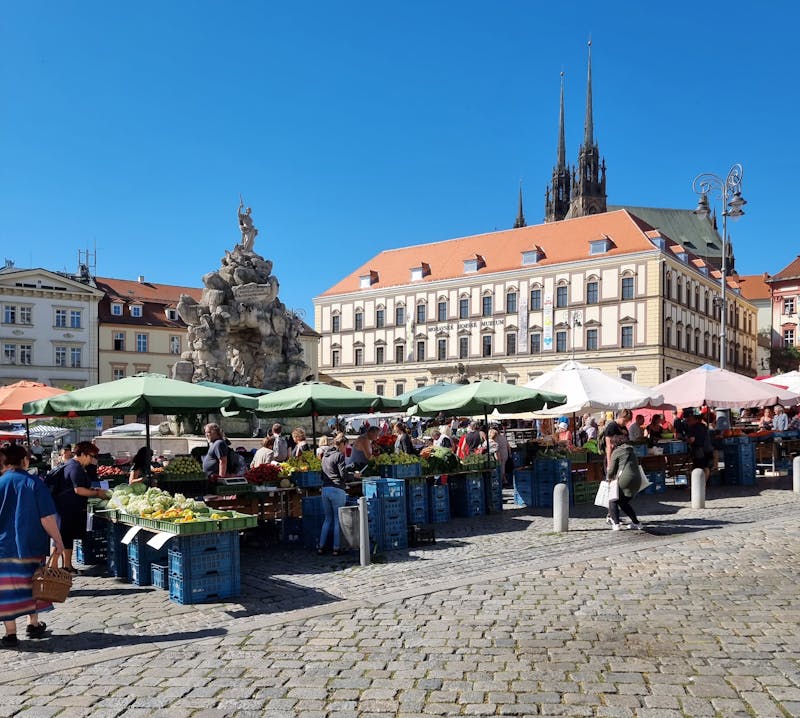
August in the historic capital of Moravia brings an exceptionally beautiful and festive energy. As the warm summer sun illuminates the grand functionalist and Baroque facades of the old town, the entire city of Brno shifts into a relaxed, celebratory rhythm. The outdoor terraces of local bars along the famous streets buzz with lively conversations, the open-air stalls of the ancient vegetable market at Zelný Trh overflow with colorful summer harvests, and a refreshing evening breeze rolls gently off the surrounding South Moravian hills. While the metropolitan summer calendar features plenty of music events, art exhibitions, and open-air food markets, mid-August introduces a monumental milestone that honors the deep historical soul and indomitable spirit of the city.
The highly anticipated Brno Day (Den Brna) 2026 festival represents the absolute high point of regional folklore identity, local statehood pride, and historical military remembrance. Scheduled to take over the city layout from Friday, August 14, 2026, to Sunday, August 16, 2026, this legendary three-day municipal celebration turns the entire Moravian metropolis into a living historical theater.
Commemorating one of the most miraculous and definitive military victories in Central European history, the event fills the ancient and modern spaces of Brno with color, costume parades, and dramatic battle reenactments. For lifelong local residents, the massive university student population, and international travelers planning a meaningful summer holiday to the Czech Republic, this festival offers an unparalleled window into a culture that balances deep historical roots with welcoming community joy. From thunderous artillery salvos echoing off fortress walls to period marketplaces selling old-world crafts, the entire city unites to celebrate peace, unity, and absolute freedom under the summer sky.
A Historic Triumph: The Glorious History and Legacy of Den Brna
To fully appreciate the intense emotional and cultural energy that defines Brno Day (Den Brna) 2026, it helps to explore the profound historical background and religious legends that anchor this celebration in the Czech identity. The popular city festival commemorates a definitive moment during the Thirty Years' War, a conflict that had been raging across Europe since 1618. By the spring of 1645, the formidable Swedish army, under the brilliant command of General Lennart Torstenson, had plundered northern Moravia and set its sights directly on conquering Vienna, the imperial capital of the Habsburg Empire. However, the heavily fortified city of Brno stood as a major structural barrier in their path, a proverbial thorn in the side of the Swedish high command.
The siege that followed remains one of the most remarkable military standoffs of the 17th century:
- On May 3, 1645, Torstenson arrived at the city walls with a massive force of approximately 28,000 highly trained, well-equipped Swedish soldiers, confident that the city would surrender rapidly without a fight.
- The defensive garrison of Brno, under the newly appointed French-born commander Jean Louis Raduit de Souches, consisted of only about 500 professional soldiers.
- To reinforce the thin lines, more than 1,000 ordinary Brno townspeople, craftsmen, peasants, and university students volunteered to take up arms, training diligently in the art of wielding weapons.
- Father Martin Středa, the highly respected rector of the local Jesuit college, served as the spiritual and emotional pillar of the community, inspiring the defenders to maintain hope through more than three months of continuous artillery bombardment.
- Despite the overwhelming statistical advantage of the invaders, the unified defenders successfully withstood every single assault, displaying incredible tenacity, clever engineering, and unbreakable solidarity across all social classes.
- Exhausted, depleted, and facing a looming autumn campaign, General Torstenson finally called off the failed operation on August 15, 1645, withdrawing his troops empty-handed and securing Brno's historic legacy.
This monumental victory not only safeguarded the entire region all the way to Vienna, but it also permanently cemented Brno's status over Olomouc as the undisputed official capital of Moravia, making it the most famous military achievement in the city's history.
The Legendary Bell Trick of Petrov Hill
No historical account of the 1645 siege is complete without exploring the famous local folklore surrounding the bells of the Cathedral of St. Peter and Paul. According to historical legends, after over three months of frustration, General Torstenson declared that he would launch one final, massive assault on the morning of August 15. He allegedly swore to his officers that if his troops did not completely conquer the city by the time the church bells rang for noon, he would call off the siege and retreat permanently.
The clever defenders caught wind of this absolute ultimatum. As the fierce battle raged and Swedish troops began to breach the outer defensive lines near the city center, the watchman at the cathedral realized that the noon hour was still far away. In a stroke of brilliant tactical wit, he decided to ring the cathedral bells for noon an hour early, at exactly 11:00 AM.
Hearing the mid-day chimes, Torstenson kept his word, called a halt to the attack, and ordered his massive army to pack up their camps. To honor this legendary act of deception, the bells of the Petrov Cathedral continue to ring out the noon hour at 11:00 AM every single day, a beautiful, quirky tradition that delights modern travelers exploring the city heights.
Reenactments and Rhythms: Core Highlights of the 2026 Festival Schedule
The true magic of Brno Day (Den Brna) 2026 lies in its diverse, multi-disciplinary programming, turning the entire old town center and surrounding parks into a vibrant open-air historical playground. The organizers at TIC Brno deploy meticulous attention to detail, bringing together hundreds of historical reenactors dressed in flawless, authentic 17th-century uniforms to bring the old days back to life.
The Military Camps and Battle Reenactments at Kraví Hora
During the afternoon and evening hours, the primary center for explosive action and military showmanship settles within the lush green expanses of Kraví hora park:
- Massive, highly authentic historical military camps are constructed across the lawns, allowing visitors to stroll past canvas tents, view period cooking setups, and watch soldiers polish their weapons.
- Passionate reenactment groups stage large-scale, synchronized battles, recreating specific historical skirmishes from the 1645 siege with incredible dramatic flair.
- The air fills with the thunderous roar of artillery salvos, the crackle of period muskets, and thick clouds of white smoke that create a highly immersive combat atmosphere.
- Equestrian teams show off high-end cavalry maneuvers and historic fencing demonstrations, showcasing the extreme athletic skill required for 17th-century combat.
The Old-World Marketplace on Radnická Street
For those seeking a more relaxed, sensory immersion into the lifestyle of the era, the festival transforms the historic Radnická Street (Town Hall Street) into a bustling period marketplace:
- Rows of beautifully decorated wooden stalls sell unique handcrafted items, including hand-poured beeswax candles, traditional Moravian ceramics, and old-world ironmongery.
- Master artisans dressed in historic costumes demonstrate ancient trades like blacksmithing, wicker basket weaving, and traditional leatherworking live before your eyes.
- Visitors can watch the magical, traditional casting of black bullets, a fun nod to the legend that General Torstenson could only be wounded by a magical black bullet cast during a specific phase of the moon.
- Local vendors offer a tempting array of traditional food and sweet treats, filling the summer air with the rich aromas of roasted meats and cinnamon pastries.
The Majestic Historical Uniform Parade
A central visual highlight of the weekend is the grand Military Parade, which snakes its way through the pedestrian avenues of the city center:
- Hundreds of soldiers, drummers, and flag-bearers dressed in colorful historical uniforms march in perfect formation through the cobblestone streets.
- The rhythmic beating of historic drums and the bright fanfare of brass horns echo off the historic buildings, drawing thousands of cheering spectators to the sidewalks.
- The parade moves past prominent city landmarks, allowing for fantastic photography opportunities as the historic troops salute the public from the grand squares.
Starlit Cultural Sanctuaries: Exploring the Festival Venues
The festival layout is masterfully integrated into the physical landmarks, historic churches, and breathtaking fortress architecture of the Moravian capital, creating a romantic resort atmosphere across multiple primary hubs.
The Mighty Bastions of Špilberk Castle
Perched majestically on a rocky hill overlooking the entire city grid, the iconic Špilberk Castle serves as a core venue for the festival celebrations:
- This massive hilltop fortress, which once stood as the most feared defensive citadel in the Austro-Hungarian Empire, hosts specialized historical exhibitions and guided tours of its deep stone casemates.
- The castle courtyards fill with interactive workshops, archery shooting ranges, and fencing performances tailored specifically for families traveling with younger children.
- The elevated stone ramparts provide a privileged viewpoint where visitors can look out over the sprawling city layout while listening to acoustic folk concerts under the stars.
The Spiritual Sanctuary of the Church of Saint James
The festival maintains a deep commitment to honoring the cultural and spiritual architects of the historic victory through specialized ecclesiastical programs:
- The stunning late-Gothic Church of Saint James (Kostel svatého Jakuba) hosts solemn mass services and classical organ recitals organized in close partnership with the Brno Bishopric.
- City representatives and international delegations gather at the church to pay a formal tribute at the majestic tomb of commander Jean Louis Raduit de Souches, located behind the main altar.
- Visitors can pause to admire the beautiful, modern bronze statue of Father Martin Středa unveiled near the church plaza, reflecting on his role as the spiritual rock of the city during its darkest hour.
Beyond the Battlefields: Savoring Moravian Gastronomy and Lifestyle
Attending the festival provides the ultimate creative anchor for planning a sophisticated, culturally rich summer long weekend in the Czech Republic's favorite student capital. Because the primary historical reenactments are strategically spaced across the three-day cycle, visitors have ample daylight hours to step away from the musket smoke and discover the unique treasures of Brno.
Fueling your system between battle sets requires diving into the rich, local flavors of South Moravia at neighborhood taverns:
- The Traditional Autumn Feast: Indulge in an authentic Moravian meal by ordering a classic platter of succulent roasted duck or goose seasoned with caraway seeds, served hot alongside sweet braised red cabbage and thick, pillowy potato and bread dumplings.
- Tasting the Local Brews: Pair your savory meats with a cold mug of draft lager from celebrated regional microbreweries or traditional icons like Starobrno, enjoying a refreshing taste of Moravia's legendary brewing culture on outdoor terraces.
- Exploring South Moravian Wine Cellars: Visit an independent wine cellar (vinotéka) in the bohemian Veveří neighborhood to sample premium white grape varieties like Pálava, Veltlínské zelené, or a crisp Ryzlink rýnský sourced from multi-generational family cellars in nearby Mikulov.
- Discovering Iconic City Landmarks: Stroll through the triangular Freedom Square (Náměstí Svobody) to see the quirky, black stone astronomical clock, or check out the eerie bone collections of plague and war victims in the historic Brno Ossuary, the second-largest ossuary in all of Europe.
Practical Logistics and Travel Advice for Holiday Visitors
Navigating your journey to Brno and completing a completely stress-free festival week is remarkably simple thanks to the city's world-class public transport network and highly compact, walkable layout.
To guarantee a smooth, comfortable experience from start to finish, keep several practical guidelines in mind:
- Rely Exclusively on the Tram Network: Driving a private car or rental vehicle anywhere near the historic old town center or Kraví hora park during major festival days is highly discouraged due to strict city traffic laws, extensive pedestrian zones, and roadblocks. Rely entirely on the municipal transit authority, DPMB. The high-frequency trams, known locally as šaliny, run smoothly past all major hotels, with Tram Line 4 dropping you right outside the military camps at the náměstí Míru stop.
- Arriving via Rail and Aviation Hubs: International travelers can fly into Brno-Tuřany Airport (BRQ) or land at Vienna Airport (VIE) and catch a direct, comfortable RegioJet bus coach straight to the city center. Worshippers coming from Prague, Bratislava, or Vienna can take a high-speed EuroCity train straight to Brno Hlavní Nádraží (the Main Train Station), which sits right on the edge of the historic core.
- Invest in a 24-Hour Transit Ticket: Purchasing a budget-friendly multi-hour transit ticket on your smartphone via the DPMB application allows for flexible, unlimited transfers across all trams, city buses, and local trolleybuses throughout the weekend.
- Pack Layers for Changing Weather: August in South Moravia typically brings gorgeous, hot summer sunshine, but evening conditions beside the hilltop fortresses can cool down quickly. Bring a comfortable sweater or a reliable light jacket to stay warm while watching the night-time battle reenactments under the stars.
Experience the Living Spirit of Moravian Pride
The upcoming return of Den Brna represents a profound celebration of historical longevity, community solidarity, and shared human joy. Standing inside a packed, beautifully decorated square while the rhythmic beating of historic drums echoes off the Baroque facades, watching a child's eyes light up with pure inspiration during a thrilling fencing show at Špilberk Castle, and listening to the majestic chimes of the Petrov Cathedral ring out the noon hour early at 11:00 AM alongside local residents is a rare, life-affirming privilege. It is an immersive educational adventure that perfectly bridges old-world European heritage with the vibrant, cosmopolitan energy of a modern resort capital, leaving a powerful, lasting mark on your travel memories. Gather your closest friends, family members, and cultural companions, coordinate your scenic public transport routes through the beautiful neighborhoods of the city, and prepare to submerge your senses entirely in the unforgettable, welcoming energy of this premier summer milestone in the heart of Brno.
Verified Information at a Glance
| Detail | Information |
|---|---|
| Event Category | Public Historical City Festival, Military Reenactment, and Cultural Folklore Celebration |
| Official 2026 Dates | Friday, August 14, Saturday, August 15, and Sunday, August 16, 2026 |
| Primary Event Organizer | TIC Brno (Tourist Information Centre of the City of Brno) in close cooperation with the Brno Bishopric |
| General Public Admission Pricing | 100% Free of charge and fully open-access across all primary outdoor stages, military camps, costume parades, and Radnická Street marketplaces (No entry tickets or advanced digital registrations required for general public access) |
| Primary Festive Venues | Distributed across key sectors of Brno, Czech Republic, including Špilberk Castle, Kraví hora park, Radnická Street, the Church of Saint James, and the historical city center |
| Core Historical Themes | Celebrating the successful defense of Brno against the 28,000-strong Swedish siege of 1645 during the Thirty Years' War |
| Flagship Staging Assets | Authentic 17th-century uniform military parades, synchronized battle reenactments with artillery smoke cannons, old-world handicraft markets, and sacred classical organ concerts |
| Primary Public Transport Links | Brno Hlavní Nádraží Train Station, and the DPMB municipal tram (šalina) network via Line 4 (Náměstí Míru Stop for Kraví hora) |
| Official Information Portals | www.denbrna.cz and www.gotobrno.cz |
Frequently Asked Questions About Brno Day
Do international travelers need to purchase tickets in advance to watch the battle reenactments?
No, one of the most wonderful characteristics of Brno Day (Den Brna) 2026 is its absolute public accessibility. General spectators, holiday travelers, and families do not need to purchase any tickets, order entry wristbands, or complete any advanced digital registrations online. You can simply walk straight into the public festival spaces at Kraví hora or Špilberk Castle and enjoy all the military encampments, uniform parades, and historical shows completely free of charge.
Why do the church bells of the Petrov Cathedral ring for noon at 11:00 AM instead of 12:00 PM?
This unique daily tradition honors a famous tactical trick executed during the Swedish siege of 1645. The Swedish General Torstenson declared he would retreat if his army did not conquer the city by the time the bells rang for noon. Realizing their defenses were thinning at 11:00 AM, the clever watchman rang the cathedral bells an hour early, fooling the general into calling a halt to the attack and saving the city from destruction.
Is the festival safe and easy to navigate with young children?
Absolutely. Brno is universally celebrated as an exceptionally safe, clean, and pedestrian-friendly European destination, making it a fantastic choice for multi-generational families. The main city squares are fully pedestrianized and free from car traffic during the festival weekend, and the interactive crafting workshops, archery shooting ranges, and historical games hosted inside the courtyards of Špilberk Castle are specifically engineered to engage and inspire younger minds.
What options are available for traveling to Brno from Prague or Vienna for the weekend?
Traveling to the capital of Moravia from neighboring international transit hubs is incredibly quick, reliable, and comfortable. Worshippers can book a high-speed EuroCity train operated by the Czech Railways (České dráhy) or a modern RegioJet coach straight to the Brno Hlavní Nádraží central station. The direct rail journey takes approximately 2.5 hours from Prague and just 1.5 hours from Vienna, dropping you right at the edge of the historic old town core.
What happens to the scheduled outdoor programming if it rains unexpectedly?
The festival operates as a traditional rain-or-shine outdoor cultural celebration. Because August in South Moravia typically brings beautiful, warm summer sunshine with minimal climate risks, severe storms are rare. In the highly unlikely scenario of a sudden passing shower, the sturdy wooden marketplace stalls remain open, and spectators can easily seek temporary shelter inside the grand stone cellars of Špilberk Castle, historic arcades, or nearby traditional taverns until the sky clears.
Can I bring my own professional camera gear to photograph the costume parade?
Standard personal smartphones and compact pocket cameras are completely permitted for capturing casual photographs and short video clips for personal social media sharing. However, bringing professional DSLR or mirrorless cameras equipped with heavy tripods, detachable telephoto lenses, or commercial audio recording gear into the inner reenactment zones is strictly restricted unless you possess an official press accreditation pass issued directly by the TIC Brno media relations department.
More Events in Brno
%202026.webp)
Event Has Passed - See You Next Time!
Event Details
Date
to
Location
Špilberk Castle & Town Hall Street, Brno, Czech Republic
Brno, Czech Republic
Price
Free Entry