
%202026.webp)
Event Has Passed - See You Next Time!
Event Details
Date
to
Location
City centre, Ghent, Belgium
Ghent, Belgium
Price
Free Entry
About This Event
Ghent Festivities (Gentse Feesten) 2026: Ten Days When Ghent Becomes the Best Place on Earth
There is a festival in Belgium that has been running since 1843, that takes over an entire medieval city for ten days every summer, stages more than 3,300 performances, fills its streets with approximately 1.5 million visitors, and charges nothing — not a single euro — for entry to the vast majority of its programme. The Ghent Festivities (Gentse Feesten) 2026 run from Friday July 17 to Sunday July 26, 2026, across the full historic centre of Ghent, Belgium's most underrated and arguably most extraordinary city.
Ten days. Over 3,300 performances. Free. July 17–26.
What the Ghent Festivities Actually Are
The Gentse Feesten is not a music festival with side activities, or a fair with some stages attached. It is a complete takeover of a major European city by its own cultural life — the moment each year when Ghent's historic squares, riverbanks, church squares, parks, and cobblestone streets become one interconnected open-air performance venue, running from afternoon through the early hours of the morning for ten consecutive days and nights.
The scale is genuinely difficult to comprehend until you are inside it. The Festivity Zone covers:
- Korenmarkt (Corn Market Square) — Ghent's central hub, at the foot of Sint-Niklaaskerk (Saint Nicholas' Church)
- Sint-Baafsplein (Saint Bavo's Square) — the grand square in front of Sint-Baafskathedraal (Saint Bavo's Cathedral), which houses the Ghent Altarpiece by Van Eyck, widely considered the most important painting in Western art history
- Vrijdagmarkt (Friday Market Square) — the great workers' square that has been the gathering point of Ghent's civic life since the Middle Ages
- Graslei and Korenlei — the double row of medieval guild houses lining both banks of the Leie River, one of the most beautiful urban waterfront scenes in northern Europe; the Graslei is the location of Polé Polé Ghent, the African-themed free music stage that runs the full 10 days of the festival
- Baudelopark — a green park within the city centre that becomes the Children's Village for the duration of the festival
- Kouter — the flower-market square that hosts additional concerts and events
- Groentenmarkt (Vegetable Market) — another of Ghent's beautiful central squares, ringed by café terraces that fill completely during the festival
The transition from Ghent's normal daily life to the Gentse Feesten state is abrupt and total. On the morning of July 17, the city wakes up already in festival mode — stages assembling, staff positioning, the first visitors arriving by train, and the knowledge that for the next ten days the historic centre belongs to the festival.
The History of a Festival That Refuses to Have an Admission Price
The Gentse Feesten began in 1843 — a time of significant social tension in Belgium, when the textile workers of Ghent who formed the backbone of the city's industrial wealth were among the most economically precarious people in the country. The festival emerged from the working-class culture of the city as a deliberate act of communal celebration that was accessible to everyone regardless of income.
The commitment to free access was not simply a pricing decision. It was a statement about what kind of city Ghent considers itself to be — a statement rooted in the same tradition of civic independence and equality that produced the Stroppendrager identity and the guilds' resistance to imperial taxation. Ghent has always been a city that believed its public life belonged to all of its citizens, not just those who could afford it.
Nearly 180 years later, the festival has grown from its working-class origins into Europe's largest free open-air cultural festival — but the founding principle has not changed. In 2026, every free concert, every street theatre performance, every circus act, and every parade at the Gentse Feesten is available to every person who shows up. No wristband. No ticket. No barrier.
2026 Programme Highlights: What to Plan For
Opening Parade — July 17
The festival opens on the evening of Friday July 17 with the traditional Opening Parade — a theatrical procession through the city centre streets that marks the official beginning of the ten days and sets the tone for everything that follows. The Opening Parade is typically one of the most creatively produced events of the festival, combining music, costumed performers, and street theatre in a procession that draws enormous crowds.
Arriving in Ghent on July 17 in time for the opening is the most atmospheric way to begin the Festivities — you enter the festival at the moment it begins rather than stepping into something already underway.
Belgian Independence Day — July 21
July 21 is Belgian National Day — the anniversary of King Leopold I taking his constitutional oath in 1831 — and it falls squarely in the middle of the Gentse Feesten every year. The combination of the national holiday with the already fully activated festival atmosphere produces one of the most energised days of the ten-day programme.
Expect additional patriotic celebrations, Belgian flag displays across the city, and the particular pleasure of a country that genuinely celebrates its national day in a city that is simultaneously hosting its greatest annual festival.
Polé Polé Ghent — July 17–26
Polé Polé Ghent is the African music and world music stage running the full duration of the festival at the Graslei — the medieval guild house waterfront that is among the most beautiful concert settings in Belgium.
"Polé Polé" means "slowly, slowly" in Swahili — a phrase that captures the unhurried, community-oriented energy of the African musical tradition that the stage celebrates. The Graslei setting gives the Polé Polé concerts a visual atmosphere unlike anything else in the Festivities: musicians performing against the backdrop of the 12th–16th century guild house facades lining the river, with the towers of Ghent's three medieval towers (Sint-Niklaaskerk, Belfort, Sint-Baafskathedraal) visible above the roofline.
Procession of Emperor Charles and the Noose Bearers — July 24
On Friday July 24 at 8:30 PM, the festival's most distinctive historical event brings approximately 240 performers in 16th-century costume through the city's medieval streets: Emperor Charles V on horseback (booed), the Stroppendragers (noose bearers, barefoot in white penitent robes, cheered), the imperial court, craftsmen guilds, and drummers recreating the humiliation ceremony of May 1540 that Ghent turned into its greatest source of civic pride.
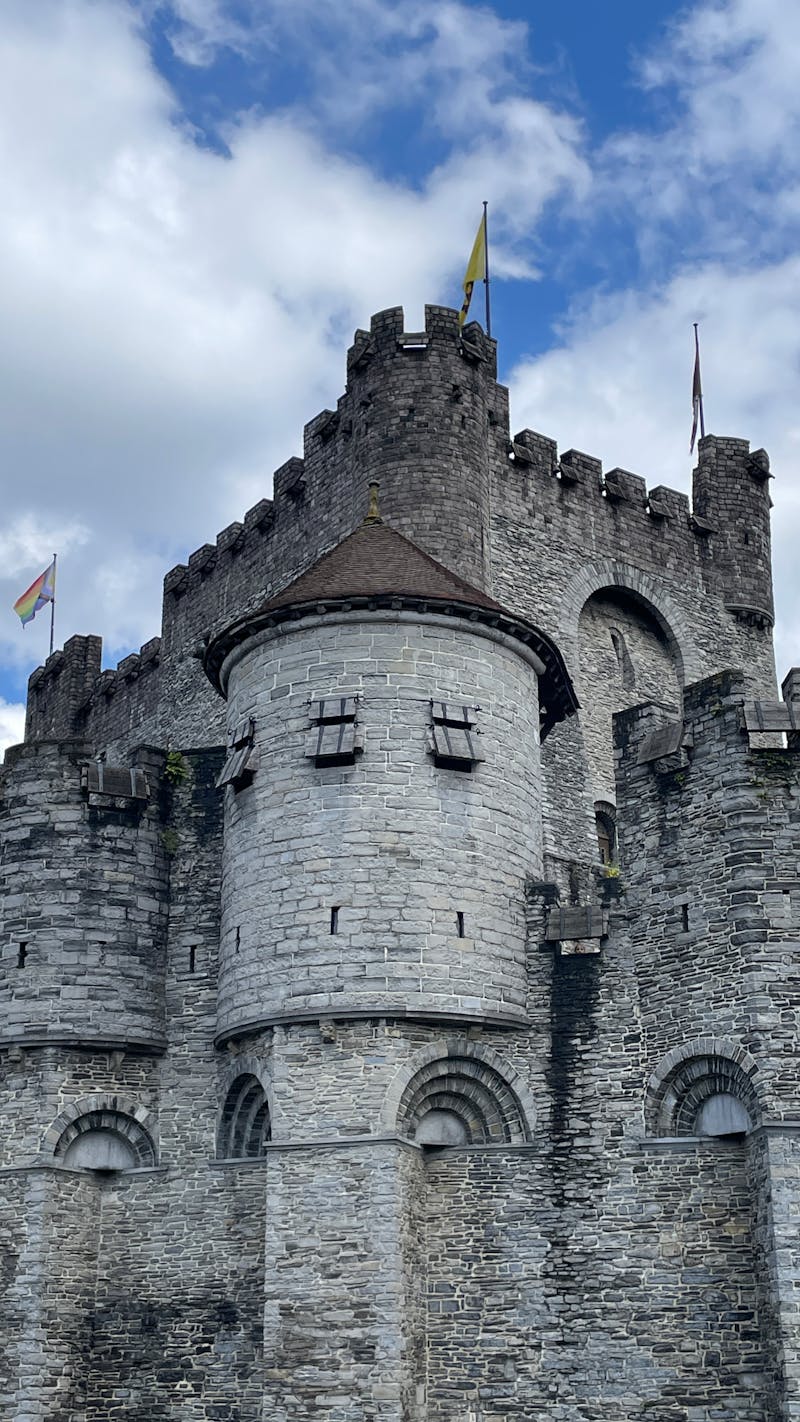
The procession ends at the Gravensteen (Castle of the Counts) with the ritual burning of the nooses — one of the most genuinely moving theatrical moments in the Belgian calendar.
Medieval Breakfast — July 18–26
One of the Gentse Feesten's most charming recurring events: the Medieval Breakfast allows visitors to eat breakfast dressed as a knight or noblewoman, in a period setting within the festival zone. Running from July 18 through July 26, it is aimed at families and visitors who want to extend the historical atmosphere of the city's medieval architecture into their morning meal.
Children's Village at Baudelopark
Baudelopark transforms into the festival's dedicated Children's Village — a programme of interactive performances, workshops, creative activities, and tailored shows aimed at younger visitors. The FRIDAYFOUR programme within the Little Ghent Festivities stream offers daily programming specifically designed for children, ensuring that the festival is as genuinely accessible for families as for the late-night music crowds.
Closing Fireworks — July 26
The festival closes on Sunday July 26 with fireworks above the Graslei — the medieval waterfront turned pyrotechnic display, one of the most visually stunning finales available at any European summer festival.
The combination of the fireworks' reflection in the Leie River, the guild house facades illuminated behind, and the energy of a city that has been celebrating for ten straight days makes the closing night one of the single most atmospheric moments of the Belgian summer.
The City as Venue: Ghent's Historic Setting
The Ghent Festivities would not be the Ghent Festivities anywhere else. The specific quality of the event is inseparable from the city in which it takes place — and Ghent is, in the opinion of many who know it, the most beautiful city in the Low Countries.
Ghent's three medieval towers — the Sint-Niklaaskerk (Saint Nicholas' Church, 13th century), the Belfort (Belfry, 14th century, UNESCO World Heritage), and the Sint-Baafskathedraal (Saint Bavo's Cathedral, 15th–16th century) — rise together from the city centre in a grouping that has been described as the most dramatic medieval skyline in Belgium. The festival stages and sounds fill the spaces between them for ten days each July.
The Gravensteen (Castle of the Counts), built in 1180 on the Lieve River, provides the Stroppendragers procession's backdrop and is a constant visual presence in the northern part of the festival zone. The Graslei guild houses, dating from the 12th to the 16th century, line the Leie River in the most photographed view in Ghent — and are the setting for the Polé Polé stage and the closing fireworks.
Walking through the Gentse Feesten means walking through 1,000 years of Flemish urban history with a free concert at every corner.
Practical Information for Visiting Gentse Feesten 2026
Admission: The vast majority of events are completely free; no wristband or ticket required
Dates: Friday July 17 – Sunday July 26, 2026
Best days to attend:
- July 17 (Opening Parade, evening) — the festival's beginning
- July 21 (Belgian National Day inside the festival) — maximum energy
- July 24 (Stroppendragers Procession at 8:30 PM) — the signature historical event
- July 26 (Closing Fireworks above the Graslei) — the most spectacular ending
Getting to Ghent:
- By train: Ghent-Sint-Pieters station is the main rail hub; direct trains from Brussels (~28–30 minutes), Bruges (~23–30 minutes), and Antwerp (~50–55 minutes) run frequently; the train is strongly recommended as the city centre is largely closed to private vehicles during the Festivities
- By car: The historic centre is pedestrianised during the festival; park at designated peripheral car parks and take shuttle or public transport into the centre; follow P+R (Park and Ride) signage on the approach roads
Accommodation:
- Ghent hotels and B&Bs within walking distance of the Festivity Zone fill months in advance for July 17–26; book as early as possible — ideally 6 months ahead
- Bruges (23 minutes by train), Brussels (30 minutes), and Antwerp (55 minutes) are all practical accommodation bases with regular late-night train connections back from Ghent during the festival (check last train times and book the train home before midnight celebrations begin)
- Budget options: Ghent has a strong youth hostel culture; several well-rated hostels operate in the city centre
What to eat: Ghent's food culture is outstanding and the Festivities bring it to full expression:
- Waterzooi — Ghent's signature creamy chicken or fish stew with vegetables; available at restaurants throughout the city
- Cuberdon — the purple, cone-shaped soft candy flavoured with raspberry that is Ghent's most iconic sweet; sold from vendor carts throughout the Festivity Zone
- Tierenteyn mustard — the artisanal mustard produced since 1790 at the same Vrijdagmarkt shop; the most distinctive local condiment
- Belgian beer — the festival bar infrastructure across the Festivity Zone serves a comprehensive range of Belgian ales, with Ghent's own brewing tradition well represented
Programme information:
- The full programme publishes on visit.gent.be and via the Gentse Feesten app (available for iOS and Android); with 3,300+ events across ten days, the app is the practical way to navigate and plan
- Performances run from approximately mid-afternoon daily through the early hours; the heaviest programming is from 7:00 PM onward
Ten Days That Belong to Everyone
The Ghent Festivities (Gentse Feesten) 2026 is the event that best demonstrates what Ghent is as a city: generous, historically aware, stubbornly committed to the principle that cultural life should be free and accessible, and genuinely extraordinary in its execution.
July 17 to July 26, 2026. Over 3,300 performances. Fireworks above the Graslei. The Stroppendragers walking barefoot through the city at 8:30 PM on July 24. Medieval towers rising above ten days of free concerts. Ghent does not ask you to pay to be there — it just asks you to show up. And if you do, it will give you one of the best ten days of your life.
Verified Information at a Glance
| Detail | Information |
|---|---|
| Event | Ghent Festivities (Gentse Feesten) 2026 |
| Category | Cultural / Music / Street Theatre / Historical / Community Festival — Europe's largest free open-air cultural festival |
| Dates | Friday July 17 – Sunday July 26, 2026 (10 days) |
| City | Ghent (Gent), East Flanders, Belgium |
| Admission | FREE (vast majority of events; no wristband required) |
| Approximate attendance | ~1.5 million visitors over 10 days |
| Scale | 3,300+ performances |
| Festival founded | 1843 |
| Festivity Zone key venues | — |
| Key 2026 events | — |
| Procession of Emperor Charles and the Noose Bearers — July 24, 8 | 30 PM–9:30 PM, starting at Gravensteen (free) |
| Getting there | Train to Ghent-Sint-Pieters; from Brussels ~30 min; from Bruges ~25 min; from Antwerp ~55 min |
| Accommodation | Book 6 months ahead for Ghent July 17–26; Brussels, Bruges, Antwerp viable alternatives |
| Programme | visit.gent.be and Gentse Feesten app |
| Key Ghent landmarks (festival backdrop) | Gravensteen (Castle of the Counts, 1180); Sint-Baafskathedraal (Ghent Altarpiece); Sint-Niklaaskerk; Belfort (Belfry — UNESCO); Graslei guild houses; Vrijdagmarkt |
Event Has Passed - See You Next Time!
Event Details
Date
to
Location
City centre, Ghent, Belgium
Ghent, Belgium
Price
Free Entry