
Event Has Passed - See You Next Time!
Event Details
Date
to
Time
10:00 AM
Location
Tiroler Landestheater, Ambras Castle, Hofburg, Hofgarten & various Old Town locations, Innsbruck
Innsbruck, Austria
Price
Not Available
About This Event
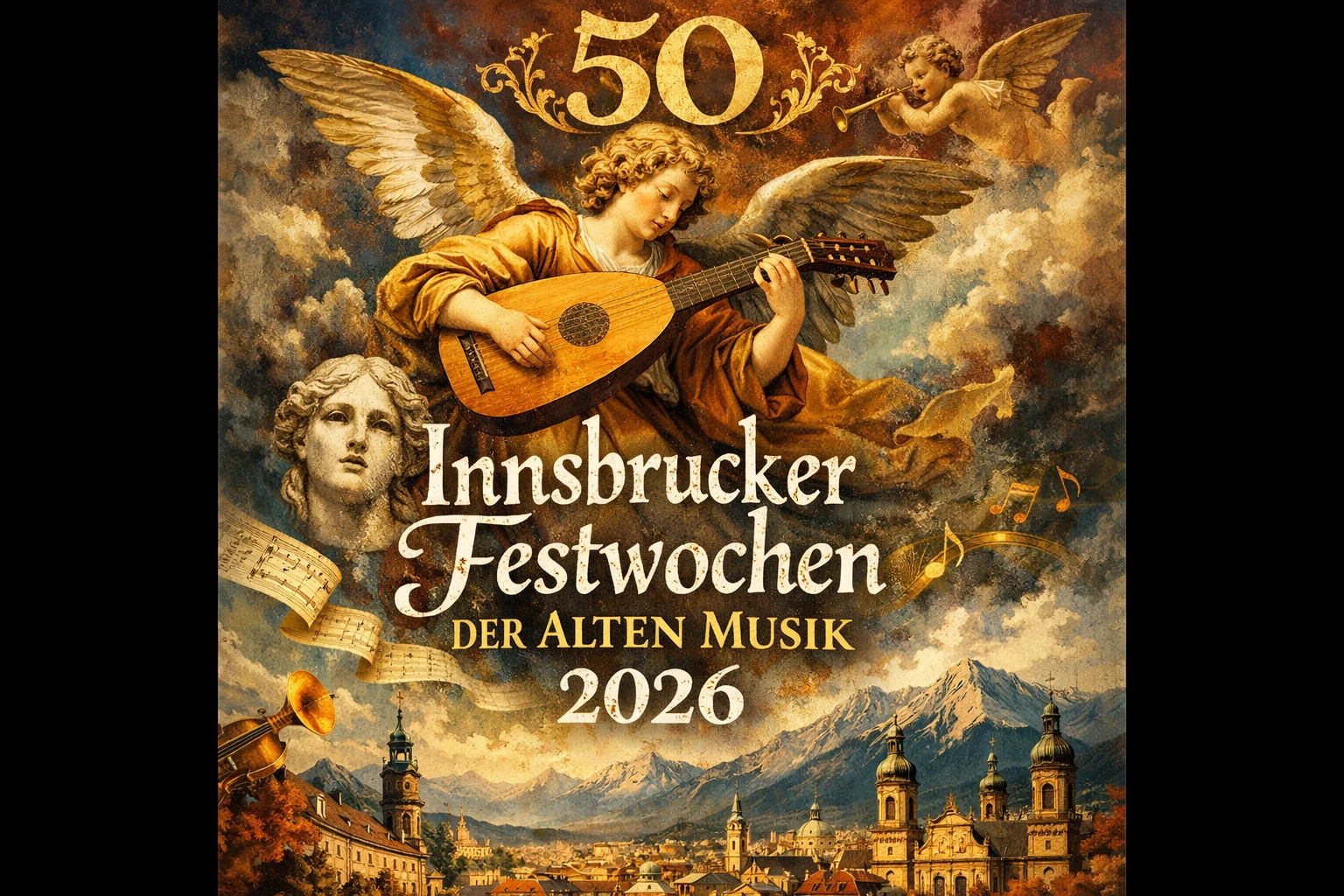
50th Innsbrucker Festwochen der Alten Musik 2026: Five Decades of Early Music in the Heart of the Tyrolean Alps
Some anniversaries are worth the journey from anywhere in Europe. The 50th Innsbrucker Festwochen der Alten Musik — the 50th Innsbruck Festival of Early Music — runs from Friday July 24 to Sunday August 30, 2026 in Innsbruck, the capital of Tyrol, Austria. Fifty years of baroque opera, chamber concerts, open-air events, and world-class historical performance practice in the most architecturally magnificent city between Vienna and Milan.
The centrepiece of the 50th anniversary edition is Antonio Cesti's "Il pomo d'oro" — a baroque opera of such extraordinary spectacle and scale that it was described at its 1668 Vienna premiere as the most lavish theatrical production in the history of the Habsburg court. Performed by the renowned period ensemble Il Pomo d'oro across six nights at the Tiroler Landestheater, it is a production that defines what the Innsbruck Festival at fifty years of age is capable of, and what the world of early music performance can still astonish audiences with.
The festival's opening weekend (July 24–26) includes the headline concert of Accademia Bizantina led by Ottavio Dantone in the Spanischer Saal (Spanish Hall) of Schloss Ambras — one of the most beautiful Renaissance interiors in the Alpine world — on Saturday July 25 at 20:00, alongside a La Cetra Barockorchester concert in the Tiroler Landestheater the same morning.
Tickets and full programme: altemusik.at
Fifty Years of Early Music in Innsbruck: The Festival's History
The Innsbrucker Festwochen der Alten Musik was founded in 1976 — the year a "Woche der Alten Musik" (Week of Early Music) was first organised in Innsbruck, followed in 1977 by the first formal "Festwoche der Alten Musik."
The timing was not accidental. The 1970s saw a revolution in early music performance practice — the "historically informed performance" movement that sought to perform medieval, Renaissance, and baroque music on period instruments, in period tunings, with period ornamentation and rhetorical approaches, rather than on modern instruments with modern techniques. Conductors, performers, and scholars including Nikolaus Harnoncourt (Vienna), Gustav Leonhardt (Amsterdam), and a generation of younger musicians were redefining what baroque music could sound like. Innsbruck, as the capital of Tyrol and a city with deep roots in Habsburg musical patronage, was the ideal home for a festival built around this new musicological and artistic movement.
Today, under Artistic Director Eva-Maria Sens and Musical Director Ottavio Dantone (leader of the Accademia Bizantina, one of the world's leading period performance ensembles), the Innsbrucker Festwochen has evolved into one of the two or three most important early music festivals in the world — alongside the Utrecht Early Music Festival, the Boston Early Music Festival, and the Resonances festival in Vienna.
Its distinguishing features across five decades:
- A consistent commitment to full baroque opera productions — staged with period instruments, historically informed staging, and casts drawn from the global early music community
- A programme that spans medieval to early classical music — not just baroque
- The use of approximately 30 historical venues across Innsbruck and the surrounding Tyrolean landscape, placing the music in physical spaces that correspond to its historical period
- A tradition of free open-air formats that open the festival to audiences beyond the concert hall
- A world-renowned singing competition — the International Singing Competition for Baroque Opera (Premio Cesti) — that has launched careers of some of the finest baroque singers of the past two decades
The 50th Anniversary Centrepiece: Cesti's "Il Pomo d'Oro"
The choice of Antonio Cesti's "Il pomo d'oro" as the centrepiece of the 50th anniversary is both historically justified and dramatically irresistible.
The work: "Il pomo d'oro" (The Golden Apple) was composed by Antonio Cesti and premiered in Vienna in 1668 for the wedding of Emperor Leopold I and Margaret Theresa of Spain — the most lavish court entertainment of the 17th century. The opera has a prologue and five acts, a cast of over 50 named roles, stage machinery depicting heaven, earth, and the underworld, and spectacle sequences that pushed every resource of the baroque theatrical world to its absolute limit. It is, in the truest sense, baroque opera at its most maximally baroque.
The opera's plot is drawn from mythology: the golden apple of Discord, inscribed "For the Fairest," is claimed by Juno, Pallas, and Venus simultaneously — setting in motion the chain of events that will lead to the Judgment of Paris and eventually the Trojan War. In Cesti's version, the conflict is resolved through the exceptional beauty and virtue of the Habsburg Empress herself, making the opera simultaneously a mythological spectacular and a piece of imperial political theatre. "Pracht, Überfluss, Spektakel" — splendour, excess, spectacle — is how the Innsbruck Festival describes it.
The production: The Innsbruck Festival production stars Il Pomo d'oro — the period ensemble whose very name is drawn from this opera, and who are now one of the finest baroque orchestras in the world — performing across six nights at the Tiroler Landestheater, Großes Haus:
- Friday August 7 at 18:30
- Saturday August 8 at 18:30
- Tuesday August 11 at 18:30
- Wednesday August 12 at 18:30
- Saturday August 15 at 16:00
- Sunday August 16 at 16:00
The Tiroler Landestheater — Innsbruck's main opera house on Rennweg — is the natural venue for a production of this scale; its full-size main stage (Großes Haus) and the formal theatrical architecture provide the framing that Cesti's spectacular demands.
The Opening Weekend: July 24–26, 2026
The opening weekend of the 50th festival establishes the celebratory tone of the entire edition with two headline events in two of Innsbruck's most magnificent spaces.
Saturday July 25 — Accademia Bizantina at Schloss Ambras (20:00)
The headline opening weekend concert features Ottavio Dantone leading the Accademia Bizantina in the Spanischer Saal (Spanish Hall) of Schloss Ambras at 20:00 — the concert that, in Innsbruck Festival tradition, announces the beginning of each new edition.
The Accademia Bizantina is Italy's most respected period performance ensemble, and Dantone has been central to the Innsbruck Festival's artistic identity in the current decade. As Musical Director, his opening concert is a statement of the festival's standards and its artistic direction — and the Spanish Hall setting at Schloss Ambras provides the ideal acoustic and architectural context.
Schloss Ambras deserves special attention as a venue. The Renaissance castle above Innsbruck was the residence of Archduke Ferdinand II of Austria (1529–1595) — humanist, patron, and collector — who transformed it in the 1560s into one of the great Renaissance courts north of the Alps. The Spanischer Saal (built 1570–1572) is a 43-metre long frescoed hall, one of the finest surviving examples of Renaissance interior decoration in the German-speaking world, with a painted ceiling of extraordinary quality and an acoustic that suits period instruments precisely. Attending a concert here is as much a cultural experience as a musical one.
Saturday July 25 — La Cetra Barockorchester at Tiroler Landestheater (10:00)
The morning of July 25 opens with a La Cetra Barockorchester concert at the Tiroler Landestheater at 10:00 — a morning concert in the festival tradition of making early music accessible across a full day's programming, from morning chamber music to evening opera.
Across the Full Festival: More Key Events
Beyond the opening weekend and the "Il pomo d'oro" production, the 50th edition's confirmed programme includes:
July 31 (Friday): Concerto Mobile at Schloss Ambras, 20:00
August 1 (Saturday): Bach à 7 — an open-air concert in Innsbruck's Innenstadt (Old Town) at 11:00; Concerto Mobile at Schloss Ambras (Spanischer Saal) at 20:00
August 7 (Friday): "Dafne" — performed at the Goldenes Dachl (the famous gilded roof loggia in the Altstadt) at 17:00; a free open-air early music performance in one of Innsbruck's most photographed landmarks
August 14 (Friday): Duo Enßle Lamprecht — late night concert at the Musikpavillon Hofgarten at 21:30; the Hofgarten (Court Garden) pavilion is one of the festival's most atmospheric informal venues for chamber music
August 19 (Wednesday): "Gioseffo" at Stiftskirche Wilten (the Premonstratensian Abbey church of Wilten, one of Innsbruck's finest baroque ecclesiastical interiors) at 20:00
August 22 (Saturday): "Il Trionfo" at Haus der Musik Innsbruck, Großer Saal at 20:00
The full 50-edition programme lists 40+ events across the festival's 38-day run — detailed at altemusik.at.
Innsbruck: The City That Has Always Belonged to Music
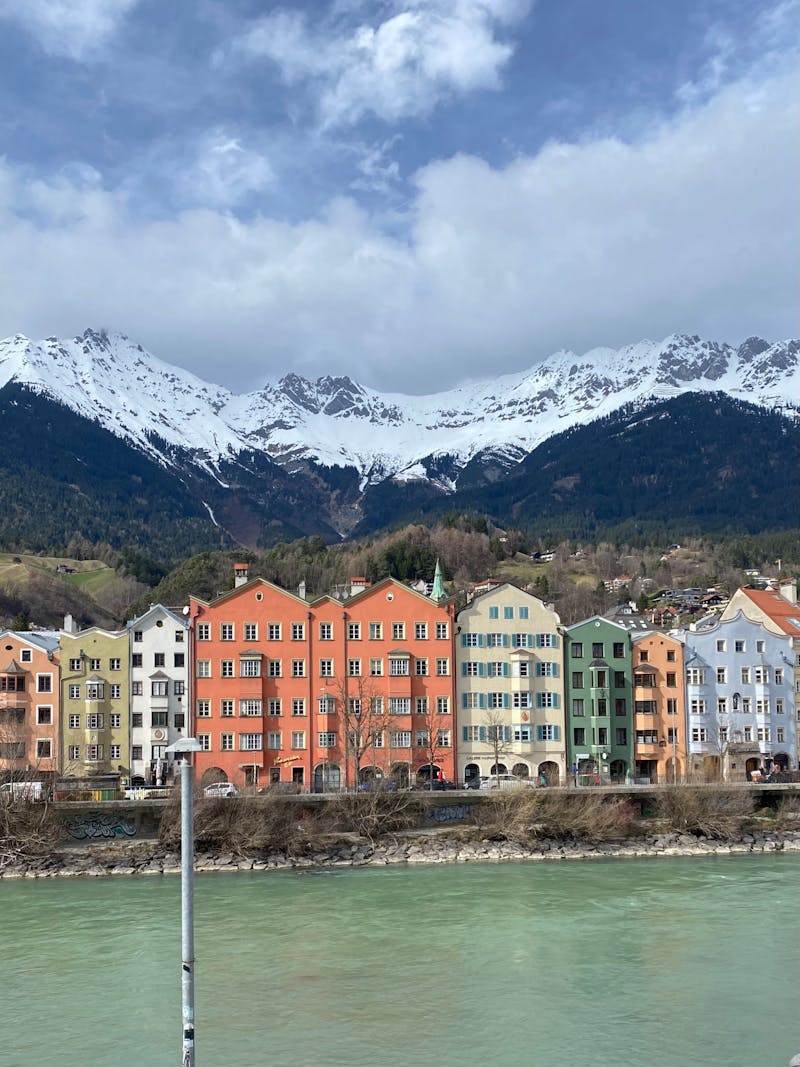
Innsbruck — population approximately 130,000, capital of the Austrian state of Tyrol — is the most dramatically sited major city in the Alps: the Inn River runs through its valley floor, the Nordkette mountain range rises directly behind the city centre to 2,256 metres, and the entire Tyrolean mountain landscape forms an omnipresent backdrop to daily life.
The city's musical heritage runs deep through the Habsburg period. The Imperial Court of Innsbruck was a significant musical patronage centre in the 16th and 17th centuries — the very era whose music the Festwochen celebrates. Archduke Ferdinand II (the builder of Schloss Ambras) maintained a court Kapelle (musical establishment) of European-level quality. Emperor Maximilian I, buried in the Hofkirche in the heart of the Old Town, was himself a passionate musical patron whose court in Innsbruck attracted composers and performers from across the continent.
Key Innsbruck landmarks in the festival's geography:
- Altstadt (Old Town): The pedestrianised historic centre, a short walk from any hotel in the city; the Goldenes Dachl (the Emperor's golden-tiled loggia, 1494–1496, with 2,657 gilded copper tiles); the Hofburg (Imperial Palace); the Hofkirche (court church, with Maximilian I's cenotaph and the famous bronze statue figures); the Stadtturm (city tower)
- Tiroler Landestheater: The main opera house and principal festival venue for staged productions; located on Rennweg, a short walk from the Altstadt
- Schloss Ambras: The Renaissance castle on the hill above the city; accessible by tram (Line 6) from the city centre
- Stift Wilten: The Premonstratensian abbey and its yellow baroque church, one of the finest baroque interiors in Tyrol; in the Wilten district south of the city centre
- Hofgarten: The formal palace garden north of the Hofburg; the Musikpavillon (music pavilion) is a regular festival venue for open-air evening concerts
- Nordkette cable car: From the city centre to 2,256 metres in 20 minutes — the most spectacular day-trip available from any festival city in Europe
Practical Guide to the 50th Innsbrucker Festwochen
Festival dates: Friday July 24 – Sunday August 30, 2026 (38 days)
Edition: 50th (founded 1976)
Opening weekend: July 24–26, 2026
Artistic Director: Eva-Maria Sens
Musical Director: Ottavio Dantone
Tickets and programme: altemusik.at; Tickethotline +43 512 52074-504; Universitätsstraße 1, 6020 Innsbruck; [email protected]
Getting to Innsbruck:
- By air: Innsbruck Airport (INN) serves direct flights from London, Frankfurt, Vienna, Amsterdam, and other European cities; the airport is 3 km from the city centre
- By train: Innsbruck Hauptbahnhof (main station) is a major junction on the Munich–Verona and Salzburg–Milan rail corridors; direct trains from Munich (1 hour 40 minutes), Vienna (4 hours), Salzburg (2 hours), Zurich (3.5 hours), Milan (4.5 hours); the main station is a 10-minute walk from the Altstadt
- By car: The A12 motorway (Inntal Autobahn) from Munich and the A13 (Brenner Autobahn) from Verona and Italy converge at Innsbruck; note the Brenner Autobahn toll
Accommodation:
- The festival runs late July through late August — peak Alpine summer season; book well in advance
- The Altstadt area and the surrounding inner districts offer the most convenient base for festival-goers; Wilten and the areas near Bergisel are quieter alternatives
- Budget options are available in Innsbruck's extensive student and youth hostel infrastructure; premium hotels include the historic Grand Hotel Europa (facing the main station)
Weather: Late July through August in Innsbruck: typically 22–30°C by day; 14–18°C evenings (the mountain air at altitude; bring a light layer for evening concerts at Schloss Ambras); afternoon thunderstorms are common in the Alps in August — carry a compact rain jacket
The 50th: A Festival That Has Earned Every Year
Five decades of bringing the music of the medieval, Renaissance, and baroque periods back to life — not as museum reconstruction but as living performance, in the Tyrolean Alps, in spaces that were built in the same centuries whose music fills them — is not a small achievement.
July 24 to August 30, 2026. Innsbruck, Tyrol, Austria. The 50th edition. Antonio Cesti's "Il pomo d'oro" in the Tiroler Landestheater. Accademia Bizantina in the Spanish Hall of Schloss Ambras. Forty events across thirty historical venues in one of the most beautiful cities in the Alps. Half a century of early music, and still going. Tickets at altemusik.at. This is the anniversary edition you do not want to hear about from someone who was there.
Verified Information at a Glance
| Detail | Information |
|---|---|
| Event | 50. Innsbrucker Festwochen der Alten Musik (50th Innsbruck Festival of Early Music) |
| Category | Early Music Festival — Baroque Opera, Chamber Music, Orchestral Concerts, Historical Performance Practice |
| Edition | 50th (founded 1976) |
| Festival dates | Friday July 24 – Sunday August 30, 2026 (38 days) |
| Opening weekend | July 24–26, 2026 |
| City | Innsbruck, Tyrol, Austria |
| Artistic Director | Eva-Maria Sens |
| Musical Director | Ottavio Dantone (Accademia Bizantina) |
| Centrepiece production | Antonio Cesti's "Il pomo d'oro" — performed by Il Pomo d'oro ensemble; Tiroler Landestheater, Großes Haus; August 7 (18:30), 8 (18:30), 11 (18:30), 12 (18:30), 15 (16:00), 16 (16:00) |
| Opening weekend headline concert | Accademia Bizantina, Ottavio Dantone — Schloss Ambras (Spanischer Saal) — Saturday July 25, 20:00 |
| Opening weekend second event | La Cetra Barockorchester — Tiroler Landestheater — Saturday July 25, 10:00 |
| Key confirmed venues | — |
| Selected additional events | July 31 Concerto Mobile at Schloss Ambras (20:00); Aug 1 Bach à 7 in Innenstadt (11:00) + Concerto Mobile at Schloss Ambras (20:00); Aug 7 "Dafne" at Goldenes Dachl (17:00); Aug 14 Duo Enßle Lamprecht at Musikpavillon Hofgarten (21:30); Aug 19 "Gioseffo" at Stiftskirche Wilten (20:00); Aug 22 "Il Trionfo" at Haus der Musik (20:00) |
| Scale | 40+ events across 38 days |
| Tickets | altemusik.at; tickethotline +43 512 52074-504; [email protected] |
| Nearest airport | Innsbruck Airport (INN) — 3 km from city centre; direct flights from major European cities |
| By train | Munich 1h 40min; Vienna 4h; Salzburg 2h; Zurich 3.5h |
| July–August weather | 22–30°C days; 14–18°C evenings; afternoon Alpine thunderstorms possible; light layer + rain jacket recommended |
| Official website | altemusik.at |
Event Has Passed - See You Next Time!
Event Details
Date
to
Time
10:00 AM
Location
Tiroler Landestheater, Ambras Castle, Hofburg, Hofgarten & various Old Town locations, Innsbruck
Innsbruck, Austria
Price
Not Available