
Event Has Passed - See You Next Time!
Event Details
Date
to
Location
Citywide — Alfama, Mouraria, Graça, Bica, Bairro Alto; Marchas parade: Avenida da Liberdade
Lisbon, Portugal
Price
Free Entry
About This Event
Festas de Lisboa 2026: The Complete Guide to Lisbon's Greatest Month-Long Celebration
If there is one month in the year to be in Lisbon, it is June. Not just because of the weather (reliably sunny, 26–30°C, with long golden evenings), not just because of the food (the smell of sardines grilling over charcoal filling every cobblestoned street), but because June in Lisbon is when the city becomes entirely, joyously, unapologetically itself. The Festas de Lisboa 2026 — also called the Santos Populares, the Festas de Santo António, and by many Lisboetas simply "as festas" — run from June 1 to June 30, 2026, and they represent one of the oldest, most authentic, and most completely alive urban celebrations in Europe.
The numbers give some sense of scale: over 800 years of continuous celebration of Santo António (born in Lisbon in 1195); dozens of simultaneous arraiais (street festivals) in Lisbon's historic neighbourhoods running across the entire month; the Marchas Populares parade on the night of June 12 drawing tens of thousands of spectators along the full length of the Avenida da Liberdade; and an atmosphere on the peak night — the night of June 12 rolling into June 13, the official feast day — that Lisboetas call "a noite mais longa do ano": the longest night of the year.
All of it is free. All of it happens in the streets. And all of it tastes like charcoal-grilled sardines and cold white wine.
The History Behind the Festival: Santo António and 800 Years of Lisbon Pride
Santo António de Lisboa (Saint Anthony of Lisbon, also known as Saint Anthony of Padua) was born Fernando Martins de Bulhões in Lisbon in 1195, in a house that still stands — now the Church of Santo António da Sé, directly beside the Lisbon Sé Cathedral in the Alfama district. He joined the Franciscan order, travelled to Morocco and then Italy, and became one of the most influential theologians, preachers, and figures of compassion of the 13th century. He died in Padua, Italy, in 1231, aged 35, and was canonised the following year — the fastest canonisation in the history of the Catholic Church at that time.
Padua and Lisbon have argued about ownership of the saint ever since. Lisbon's position is simple: António was born here. The basilica in his name rises from the site of his birth house, the Alfama neighbourhood he grew up in still bears the memory of him in its lanes and chapels, and on the night of June 12 each year, every resident of every Lisbon bairro who pours onto the streets to dance and eat sardines by candlelight is, in their own way, continuing the 800-year tradition of celebrating the city's own saint.
Santo António is associated specifically with matchmaking and love — he is the patron saint of lovers and of finding lost things (including, in the popular Portuguese tradition, lost loves). The Casamentos de Santo António (Santo António Mass Weddings), held each June 13, are a civic ceremony in which Lisbon's municipality sponsors and celebrates multiple couples getting married on the feast day of the patron saint. The tradition dates to 1958.
The Full Calendar: June 1–30, 2026
The Festas de Lisboa are not a single event but a city-wide, month-long explosion of concurrent celebrations. The calendar builds steadily from June 1 toward the peak of June 12–13, then continues with the celebrations of São João (June 23–24) and São Pedro (June 28–29) before closing out the month.
The Arraiais: Lisbon's Neighbourhood Street Parties
The arraial is the essential unit of the Festas de Lisboa: a neighbourhood street party, held in a square or largo (small square), with tables and chairs, a makeshift bar serving sardines and drinks, paper lanterns and coloured decorations strung between buildings, a small stage or speakers playing Fado and pimba music, and the neighbourhood's residents filling every chair and standing in every space. Dozens of arraiais run simultaneously across Lisbon throughout June, each one organised by its local junta de freguesia (parish council).
Confirmed arraiais for 2026 with dates and locations:
- Santos em Santos (Estrela): May 16 – June 15, 2026 — Terrapleno de Santos; open Sunday–Thursday 4pm–11pm; Friday, Saturday and holiday eves 4pm–1am
- Arraial de Santo António (Santo António): May 27 – June 19, 2026 — Praça da Alegria; daily 12pm–10pm (until midnight on Fridays and Saturdays)
- Alfama Popular Arraial (Santa Maria Maior): May 30 – June 28, 2026 — Largo de São Miguel, Alfama; traditional arraial every day
- Arraial da Bica (Misericórdia): May 30 – June 29, 2026 — Largo de Santo Antoninho, Bica
- Arraial da Mouraria: May 29 – June 21, 2026 — Largo da Rosa, Mouraria
- Arraial dos Navegantes (Parque das Nações): June 6–8, 2026 — near Igreja da Nossa Senhora dos Navegantes, Parque das Nações
- Grande Arraial das Avenidas Novas: May 30 – June 15, 2026 — Jardins do Campo Pequeno (Campo Pequeno Gardens)
All arraiais are free entry. Food, drinks, and sardines are purchased individually on site.
The Night of June 12: Lisbon's Peak Celebration
The night of Friday June 12, 2026 is the absolute centre of the entire month — the night the entire city erupts. Every arraial is at full capacity. The sardine grills are going. The streets of Alfama, Mouraria, Graça, Bairro Alto, Bica, and Castelo are so packed that movement becomes a slow, joyful shuffle from one bar to the next. This is what the Lisboetas mean by "a noite mais longa do ano."
Celebrations on this night officially run from 22:00 to 05:00 — seven hours of continuous street party across the historic neighbourhoods. In practice, celebrations begin earlier in the evening and end when people finally go home as dawn breaks over the Tagus.
June 12 Evening: The Marchas Populares Parade
The centrepiece visual event of the entire Festas de Lisboa is the Marchas Populares parade, which takes place on the evening of June 12, starting at 20:00, along the full length of the Avenida da Liberdade — Lisbon's grandest boulevard, a tree-lined 1.1-kilometre avenue running from the Praça dos Restauradores down to the Praça do Marquês de Pombal.
Each of Lisbon's freguesias (urban parishes) sends a marcha — a team of dozens of performers dressed in elaborate hand-made costumes specific to their neighbourhood's colours and identity, performing a choreographed routine to an original song composed specifically for that year's parade. The costumes take months to make. The choreographies take months to rehearse. The songs — invariably catchy, often deeply nostalgic — are written by local composers and performed by the marcha's own singers.
The marchantes parade in sequence down the Avenida da Liberdade, performing before a jury seated at a judging stand; the best marcha wins the competition that year and earns the fierce pride of their neighbourhood. But the real point is not the competition — it is the extraordinary visual display of 24 different Lisbon neighbourhoods, each in their own colour, each with their own song, each expressing their specific identity on the city's grandest street.
Watching from the standing sections along the Avenida is free. Grandstand tickets can be purchased through the Câmara Municipal de Lisboa (City Hall).
June 13: The Feast Day of Santo António
Saturday June 13, 2026 is the official feast day. The religious procession — the Procissão de Santo António — takes place in the afternoon, winding through the streets of the Alfama neighbourhood around the Sé Cathedral (Lisbon's cathedral, built in 1147) and ending at the Igreja de Santo António, built on the site of the saint's birth house beside the Sé.
The Casamentos de Santo António (Mass Weddings) — the civic ceremony in which the City of Lisbon sponsors couples marrying on the feast day — also take place on June 13, typically at the Igreja de Santo António da Sé or at the city's civil registry; the couples process in traditional dress in a public ceremony that draws large and warm crowds.
The Flavours, the Sounds, and the Symbols
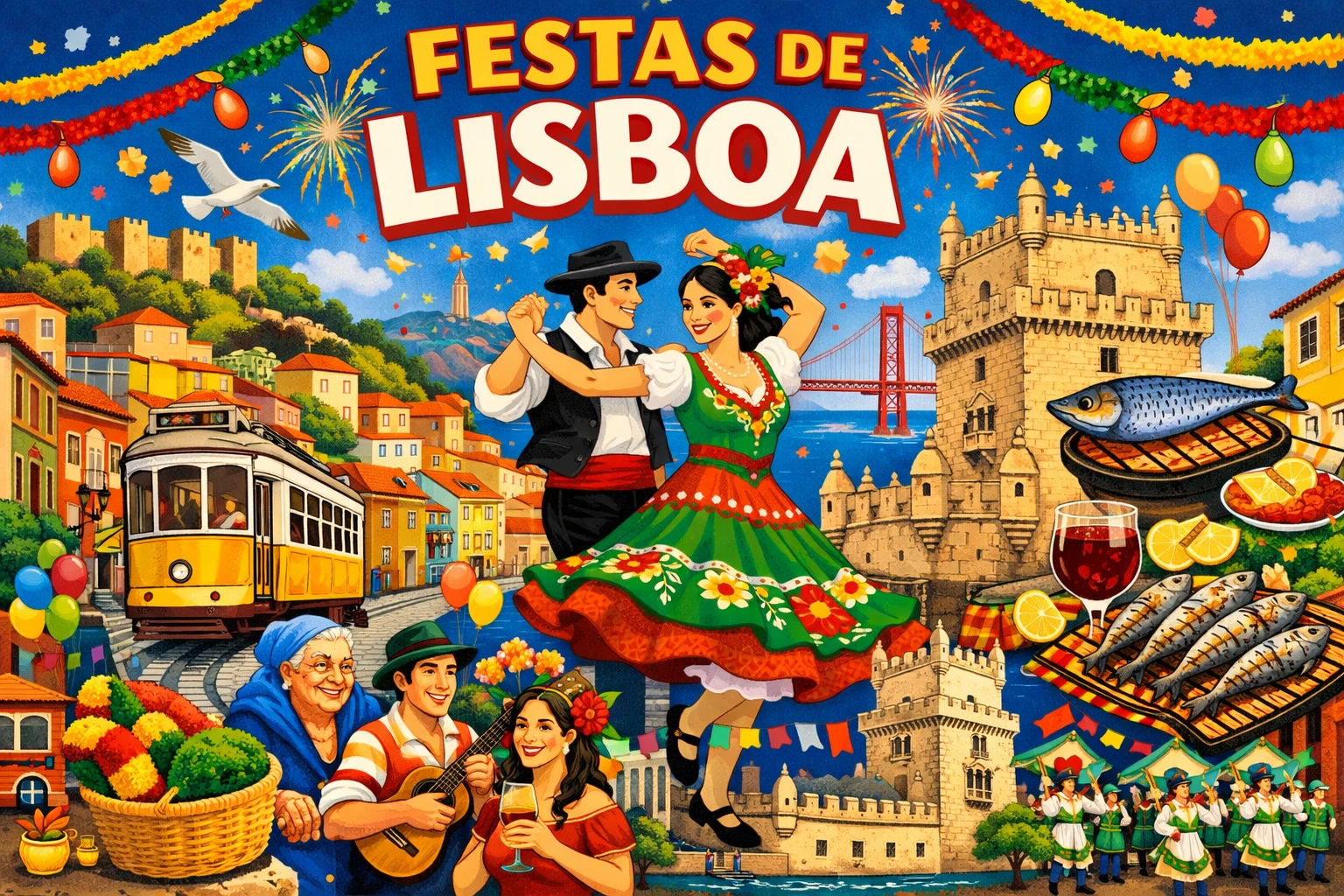
No festival in Europe has a more specific and universally recognised sensory identity than the Festas de Lisboa. The smell of sardines — specifically sardinhas assadas (charcoal-grilled whole sardines) served on a piece of bread — is the first and last thing most visitors remember. The Lisbon sardine season peaks in June, and the sardines served at the arraiais are as good as food gets anywhere in the city in any month.
The iconic elements of the Festas de Lisboa:
- Sardinhas assadas: Grilled over charcoal, served on stale bread to soak the juices, eaten with your hands; the bread plate is not optional — it is part of the experience
- Manjerico: A small pot of basil, decorated with a paper carnation and a poem on a heart-shaped tag; the traditional June gift exchanged between lovers and friends; every arraial sells them; the scent of basil becomes, in June, as characteristic of Lisbon as the sardines
- Pimba music: The deliberately populist, enormously catchy Portuguese folk-pop genre that dominates the arraiais — accordion-driven, lyrically simple, impossible not to move to; it is the sound of collective joy in Lisbon June
- Fado: The profound, slow, emotionally deep music that is Lisbon's other musical soul — some arraiais feature dedicated Fado evenings alongside the pimba; the contrast between the two genres in the same June street is entirely Lisbon
- Paper decorations and coloured lanterns: Every street in Alfama, Mouraria, and Bairro Alto is decorated with hand-cut paper garlands in red, green, and yellow strung across the lanes between buildings; at night, the lanterns light the coloured paper and the narrow streets become something between a stage set and a living painting
The Neighbourhoods: Where to Experience the Festas
The Festas de Lisboa happen across the entire city, but five neighbourhoods are the most deeply immersive:
Alfama
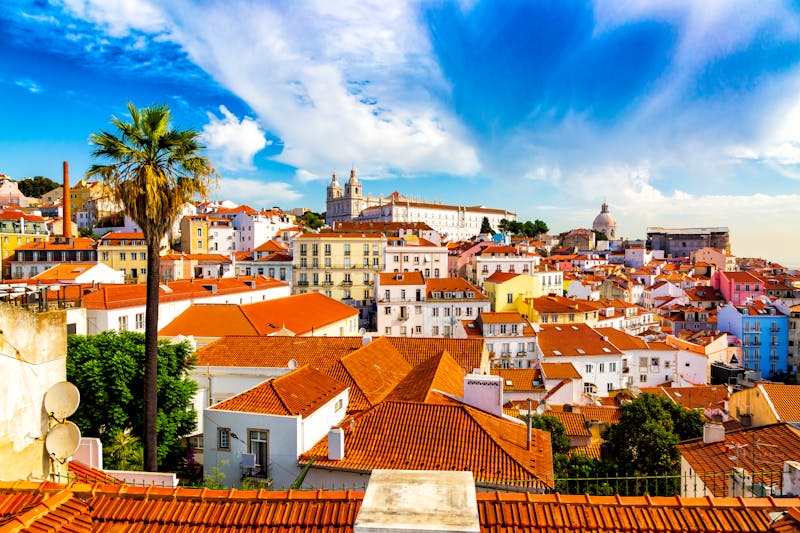
The oldest surviving neighbourhood in Lisbon — the Moorish-era labyrinth of steep lanes and miradouros (viewpoints) that climbs from the Tagus waterfront up to the Castelo de São Jorge — is the spiritual heart of the Festas. The Largo de São Miguel arraial runs from May 30 to June 28 daily; on the night of June 12, Alfama is essentially impassable due to the density of celebrating Lisboetas.
Mouraria
The Moorish quarter that gave Fado its urban soul, immediately adjacent to Alfama below the Castelo walls. The Largo da Rosa arraial in Mouraria (May 29 – June 21) is one of the most atmospheric in the city, partly because Mouraria's multicultural present-day community adds a specific energy to the traditional June celebrations.
Bica and Bairro Alto
The steep lanes of the Bica neighbourhood (served by the famous Elevador da Bica funicular) and the adjacent Bairro Alto hillside district are both densely decorated and densely crowded on the peak June nights. The Arraial da Bica at Largo de Santo Antoninho runs from May 30 to June 29.
Graça
The hilltop neighbourhood of Graça, north of Alfama, is where older, more traditional June celebrations happen with slightly less tourist density — a good option for those who want to experience the festivities in a more residential, neighbourhood setting.
Practical Guide to the Festas de Lisboa 2026
Season: June 1–30, 2026
Peak night: Friday June 12 into Saturday June 13, 2026 (22:00–05:00)
Feast day: Saturday June 13, 2026
Marchas Populares parade: Friday June 12, from 20:00, Avenida da Liberdade (free standing; paid grandstand seats via Câmara Municipal de Lisboa)
Religious procession: Saturday June 13, afternoon, around the Sé Cathedral and Igreja de Santo António, Alfama
Casamentos de Santo António (Mass Weddings): Saturday June 13
Admission: Free for all arraiais, street parties, and the Marchas Populares standing area
Arraiais confirmed 2026:
- Santos em Santos: May 16 – June 15, Terrapleno de Santos; Sun–Thu 4pm–11pm; Fri/Sat/holidays 4pm–1am
- Arraial de Santo António: May 27 – June 19, Praça da Alegria; daily 12pm–10pm (midnight Fri/Sat)
- Alfama Popular Arraial: May 30 – June 28, Largo de São Miguel (daily)
- Arraial da Bica: May 30 – June 29, Largo de Santo Antoninho
- Arraial da Mouraria: May 29 – June 21, Largo da Rosa
- Arraial dos Navegantes: June 6–8, Parque das Nações
- Grande Arraial das Avenidas Novas: May 30 – June 15, Jardins do Campo Pequeno
Getting around:
- Alfama, Mouraria, Graça, Bica, and Bairro Alto are all walkable from central Lisbon (Baixa and Chiado); Alfama is uphill from the Sé Cathedral, accessible on foot or by Tram 28
- Tram 28 runs from Martim Moniz through Alfama and Graça to the Estrela neighbourhood; it is the most atmospheric route to the June festival heart but will be slow on peak nights
- On the night of June 12–13, use your feet; the neighbourhoods are too dense for trams or taxis to move freely
Practical tips for peak night (June 12–13):
- Arrive early (19:00–20:00) to find a table at an arraial before the Marchas Populares parade ends and the crowds flood back from the Avenida da Liberdade into the neighbourhoods
- Wear comfortable shoes; cobblestones are everywhere and the terrain in Alfama and Mouraria is steep
- Eat sardines; do not leave Lisbon in June without having eaten sardines at a street arraial
- Buy a manjerico; it is approximately €3–5 at any street stall and it smells of June in Lisbon
- Carry cash; most arraiai stalls do not accept cards
June weather in Lisbon: 26–30°C days; 18–22°C evenings; essentially no rainfall in June; nights are warm enough for T-shirts
Nearest airport: Lisbon Humberto Delgado Airport (LIS), approximately 7 km from the Alfama; taxi or metro (red line to Oriente, then metro to Baixa-Chiado for Alfama) approximately 30 minutes
June in Lisbon: No Other City Celebrates Like This
The Festas de Lisboa are not a performance for tourists. They are what Lisbon does every June because it has always done it, because the city's relationship with its own patron saint is personal and specific, and because the tradition of gathering in the street to eat sardines and drink wine and dance to music and light fires on the Feast of Santo António is woven into what it means to be Lisboeta.
June 1–30, 2026. Alfama, Mouraria, Bica, Bairro Alto, Graça, and every other neighbourhood in the city. The Marchas Populares on June 12 at 20:00 on the Avenida da Liberdade. The longest night of the year in Lisbon, June 12 into June 13. Grilled sardines, basil pots, paper lanterns, pimba music, and a city that has been celebrating this saint for 800 years and shows no sign of stopping. Everything is free. Bring your appetite and stay late.
Verified Information at a Glance
| Detail | Information |
|---|---|
| Event | Festas de Lisboa 2026 / Santos Populares / Festas de Santo António |
| Category | Traditional Urban Street Festival / Catholic Patron Saint Festival / Month-Long City Celebration |
| Season dates | June 1–30, 2026 |
| Peak celebration | Night of Friday June 12 into Saturday June 13, 2026 (22:00–05:00) |
| Feast day | Saturday June 13, 2026 |
| Key events | — |
| Marchas Populares Parade | Friday June 12, from 20:00, Avenida da Liberdade (free standing) |
| Religious Procession | Saturday June 13, afternoon, Sé Cathedral area |
| Casamentos de Santo António (Mass Weddings) | Saturday June 13 |
| Admission | Free (all arraiais, street parties, Marchas Populares standing area) |
| Arraiais confirmed 2026 | — |
| Santos em Santos | May 16–June 15, Terrapleno de Santos |
| Arraial de Santo António | May 27–June 19, Praça da Alegria |
| Alfama Popular Arraial | May 30–June 28, Largo de São Miguel |
| Arraial da Bica | May 30–June 29, Largo de Santo Antoninho |
| Arraial da Mouraria | May 29–June 21, Largo da Rosa |
| Arraial dos Navegantes | June 6–8, Parque das Nações |
| Grande Arraial das Avenidas Novas | May 30–June 15, Jardins do Campo Pequeno |
| City | Lisbon, Portugal (historic neighbourhoods: Alfama, Mouraria, Graça, Bica, Bairro Alto, Castelo, Baixa) |
| Secondary saints | São João (June 23–24); São Pedro (June 28–29) — less central in Lisbon but celebrated |
| History | Over 800 years (Santo António born in Lisbon, 1195) |
| Traditional food | Sardinhas assadas (charcoal-grilled sardines) on bread |
| Traditional symbol | Manjerico (basil pot with paper carnation and heart tag) |
| Music | Pimba, Fado, live bands and DJs at all arraiais |
| Nearest airport | Lisbon Humberto Delgado Airport (LIS) — 7 km from Alfama |
| June weather | 26–30°C days; 18–22°C evenings; virtually no rainfall |
Event Has Passed - See You Next Time!
Event Details
Date
to
Location
Citywide — Alfama, Mouraria, Graça, Bica, Bairro Alto; Marchas parade: Avenida da Liberdade
Lisbon, Portugal
Price
Free Entry