

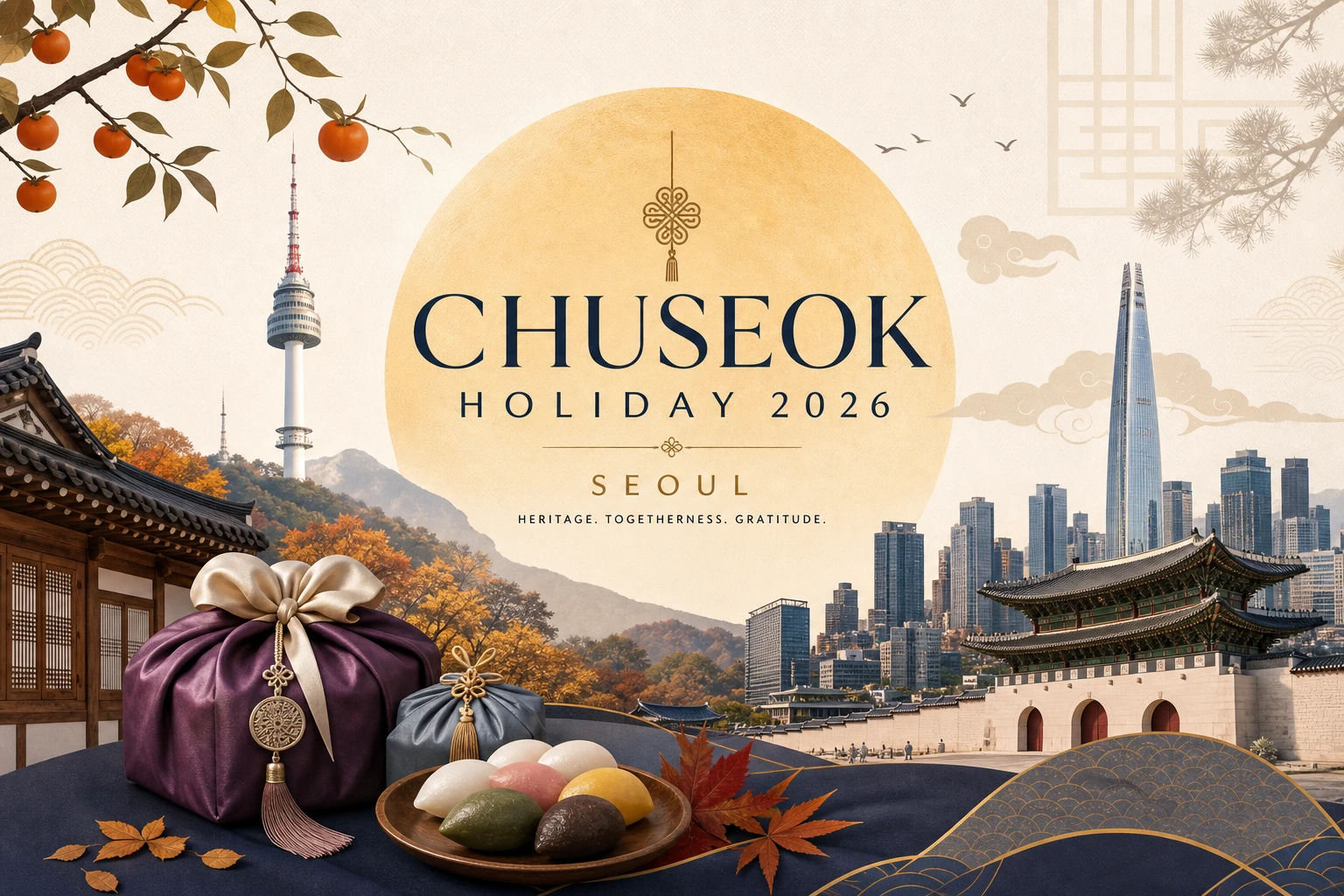
Event Has Passed - See You Next Time!
Event Details
Date
to
Location
Nationwide / Seoul, South Korea
Seoul, South Korea
Price
Free Entry
About This Event
The autumn season in South Korea is arguably the most beautiful time of the year to explore the country. September brings clear blue skies, crisp afternoon breezes, and comfortable daytime temperatures averaging around 24 degrees Celsius. While the capital city is normally a high-speed, bustling metropolis of nearly ten million people, something magical happens during the autumn harvest season. As the full moon rises, the vast urban center transforms into a peaceful sanctuary. Millions of local residents journey across the country to visit their ancestral hometowns, leaving the grand thoroughfares of the capital remarkably quiet and beautifully open for exploration.
Experiencing the Chuseok Holiday 2026 Seoul provides international travelers and holiday seekers with a rare window into the deepest layers of Korean heritage. From the sprawling stone courtyards of ancient royal palaces to vibrant cultural festivals nestled under the city skyline, the holiday offers a unique blend of historical reverence and contemporary festive fun. This comprehensive guide details everything you need to know about celebrating Korea's mid-autumn harvest festival in the heart of the capital, from traditional delicacies to must-visit cultural hubs.
The Cultural Significance and Rich History of Chuseok
To truly appreciate the celebrations, one must look back into Korea’s deep agrarian past. Historically known as Hangawi, which translates roughly to the great middle of autumn, Chuseok is celebrated on the 15th day of the 8th month of the lunar calendar. This corresponds to the arrival of the full harvest moon, a time when ancient farmers paused to give thanks to nature for a bountiful crop and to honor the ancestors who watched over them.
Dating back to the Three Kingdoms period over a thousand years ago, Chuseok began as a series of communal celebrations. These early gatherings wove together intense weaving competitions, archery contests, and spiritual rituals. Today, it remains one of the most significant and respected public holidays in South Korea. It is a time focused heavily on family solidarity, traditional piety, and sharing the blessings of a successful harvest year.
Time-Honored Chuseok Traditions and Family Rituals
While the modern city skyline dominates the horizon, ancient customs come alive inside households during this festive period. Understanding these practices helps visitors recognize the deep cultural meaning behind the holiday events seen throughout the city.
- Charye (Ancestral Worship Rites): In the early morning hours of Chuseok day, families gather to set up an elaborate ritual table. They arrange newly harvested rice, freshly picked fruits, traditional meats, and colorful rice cakes according to strict ancestral guidelines. Family members perform deep ceremonial bows to express gratitude to their ancestors for their protection, health, and ongoing blessings.
- Seongmyo and Beolcho (Grave Visiting and Tidying): Honoring ancestors extends far beyond the home. Families travel to ancestral burial sites located on scenic hillsides to remove weeds, clean the surrounding gravesites, and offer quiet bows. This practice is considered a vital duty of filial piety and a profound way to stay connected to one's family lineage.
- Chuseok Gift-Giving Custom: In the weeks leading up to the holiday, the department stores and local markets of the city overflow with beautifully wrapped gift sets. Modern gifts range from premium Hanwoo beef and fresh seasonal fruits like giant Asian pears to practical items like luxury cooking oils, health tonics, ginseng, and the surprisingly popular gourmet Spam hampers.
Mouthwatering Chuseok Culinary Traditions
No festival is complete without a rich spread of seasonal delicacies. Food is a central language of hospitality during this holiday, and trying these traditional treats is a mandatory part of any holiday itinerary.
- Songpyeon (Half-Moon Rice Cakes): These colorful, bite-sized rice cakes are the ultimate culinary symbol of the holiday. Made from freshly harvested rice flour, they are stuffed with sweet fillings such as sesame seeds, honey, sweet red bean paste, or chestnuts. They are shaped into half-moons and steamed over a bed of fresh pine needles, giving them a distinct, fragrant aroma. Legend says that the person who shapes a beautiful songpyeon will meet a wonderful life partner or give birth to a beautiful child.
- Jeon (Savory Pan-Fried Pancakes): Kitchens fill with the comforting aroma of sizzling oil as families prepare various types of jeon. These savory fritters consist of sliced meats, seafood, zucchini, mushrooms, or minced pork coated in a light egg batter and pan-fried to golden perfection.
- Toranguk (Taro Soup): This wholesome soup is a comforting staple served during the autumn holiday. Taro roots are simmered in a rich beef brisket broth, creating a soothing dish that warms the body during the cooling autumn days.
- Hangwa and Traditional Confections: These delicate sweets are made from grain flour, honey, and natural plant dyes. They are beautifully decorated and offer a perfect balance of crispy textures and natural sweetness, making them excellent companions for traditional Korean hot teas.
Traditional Folk Games and Interactive Cultural Sports
The autumn harvest season is not just about quiet contemplation, it is also a time for joyful community engagement. Public parks, museums, and historical sites host interactive demonstrations of ancient games that invite participation from visitors of all ages.
- Ganggangsullae (Korean Circle Dance): This breathtaking folk dance is a UNESCO Intangible Cultural Heritage ritual with a history stretching back thousands of years. Under the bright light of the full harvest moon, women dressed in beautiful, colorful traditional hanbok clothing hold hands in a large circle. They sing traditional melodies and dance clockwise, starting slowly and gradually increasing their speed to a thrilling crescendo.
- Yut Nori (Traditional Stick Game): This beloved board game dates back to the Three Kingdoms period and remains a staple of holiday gatherings. Players toss four custom wooden sticks into the air, and their pieces move across a structured game board depending on how the sticks land. It is highly competitive, strategic, and an amazing way to foster community camaraderie.
- Tuho (Arrow Throwing): Once enjoyed by kings and high-ranking officials during grand royal banquets in the Joseon Dynasty, this game tests your focus and precision. Participants attempt to throw long wooden arrows into a narrow-necked decorative jar from a designated distance.
- Ssireum (Korean Wrestling): This popular traditional sport takes place on a large sand pit. Two competitors grab onto each other’s fabric belts, known as a satba, and use physical strength and clever leverage to force any part of the opponent's body above the knee to touch the ground. Grand national tournaments are broadcast across the country during the holiday.
Top Landmarks to Visit During Chuseok Holiday 2026 Seoul
Because so many locals depart the city, the urban center becomes an open-air cultural playground. Several iconic landmarks offer special holiday programming, often with free admission or unique nighttime access.
The Grand Royal Palaces of Seoul
The four primary palaces of the Joseon Dynasty, Gyeongbokgung, Changdeokgung, Changgyeonggung, and Deoksugung, open their historic gates completely free of charge to all visitors during the holiday period.
- Gyeongbokgung Palace: Located at the northern end of Gwanghwamun Plaza, this grand palace is the epicenter of holiday celebrations. Visitors can witness the majestic Royal Guard Changing Ceremony at the main gate, play large-scale traditional games in the open courtyards, and see hundreds of visitors exploring the historic structures while dressed in stunning rented hanbok.
- Changdeokgung Palace and the Secret Garden: For a more peaceful, nature-focused holiday afternoon, head to Changdeokgung. The palace's Huwon Secret Garden features ancient trees and quiet ponds that look spectacular bathed in early autumn light. Note that while general palace entry is free, the Secret Garden requires a paid ticket and advanced reservation.
- Deoksugung and Changgyeonggung Palaces: These sites remain open late into the evening, lighting up their historic pavilions under the autumn night sky. Walking through these illuminated palace grounds offers a magical perspective of the holiday moon.
Traditional Folk Villages and Cultural Residencies
- Namsangol Hanok Village: Nestled at the base of Namsan Mountain, this beautiful cluster of restored traditional houses hosts a lively annual festival. The village becomes a bustling playground filled with food stalls where you can try making songpyeon, watch mask dance performances, and purchase handmade local crafts.
- Bukchon Hanok Village: Walking through the narrow, winding alleys of this historic neighborhood offers an atmospheric journey back in time. Visitors can admire the beautiful tiled roofs and quiet courtyards while participating in local tea ceremonies or cultural workshops held in the community centers.
National Museums and Modern Observatories
- National Museum of Korea: Located in Yongsan, the outdoor open plaza of this grand institution hosts free traditional performing arts festivals throughout the holiday. Visitors can watch mesmerizing tightrope walking demonstrations, dynamic samulnori percussion performances, and emotional pansori narrative singing.
- National Folk Museum of Korea: Positioned directly within the grounds of Gyeongbokgung, this museum offers hands-on holiday programs specifically designed for families, including traditional craft workshops and virtual historical experiences.
- Seoul Sky at Lotte World Tower: If you want to see the harvest moon from an incredible vantage point, head to the 120th-floor outdoor terrace of the tallest building in South Korea. The observatory hosts special full moon tours and astronomy explanations high above the glittering city lights.
Essential Travel Tips for Navigating the Holiday
To ensure a smooth and stress-free experience during your trip, it helps to plan ahead around the unique operational rhythms of the city during this national holiday.
- Stay Inside the Capital: Avoid planning long-distance intercity trips via train or express bus during the holiday window. Train tickets sell out months in advance within minutes of opening, and the highways experience massive traffic jams as millions of people move across the nation. Staying within the city allows you to enjoy an uncrowded urban space with empty subways and peaceful streets.
- Understand Store and Restaurant Closures: Major department stores like Shinsegae and Lotte, as well as smaller family-owned traditional restaurants and neighborhood markets, often close on the actual morning of Chuseok day, which falls on Friday, September 25th in 2026. This allows employees to perform family rituals. However, large shopping malls like Starfield COEX Mall in Gangnam and Lotte World Mall in Jamsil, convenience stores, and major tourist attractions open by the afternoon.
- Reliable Transit and Resources: The extensive metropolitan subway and public bus systems run completely normally throughout the holidays, making it incredibly easy to hop from one landmark to another. If you ever find yourself needing instant assistance, you can call the Korea Travel Hotline at 1330 for 24-hour support in English. Additionally, the local government ensures that dozens of major emergency medical centers remain fully operational around the clock for total peace of mind.
Discovering the capital during this unique period lets you see a completely different side of South Korea. The combination of clear weather, festive spirit, and uncrowded historic neighborhoods creates an unforgettable environment for exploration. Gather your loved ones, plan your itinerary, and step out into the crisp autumn air to experience the rich sounds, flavors, and sights of this remarkable cultural celebration.
Verified Information at a Glance
| Detail | Information |
|---|---|
| Event Category | National Public Holiday and Cultural Harvest Festival |
| Official Holiday Dates | Thursday, September 24, 2026, to Saturday, September 26, 2026 (The primary Chuseok Day is Friday, September 25, 2026) |
| Admission Pricing Matrix | General admission to major royal palaces (Gyeongbokgung, Changdeokgung, Changgyeonggung, Deoksugung), Jongmyo Shrine, and royal tombs is completely free of charge during the holiday. Modern theme parks like Lotte World or observatories like Seoul Sky maintain their standard entry pricing. |
| Primary Event Venues | Royal Palaces of central Seoul, Namsangol Hanok Village, Bukchon Hanok Village, Gwanghwamun Plaza, National Museum of Korea, and public parks throughout Seoul, South Korea. |
| Public Transport Status | The metropolitan subway network and city bus lines operate fully and continuously on standard holiday schedules. |
Frequently Asked Questions
When exactly is Chuseok celebrated in 2026?
In 2026, the public holiday spans three days, beginning on Thursday, September 24th and concluding on Saturday, September 26th. The central day of celebration, which aligns with the full harvest moon on the 15th day of the eighth lunar month, falls on Friday, September 25th.
Is public transportation active in Seoul during the holiday?
Yes, the internal public transit networks within the capital, including all major subway lines and city buses, remain completely active and operate smoothly on standard holiday schedules. However, long-distance transport options like KTX trains and intercity express buses are extremely crowded and should be avoided unless booked months in advance.
Are restaurants and shops open during Chuseok in Seoul?
Major shopping destinations like Starfield COEX Mall and Lotte World Mall remain open, though individual shops inside may delay their opening until midday on Chuseok day itself. Many independent cafes and local eateries, especially in vibrant student districts like Hongdae, stay open. Small family-run restaurants and traditional markets are the most likely to close on the morning of Friday, September 25th.
Is admission to the royal palaces really free?
Yes, the official cultural heritage services grant completely free general admission to all four major royal palaces, Gyeongbokgung, Changdeokgung, Changgyeonggung, and Deoksugung, along with Jongmyo Shrine, for the duration of the holiday. Please note that specific premium areas, such as the Huwon Secret Garden at Changdeokgung, still require paid entry and advanced reservations.
What is the traditional food eaten during Chuseok?
The definitive food of the holiday is songpyeon, which are small, half-moon-shaped rice cakes stuffed with sweet fillings like sesame, chestnuts, and honey, then steamed over fresh pine needles. Other common holiday foods include jeon (savory pan-fried pancakes), toranguk (taro soup), and fresh autumn fruits like Korean pears.
What are some traditional games I can see or play?
Visitors can view or participate in several classic Korean folk games at cultural sites. These include Yut Nori, a competitive board game played by throwing four wooden sticks, Tuho, an arrow-throwing accuracy game, Ganggangsullae, a traditional circle dance, and Ssireum, a form of traditional wrestling performed in sand rings.
Event Has Passed - See You Next Time!
Event Details
Date
to
Location
Nationwide / Seoul, South Korea
Seoul, South Korea
Price
Free Entry