
Event Has Passed - See You Next Time!
Event Details
Date
to
Location
Hrvatsko Narodno Kazalište (HNK Split), Trg Gaje Bulata 1; Meštrović Gallery; Diocletian's Palace Peristyle & multiple venues, Split
Split, Croatia
Price
Not Available
About This Event
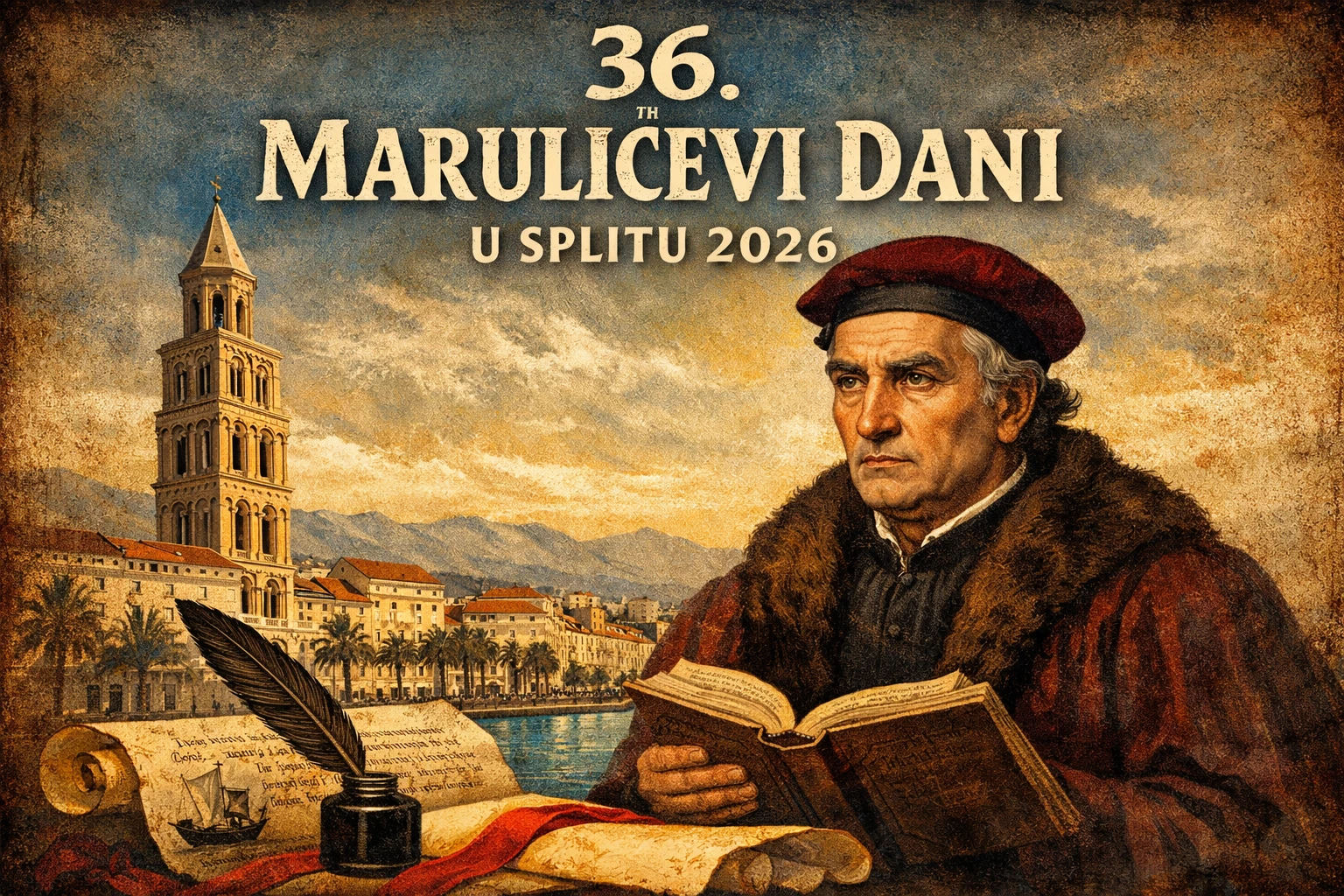
36th Marulić Days in Split: Croatia's Premier Theatre Festival Comes to the Adriatic Coast, April 20–30, 2026
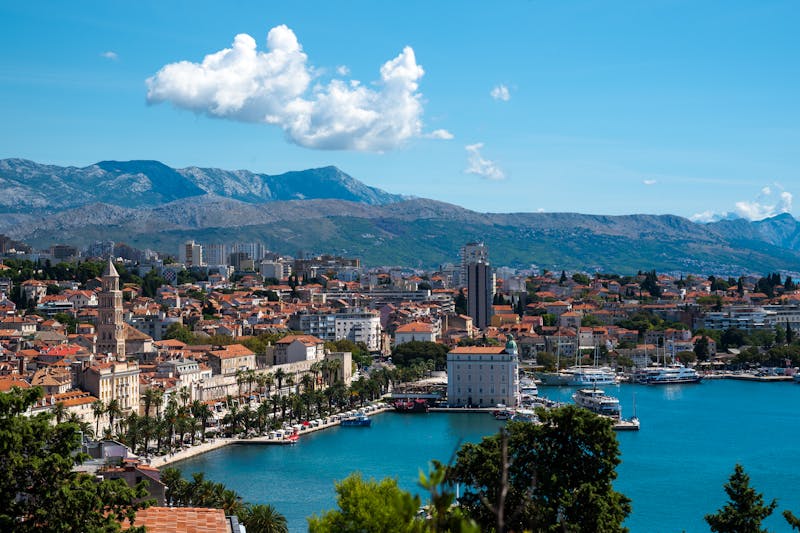
There are theatre festivals that happen in beautiful places. And then there is Marulić Days — a theatre festival that happens in a city whose identity is so inseparable from culture, from literature, and from the deep continuity of Mediterranean civilisation that every performance is coloured by the weight of the place itself. From April 20 to 30, 2026, the 36th Marulić Days festival of Croatian drama fills the stages of HNK Split and the historic spaces of Split's old city with the finest work in contemporary Croatian theatre.
This year's edition arrives with headlines that confirm its growing significance. The 36th Marulić Days has registered record interest from theatre companies submitting applications, and for the first time in the festival's history it makes what organisers describe as a "strong international leap" — bringing theatre companies from across the region to join Croatian companies in competition. Thirteen productions will compete for the festival's awards across eleven days of performances at multiple Split venues.
Tickets and programme: marulicevidani.hnk-split.hr and hnk-split.hr
Marko Marulić and the Literary Legacy That Names a Theatre Festival
The festival's name demands some explanation — and once you understand it, the choice is obvious.
Marko Marulić (1450–1524) was a Split-born humanist writer, philosopher, poet, and theologian whose most celebrated work, the epic poem "Judita" (Judith, 1501), holds the distinction of being the first major literary work written in the Croatian language — the first literary text of lasting significance composed by a Croatian author in the vernacular spoken by the Croatian people rather than in Latin.
In a city whose history stretches from ancient Illyrian settlements through Roman imperial grandeur to medieval independence, Ottoman pressure, Venetian rule, Habsburg administration, and modern Croatian statehood, the decision to anchor Split's major national theatre festival to the name of a writer who first gave lasting literary form to the Croatian language carries enormous symbolic weight.
Marulić wrote in Split, in the shadow of Diocletian's Palace, in a city that was already over a thousand years old when he composed "Judita." The festival that bears his name takes place in the same city, in the same ancient streets, in a national theatre founded as an act of cultural identity — a continuity of place and purpose that is genuinely remarkable.
The Festival's History: 35 Editions Building Croatian Theatre
The Marulić Days festival was established in the early 1990s — a period when Croatian theatre, like Croatian culture broadly, was in the process of defining itself in the context of Croatian independence. Over 35 previous editions, the festival has built its programme on a clear and consistent mission: to identify, gather, and celebrate the finest work being produced in Croatian drama each year, and to provide a competitive framework that encourages quality, seriousness, and ambition across the Croatian theatrical landscape.
The festival is organised under the umbrella of HNK Split (Hrvatsko Narodno Kazalište Split, the Croatian National Theatre Split) — the same institution that has been the anchor of Split's cultural life since 1940 and whose building, constructed in 1893, carries in its neo-Renaissance architecture the same spirit of cultural assertion that motivated the first Croatian national theatres across the Dalmatian coast.
The 36th Edition: Record Interest and a Regional Reach
The announcement of the 36th Marulić Days at a press conference at HNK Split on March 10, 2026, was notable for several reasons.
Record interest — the number of theatre productions submitted for consideration in the 2026 competition exceeded all previous editions — confirms that the festival's reputation within the Croatian theatrical community is at an all-time high. For theatre companies across Croatia, being selected for Marulić Days is a significant recognition.
The international expansion of the 2026 programme represents a qualitative shift in the festival's ambition. The "strong international leap" referenced in official communications signals that Marulić Days is positioning itself as a regional festival — one that brings Croatian theatre into conversation with theatre from the broader former Yugoslav space and beyond. For audiences in Split, this means the 36th edition offers not only the best of contemporary Croatian drama but a comparative context in which that work can be assessed.
The 2026 Competition Programme: Thirteen Productions, Eleven Days
The competitive programme of the 36th Marulić Days consists of 13 productions performed across four venues between April 20 and 30. The full confirmed schedule:
HNK Split (Main Stage) — Trg Gaje Bulata 1
- April 20, 20:00 — Miroslav Krleža: "Gospoda Glembajevi" (The Glembay Family)
- Croatia's greatest 20th-century playwright's masterwork of bourgeois collapse and family dysfunction — a work that has held the Croatian stage since its premiere in 1929 and which retains its power in every generation.
- April 21, 20:00 — Mate Matišić: "Otac, Kći i Duh Sveti" (Father, Daughter and Holy Ghost)
- Matišić is one of the most significant living Croatian playwrights — a writer whose work engages directly with the wounds of recent Croatian history with a formal precision and emotional honesty that places him in the front rank of European playwriting.
- April 25, 20:00 — Espi Tomičić: "Budi uvijek kao zmaj" (Always Be Like a Dragon)
- April 26, 20:00 — Lidija Deduš: "Drvene ptice" (Wooden Birds)
- April 27, 20:00 — Dorotea Šušak and Romano Nikolić: "Kuća je velika, ne može se ona nosit" (The House is Big, You Can't Carry It)
- April 28, 20:00 — Autorski projekt A. Tomić and J. Kovačić after M. Vujčić: "Sigurna kuća" (Safe House)
GKM Split (Gradsko Kazalište Mladih Split — Split City Youth Theatre)
- April 22, 20:00 — Ivor Martinić: "Sin, majka i otac sjede za stolom i dugo šute" (Son, Mother and Father Sit at the Table and Stay Silent for a Long Time)
- Martinić is one of the most internationally recognised Croatian playwrights of his generation — his work has been translated and performed across Europe. This production brings one of the finest contemporary Croatian dramatic voices to the festival competition.
- April 27, 18:00 — Autorski projekt Darija Harjačeka: "Kamov, potres" (Kamov, Earthquake)
- A production engaging with the legacy of Janko Polić Kamov — the early 20th-century Croatian avant-garde writer from Rijeka whose explosive, transgressive work made him one of the most radical literary voices in Croatian modernism.
MKC Split (Mládih Kulturni Centar — Youth Cultural Centre Split)
- April 28, 18:00 — Drago Hedl – Patrik Lazić: "Matija"
Diocletian's Palace Cellars (Dioklecijanovi Podrumi)
- April 22, 18:00 — Kolektiv Igralke – Rajna Racz: "Majke" (Mothers)
- This production — performed in the underground Roman vaults of Diocletian's Palace rather than in a conventional theatre space — represents the festival at its most specifically Split: a performance of contemporary Croatian drama in a 1,700-year-old Roman monument, in a space where the ancient stone amplifies the human voice and the theatrical act takes on the weight of history.
Ceremonial Closing
- April 30, 19:00 — Svečano zatvaranje 36. Marulićevih dana (Ceremonial Closing of the 36th Marulić Days) with "Ero s onoga svijeta" (Ero the Joker) at HNK Split
- The festival closes with a performance of Jakov Gotovac's beloved Croatian opera — the most frequently performed Croatian opera, whose folk-inspired comedy and irresistible melodic energy have made it a defining work of Croatian musical theatre since its premiere in 1935.
The Venues: Split's Cultural Spaces in April
HNK Split — Croatian National Theatre Split
The main venue of the Marulić Days festival, HNK Split at Trg Gaje Bulata 1 was built in 1893 during the period of Austro-Hungarian administration of Dalmatia. The neo-Renaissance building — with its grand entrance loggia, warm stone exterior, and beautifully preserved main auditorium — has been operating as a state institution with drama, opera, and ballet ensembles since 1940. The current 2025/2026 season runs from October 2025 to June 2026.
The HNK Split main auditorium seats approximately 600 people — an intimacy that suits the drama festival format ideally. The theatre sits at the northwestern corner of Diocletian's Palace, steps from the palace walls, the Peristil, and the Riva waterfront.
GKM Split — City Youth Theatre
The Gradsko Kazalište Mladih Split is one of Croatia's most active and most artistically ambitious youth theatre institutions — a company with a long tradition of producing work that takes young audiences seriously and that consistently attracts some of the most inventive directing talent in Croatian theatre.
Diocletian's Palace Cellars
The use of the Roman cellars as a festival venue for the April 22 performance of "Majke" is the programming detail that most clearly illustrates what makes Marulić Days in Split different from any other Croatian theatre festival. To perform contemporary Croatian drama about mothers in a 1,700-year-old Roman vault, in a city that has been continuously inhabited since the 4th century, creates a theatrical context of extraordinary depth and resonance.
Practical Information for Festival Visitors
Dates: April 20–30, 2026
Main venue: HNK Split, Trg Gaje Bulata 1, 21000 Split, Croatia
Additional venues: GKM Split, MKC Split, Diocletian's Palace Cellars
Programme and tickets: marulicevidani.hnk-split.hr / hnk-split.hr
HNK Split box office:
- Monday to Friday: 10:00 – 13:00 and 17:30 – 20:00
- Saturday: 10:00 – 13:00
- One hour before performances
Getting to HNK Split:
- On foot from the Riva: 5 minutes northwest along Marmontova street
- On foot from the Golden Gate (Zlatna Vrata): 2 minutes
- By taxi/Uber: "HNK Split" or "Trg Gaje Bulata" is immediately known; drop-off at main entrance
- Split Airport (SPU): 25 km west; Airport Bus (Pleso Prijevoz) to Riva (25 min, ~€6); Uber/taxi to HNK approximately €30
Accommodation:
Late April is shoulder season in Split — hotel prices significantly lower than the summer peak, with all the advantages of mild spring weather (typically 18–22°C, long evenings, light crowds). The Bačvice neighbourhood, Veli Varoš (the historic quarter immediately west of Diocletian's Palace), and the Radunica district all offer accommodation within walking distance of all festival venues.
Festival language:
The competition programme is performed in Croatian. For visitors without Croatian, the theatrical experience remains significant — theatrical storytelling communicates across language barriers, and the productions at Marulić Days are by definition work of sufficient quality that non-Croatian speakers consistently find the experience rewarding.
Split in Late April: The Season When the City Breathes
Late April is one of the finest times to visit Split. The city is warm — 18–22°C during the day, mild evenings perfect for outdoor dining and late walks along the Riva — and significantly less crowded than the peak summer months that begin in June.
The Old City and Diocletian's Palace (UNESCO World Heritage since 1979) are at their most accessible and most beautiful in this season: the Roman streets navigable without the summer throngs, the Peristil peaceful enough to sit in, the Cathedral of Saint Domnius open without queues. A day in Split in late April combines the pleasure of the festival evenings with the full richness of one of the Mediterranean's most extraordinary historical environments.
The Riva waterfront — metres from the HNK Split entrance — is perfect in late April: the terrace restaurants and cafes open, the harbour full of the early season's boats, and the Adriatic Sea already warm enough for those Dalmatians who cannot wait for June.
Croatian Drama at the Heart of an Ancient City
Thirty-six editions is enough time to know what a festival is made of. Marulić Days has built, over three and a half decades, a consistent record of identifying the best of Croatian drama, presenting it in one of the most culturally rich settings in Europe, and doing so with the seriousness and ambition that the work deserves.
The 36th edition — with its record applications, its international expansion, its 13 competition productions across multiple venues including Roman cellars — represents the festival at its most ambitious.
April 20 to 30, 2026. HNK Split and Split's historic stages. Programme and tickets at marulicevidani.hnk-split.hr.
Verified Information at a Glance
| Detail | Information |
|---|---|
| Event | 36th Marulić Days — Festival of Croatian Drama (36. Marulićevi Dani) |
| Category | Theatre Festival / Croatian Drama / National Cultural Festival / Competitive Programme |
| Dates | April 20–30, 2026 |
| Competition productions | 13 productions in competition for festival awards |
| Primary venue | HNK Split — Croatian National Theatre Split, Trg Gaje Bulata 1, 21000 Split |
| Additional venues | GKM Split (City Youth Theatre), MKC Split (Youth Cultural Centre), Diocletian's Palace Cellars |
| Closing event | April 30 at 19:00 — Ceremonial Closing with "Ero s onoga svijeta" (Ero the Joker), HNK Split |
| Key confirmed productions | — |
| April 20, 20 | 00: Miroslav Krleža "Gospoda Glembajevi" — HNK Split |
| April 21, 20 | 00: Mate Matišić "Otac, Kći i Duh Sveti" — HNK Split |
| April 22, 20 | 00: Ivor Martinić "Sin, majka i otac sjede za stolom..." — GKM Split |
| April 22, 18 | 00: "Majke" — Diocletian's Palace Cellars |
| April 25–28 | multiple HNK Split and GKM/MKC productions |
| April 30, 19 | 00: Ceremonial Closing — HNK Split |
| 2026 highlights | Record number of submissions; first significant international/regional participation |
| Organiser | HNK Split (Hrvatsko Narodno Kazalište Split) |
| Programme and tickets | marulicevidani.hnk-split.hr / hnk-split.hr |
| Named after | Marko Marulić (1450–1524), Split humanist, author of "Judita" (1501) — first major work of Croatian literary language |
| Festival founded | Early 1990s; 35 previous editions |
| HNK Split building | Constructed 1893; state institution since 1940; opera, drama, ballet ensembles |
| Split UNESCO status | Old City / Diocletian's Palace — World Heritage Site since 1979 |
Event Has Passed - See You Next Time!
Event Details
Date
to
Location
Hrvatsko Narodno Kazalište (HNK Split), Trg Gaje Bulata 1; Meštrović Gallery; Diocletian's Palace Peristyle & multiple venues, Split
Split, Croatia
Price
Not Available