
Event Has Passed - See You Next Time!
Event Details
Date
to
Location
Vienna wine region (Wienerwald / Kahlenberg), Vienna, Austria
Vienna, Austria
Price
Free Entry
About This Event
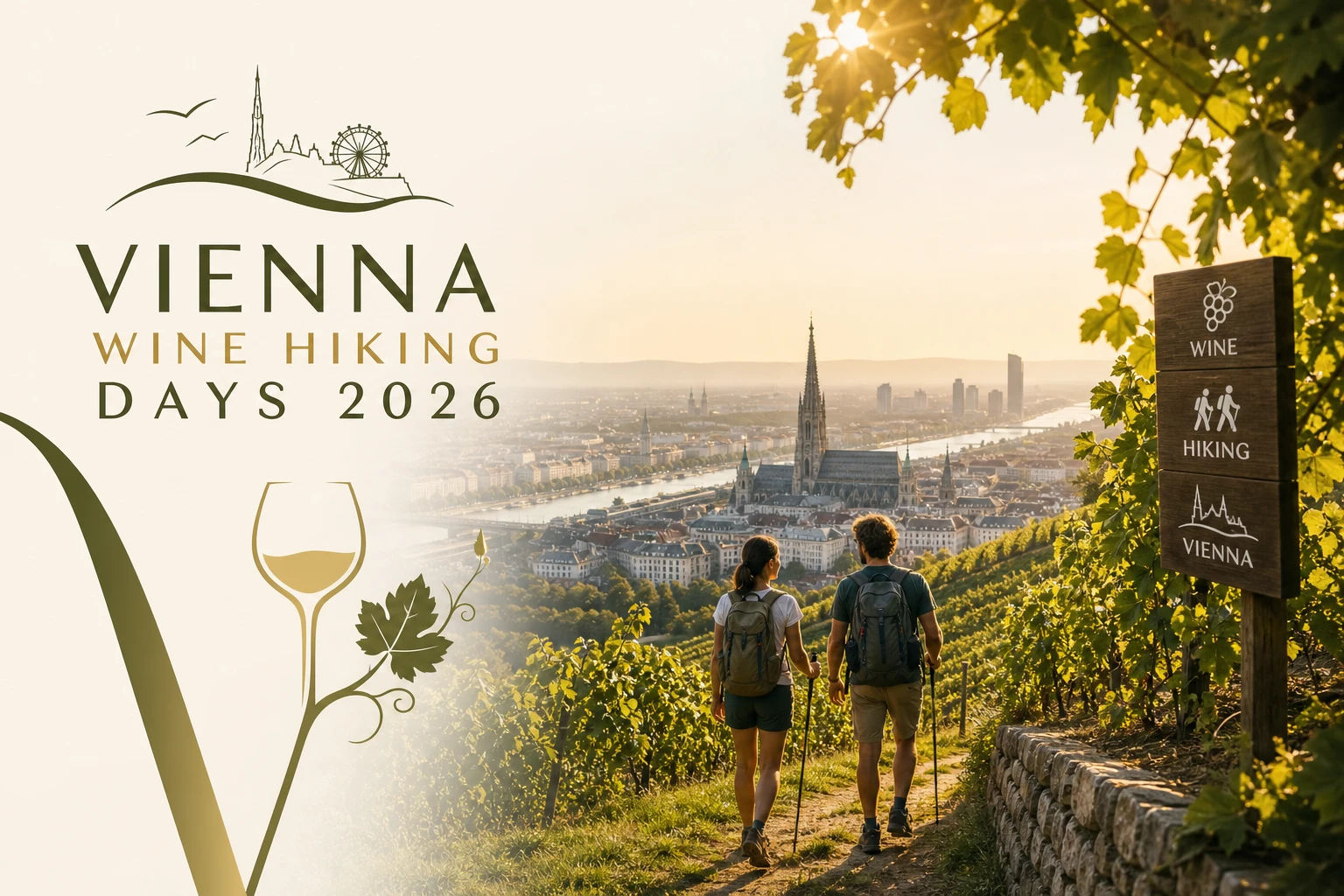
The crisp autumn breeze in eastern Austria brings a golden transformation to one of Europe's most captivating capital cities. As the urban summer heat fades, Vienna trades its bustling ice cream parlors and open-air canal bars for a deeply rooted seasonal tradition. Vienna Wine Hiking Days 2026 (locally celebrated as the Wiener Weinwandertag) represents a joyful meeting point of active outdoor recreation and culinary indulgence. Taking place over the weekend of Saturday, September 26, 2026, and Sunday, September 27, 2026, this annual event offers an unparalleled opportunity to explore Vienna's rolling hillsides, panoramic vistas, and centuries-old viticulture.
What makes Vienna truly unique among major global metropolises is its remarkable geographical luck. It is the only capital city in the world with a significant, commercially viable wine-growing industry thriving entirely within its official city limits. Spanning approximately 700 hectares of urban terrain, the local vineyards are tended to by around 140 active vintners, producing over 2.4 million liters of elegant, cool-climate wines annually. The annual wine hiking days act as a giant open house, where the security gates of these private estates are thrown wide open, allowing hikers to wander directly through the vines, sample fresh pressings, and enjoy spectacular vistas of the Danube River.
The Rich Heritage of Viennese Viticulture and Heuriger Culture
To appreciate the Vienna Wine Hiking Days 2026, it is essential to understand the long history of wine production in the city. Grapes have been cultivated on the hillsides surrounding the Danube since the Roman era, when legionaries stationed at the ancient military camp of Vindobona planted vines to secure their daily rations. This agricultural dedication persisted through the Middle Ages and into the modern era, eventually leading to a historic imperial decree in 1784. Emperor Joseph II issued a tax-exemption law that granted local vintners the legal right to sell their own homegrown wine directly to the public alongside simple, cold culinary specialties.
This decree laid the foundation for the beloved Heuriger (traditional Viennese wine tavern) culture, which is so central to Austrian identity that UNESCO officially inscribed it on its list of Intangible Cultural Heritage in 2019. Today, about 180 of these cozy, seasonal establishments dot the outer districts of Vienna. During the wine hiking weekend, these taverns and their pop-up vineyard stands become lively social hubs, offering weary walkers a place to rest their legs under vine-covered wooden arbors while listening to traditional folk music.
The Rise of Wiener Gemischter Satz
While approximately 80 percent of the wine produced within Vienna is white, one specific local specialty stands head and shoulders above the rest. Wiener Gemischter Satz is an iconic field blend that serves as a liquid symbol of the city's unique terroir.
- Unlike standard single-varietal wines, Gemischter Satz requires a minimum of three distinct white grape varieties to be planted, grown, harvested, and pressed together in the exact same vineyard plot.
- The rules governing this specialty are exceptionally strict: the largest grape variety used cannot make up more than 50 percent of the final blend, while the third largest variety must represent at least 10 percent.
- Typical grape combinations include Grüner Veltliner, Riesling, Pinot Blanc, Chardonnay, and Welschriesling.
- Since 2013, this beloved field blend has held protected DAC (Districtus Austriae Controllatus) status, cementing its reputation as a world-class white wine celebrated by international sommeliers for its vibrant acidity, complex herbal aromatics, and deep mineral undertones.
Exploring the Four Legendary Hiking Routes in 2026
The Vienna Wine Hiking Days 2026 are structured around four beautifully designed, signposted hiking trails that cut through the most scenic viticultural districts of the city. Each route offers a completely different atmospheric experience, ranging from classic postcard-perfect tourist districts to quiet, local-approved countryside loops.
Route 1: Neustift am Walde to Nussdorf (19th District - Döbling)
Frequently cited by both locals and international travelers as the most spectacular of the four trails, this sweeping 10.8-kilometer path runs along the steep, sun-drenched northern slopes of the city.
- The trail links the historic wine-growing villages of Neustift am Walde, Sievering, and Nussdorf, cutting through the legendary vineyards of the Kahlenberg and Nussberg hills.
- Along the way, hikers are treated to breathtaking, unobstructed panoramic views of the city skyline, the winding Danube River, and the distant Carpathian foothills.
- Notable stops include the prestigious Wien Cobenzl estate (operated directly by the City of Vienna) and the famous Mayer am Nussberg pop-up vineyard bar, where you can lounge on deck chairs directly next to the grapevines while sipping a crisp glass of white wine.
- The route features several steep inclines, particularly the ascent up the Cobenzl hill, meaning a moderate level of physical fitness and comfortable, supportive footwear are highly recommended.
Route 2: Strebersdorf to Stammersdorf (21st District - Floridsdorf)
For those looking to escape the larger tourist crowds and experience an authentic, deeply traditional slice of Viennese life, this 9.6-kilometer route on the north bank of the Danube is the perfect choice.
- The trail winds along the gentle slopes of the Bisamberg, a region that benefits from a drier, sunnier, and windier microclimate compared to the hills south of the river.
- This route leads hikers through the historic Stammersdorfer Kellergasse, a picturesque street lined with whitewashed, subterranean wine cellars and quiet Heurigen that have remained unchanged for generations.
- The terrain is significantly flatter and gentler than the 19th district route, making it an exceptional, low-stress option for families and casual walkers.
- A fantastic highlight for children is a visit to the municipal farm at the Magdalenenhof, where kids can interact with farm animals while parents enjoy a cold beverage.
Route 3: Ottakring (16th District)
Spanning just 2.4 to 4.5 kilometers depending on the specific loops you choose, the Ottakring trail represents the shortest and most accessible of the official options.
- The path centers around the western residential edge of Vienna, leading walkers via the quiet forest trail of the Paulinensteig up to the grand, yellow-walled Schloss Wilhelminenberg (Wilhelminenberg Palace).
- From the palace's expansive manicured lawns, hikers can enjoy a sweeping eastern perspective looking directly down into the urban heart of the city.
- Despite its shorter length, the trail features several excellent boutique wine stands Operated by local families, offering a peaceful, intimate environment to enjoy a relaxed afternoon stroll.
Route 4: Mauer (23rd District - Liesing)
Situated in the quiet southwestern corner of the city, this 4.6-kilometer trail is a hidden gem that beautifully combines modern architecture, natural forest paths, and traditional vineyards.
- The trail leads walkers through the historic neighborhood of Mauer, a tranquil area bordering the vast Vienna Woods (Wienerwald).
- A major architectural highlight of this route is the striking Wotruba Church (Church of the Most Holy Trinity), a fascinating Brutalist concrete monument composed of 152 asymmetrical concrete blocks designed by the celebrated Austrian sculptor Fritz Wotruba.
- After exploring the church, the path crosses the sprawling, green meadows of the Himmelswiese (Heaven's Meadow), offering beautiful views of the city before descending into the historic core of Mauer to visit local, family-owned Heurigen.
Unique Cultural Traditions to Experience Along the Way
Part of the magic of the Vienna Wine Hiking Days 2026 is immersing yourself in the specific culinary and social rituals that define the local harvesting season. To blend in seamlessly with the resident crowd, keep a few unique cultural traditions in mind.
The Curious Etiquette of Sturm
The late-September timing of the festival coincides perfectly with the production of Sturm, a cloudy, sweet, and highly effervescent drink that is unique to the Austrian autumn.
- Sturm is grape juice that has just begun the fermentation process, sitting in a highly active transition state between fresh grape must and finished young wine.
- It is highly delicious, refreshing, and deceptive, as its sweet, fruity taste masks a rapidly increasing alcohol content.
- When enjoying Sturm, standard wine-drinking etiquette is playfully thrown out the window: you must hold the glass with your left hand, leaving your right hand free for the proper wine that will be served later.
- Additionally, when raising a glass of Sturm with friends, you do not say "Prost!" but rather "Mahlzeit!" (which translates roughly to "enjoy your meal").
- Most importantly, you must absolutely never clink your glasses of Sturm together, as local superstition warns that doing so will bring bad luck to the upcoming wine harvest.
Feasting on a Brettljause
To fuel your journey across the hilly vineyard paths, stopping for a traditional meal is a necessity. While many pop-up stands serve warm roasted pork, local sausages, and fresh potato salad, the ultimate culinary highlight of any Heuriger visit is ordering a Brettljause.
This hearty, cold platter is served on a thick wooden board and comes piled high with local delicacies, including cured ham, smoked bacon (Speck), regional cheeses, hard-boiled eggs, pickled cucumbers, and spicy freshly grated horseradish. It is traditionally accompanied by a generous basket of dark, crusty sourdough rye bread, providing the perfect savory balance to a flight of crisp, aromatic white wines.
Navigating the Glass Deposit System
To minimize waste and protect the delicate natural environment of the vineyards, almost all pop-up wine stands along the hiking routes operate under a strict Pfandl (glass deposit) system.
- When you order your first drink, you will be charged a small deposit fee (typically ranging from €2 to €3) in addition to the price of the wine itself.
- You will receive your drink in a high-quality, real glass featuring the logo of the local winery.
- You are free to carry this glass with you as you walk along the vineyard trails, refilling it at the various stands run by the same winery or cooperative.
- Once you are finished with your walk, simply return the glass to any participating stand to receive your deposit cash back, or keep the glass as a unique, authentic souvenir of your Viennese autumn adventure.
Practical Logistics and Transit Tips for Your Hike
Planning your adventure during the Vienna Wine Hiking Days 2026 is incredibly simple, thanks to the world-class public transportation network operated by Wiener Linien. All four starting points are effortlessly connected to the city's central subway and tram lines.
- Reaching Route 1 (Döbling): Take the U4 subway line to the Heiligenstadt terminus, then transfer to the legendary Tram Line 38, which will take you directly to the historic village of Grinzing. Alternatively, you can board Bus Line 35A to Neustift am Walde to start the hike from the opposite end.
- Reaching Route 2 (Floridsdorf): Board Tram Line 31 from the central transit hubs and take it to the Stammersdorf terminus on the north bank of the Danube.
- Reaching Route 3 (Ottakring): Take the U3 subway line to its western terminus at Ottakring, then hop on Bus Line 46A or 46B to ride directly up to Schloss Wilhelminenberg.
- Reaching Route 4 (Mauer): Take Tram Line 60 from the Westbahnhof transit hub and exit at the Franz-Asenbauer-Gasse station in the 23rd district.
- What to Pack: The autumn weather in late September can be highly unpredictable. It is wise to wear comfortable, sturdy walking shoes with good grip, dress in layers, and carry a lightweight, waterproof jacket. While many larger wineries accept card payments, keeping a small amount of cash on hand is highly recommended for buying small glasses of wine and quick snacks from the smaller, independent vineyard stalls along the way.
Gather your closest friends, pack a light backpack, and make sure to clear your schedule for this spectacular late-September weekend. There is no finer way to welcome the arrival of autumn than by raised glasses, shared laughter, and golden sunbeams reflecting off the historic slopes of Vienna.
Verified Information at glance
| Detail | Information |
|---|---|
| Event Category | Autumn Viticultural Celebration, Outdoor Culinary Festival, and Public Vineyard Hiking Weekend |
| Official Event Name | Wiener Weinwandertag 2026 (Vienna Wine Hiking Days 2026) |
| Confirmed Event Dates | Saturday, September 26, 2026, and Sunday, September 27, 2026 |
| Daily Operating Hours | Active trail stations, wine pop-up stands, and culinary booths are open to the public daily from 10:00 AM to 06:00 PM (18:00 CEST) |
| Admission Pricing | Access to all four official hiking trails and vineyard estates is completely free of charge. Visitors only pay for the individual food, wine, and refreshments they purchase along the routes. |
| Standard Glass Deposit (Pfandl) | A returnable deposit of approximately €2.00 to €3.00 is charged on all real wine glasses at individual vineyard stands. |
| Hiking Route Distances | Route 1 (Neustift to Nussdorf) is 10.8 km; Route 2 (Strebersdorf to Stammersdorf) is 9.6 km; Route 3 (Ottakring) is 2.4 to 4.5 km; Route 4 (Mauer) is 4.6 km. |
| Primary Public Transport Links | Metro lines U3 and U4; Tram lines 31, 38, and 60; Bus lines 35A, 46A, and 46B. |
| Official Digital Information Platform | Full route maps, list of participating vintners, and public safety updates are managed via the city portal at www.wien.gv.at/umwelt/wald/freizeit/wandern/weinwandertag.html |
Frequently Asked Questions
What should I do if I am not a seasoned hiker but still want to attend?
The Vienna Wine Hiking Days are designed to be highly accessible and leisurely. You do not need to walk the entire length of any route to enjoy the festival. You can easily take public transit directly to key spots (such as Grinzing on Route 1 or Stammersdorf on Route 2) and enjoy a short, flat stroll to the nearest vineyard stands without engaging in any strenuous climbing.
Is the event suitable for families traveling with young children?
The festival is exceptionally family-friendly. Route 2 (Strebersdorf to Stammersdorf) is particularly recommended for families due to its gentler, flatter pathways and the inclusion of the Magdalenenhof children's farm, where kids can play with animals. Many vineyard stands also offer fresh, non-alcoholic grape juice (known as Traubensaft) so children can participate in the toasts.
Can I bring my dog with me on the wine hiking trails?
Dogs are welcome to join their owners along all four public hiking routes. However, because the trails can get exceptionally busy with large crowds on sunny afternoons, you must keep your dog on a leash at all times. It is also highly recommended to bring a muzzle, as dogs are legally required to wear them on all Viennese public transit vehicles.
What happens if it rains on the scheduled weekend dates?
The event takes place rain or shine. While the outdoor pop-up vineyard stands and open-air seating areas may have limited operations during heavy downpours, the traditional, permanent Heuriger taverns located at the starts and ends of the routes remain open, offering cozy, warm indoor spaces to enjoy local food and wine.
Do I need to book tickets or register in advance to walk the trails?
No registration, booking, or tickets are required to attend the Wiener Weinwandertag. The trails are completely open to the public, allowing you to show up at any time during the operating hours, choose your starting point, and move along the paths entirely at your own pace.
What are the main wine varieties I should look out for during my visit?
The absolute must-try wine is the Wiener Gemischter Satz DAC, the protected local field blend. Other prominent local white varieties include Grüner Veltliner, Riesling, Weissburgunder (Pinot Blanc), and Chardonnay. If you prefer red wine, keep an eye out for Zweigelt, Pinot Noir, and St. Laurent, which are beautifully cultivated on the warmer southern slopes of the city.
Event Has Passed - See You Next Time!
Event Details
Date
to
Location
Vienna wine region (Wienerwald / Kahlenberg), Vienna, Austria
Vienna, Austria
Price
Free Entry