Event Has Passed - See You Next Time!
Event Details
Date
to
Location
Multiple venues: Heldenplatz (opening concert, free), Burgtheater, Volkstheater, MuseumsQuartier, Odeon, Badeschiff (Danube Canal) – 34 venues citywide, Vienna
Vienna, Austria
Price
from €35
About This Event
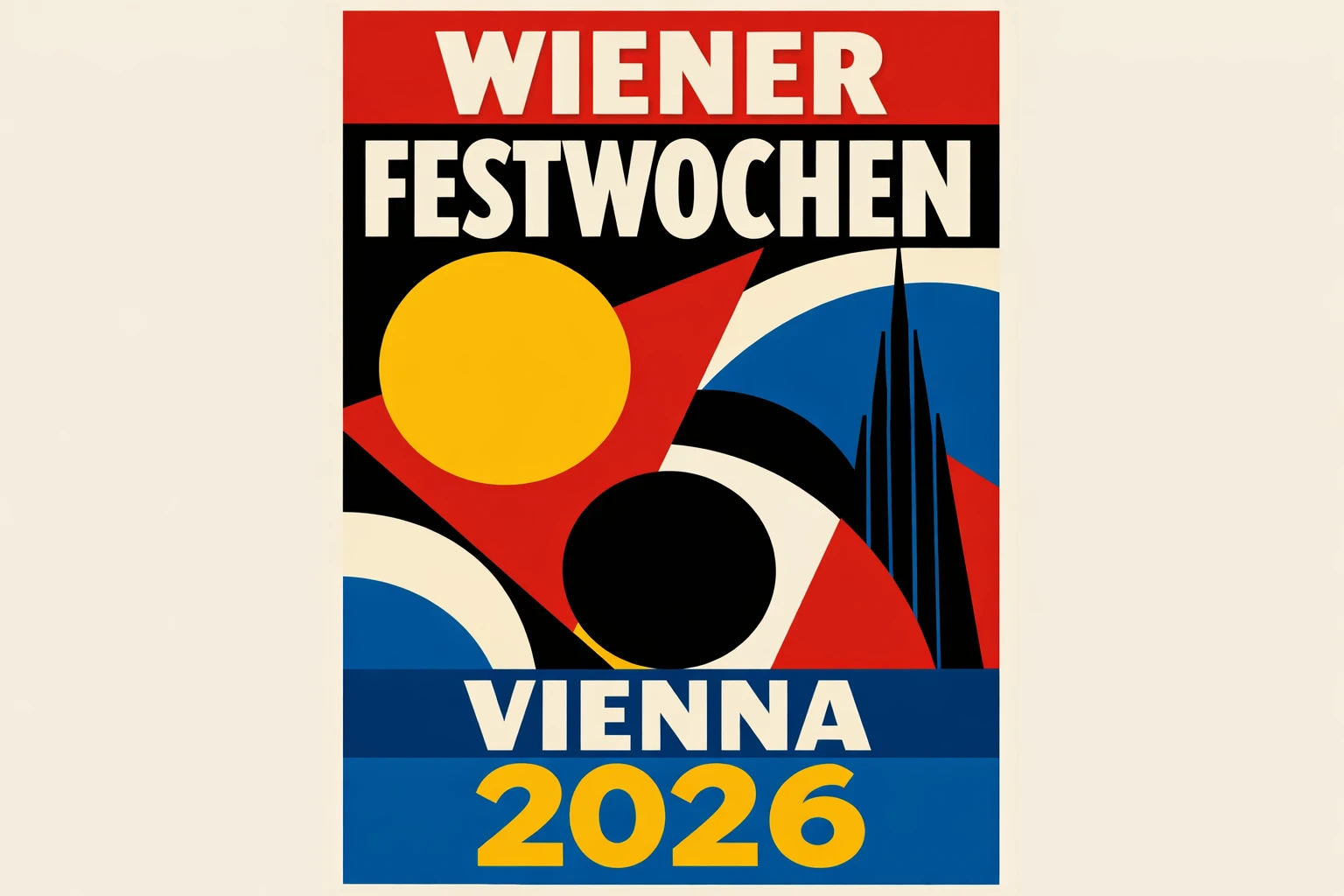
Wiener Festwochen 2026: The 75th Anniversary Edition Transforms Vienna Into the Republic of Gods, May 15 – June 21
Vienna has always understood that culture is not decoration. It is argument. It is the city's way of asking itself what it believes about beauty, power, history, and what it means to live well. The Wiener Festwochen — the Vienna Festival — has been staging that argument every May and June since 1951, and its 75th anniversary edition is the most ambitious iteration in a quarter century of ambitious iterations.
From Friday, May 15 to Sunday, June 21, 2026 — 38 days across 34 venues in one of the world's great cultural capitals — the festival declares itself the "Republic of Gods" under the direction of Belgian theatre maker Milo Rau.
The opening ceremony takes place on Friday, May 22 at 21:20 on the Heldenplatz. It is free. Patti Smith performs with the Schmusechor and the new festival band Gods Republic. Gospel meets punk. Classical meets Schlager. And Vienna, as it always does, receives the contradiction with absolute seriousness.
75 Years of Vienna's Most Radical Arts Festival
The Wiener Festwochen was founded in 1951 — six years after the end of the Second World War, four years after Vienna was still under four-power Allied occupation, in a city that was simultaneously rebuilding its physical infrastructure and attempting to reassert its cultural identity after the devastating interruptions of Nazism and war.
The festival's founding logic was explicit: Vienna would reclaim its position as a centre of European cultural life not by retreating into the safe nostalgia of its imperial past but by engaging with the most challenging and significant contemporary work being made anywhere in the world.
Over 75 years, that logic has produced a festival with a specific and consistent character:
- Politically engaged — productions that address power, violence, inequality, and the pressing concerns of the contemporary world rather than providing comfortable entertainment
- Internationally oriented — bringing the most significant theatre, dance, and music makers from every part of the world to Vienna, rather than simply celebrating local or national culture
- Formally radical — consistently supporting work that challenges theatrical convention, including immersive formats, site-specific productions, and works that make the audience part of the event rather than observers of it
- Free at the opening — the tradition of a free outdoor opening ceremony at one of Vienna's major public spaces is one of the festival's most beloved and most symbolically important features
The festival typically draws approximately 200,000 visitors across its annual run — one of the largest festival audiences in Central Europe for a programme of this cultural specificity.
The 75th Anniversary Theme: Republic of Gods
Milo Rau — the Belgian director who has led the Wiener Festwochen since 2022 and whose work in theatre and film has been described as the most consistently important political theatre practice in the world today — has titled the 75th anniversary edition "Republic of Gods."
The concept is deliberately provocative: "75 years of beauty and scandal, 75 years of sacralised art." The festival declares itself a republic — a space outside normal social and political hierarchy — and names its citizens as gods: the artists, the audience, and the radical tradition of artistic freedom that the Festwochen has embodied since 1951.
In Rau's framing, the Festwochen is not a passive cultural institution but an active political one — a place where "old gods meet new gods" and where the mixing of traditions (gospel and punk, classical and Schlager, sacred and profane) is not a marketing strategy but a philosophical position about the nature of cultural authority.
The festival presents this argument across 35 theatre and music productions, including 13 world premieres and 8 in-house productions — a programme scale that confirms the Festwochen's position as one of the most productive and resource-intensive cultural festivals in Europe.
The Opening Ceremony: Patti Smith at the Heldenplatz, May 22
The Wiener Festwochen opening ceremony has always been the festival's most public and most democratic act — a free outdoor event at one of Vienna's principal public spaces that announces the festival to the entire city regardless of who can afford a ticket.
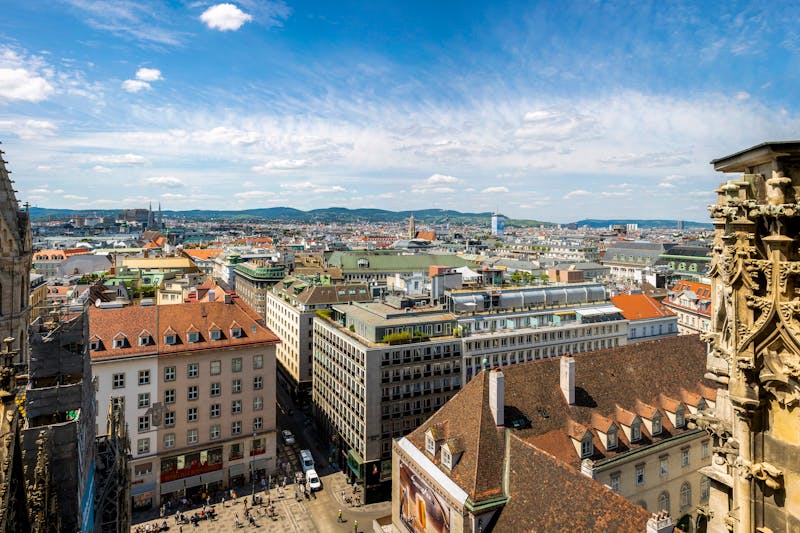
For the 75th anniversary, that tradition reaches its most extraordinary realisation: Friday, May 22, 2026 at 21:20, on the Heldenplatz — the vast historic square in front of the Hofburg Imperial Palace, one of the most architecturally and politically charged public spaces in Austria.
Patti Smith — the American singer, poet, and artist who has been one of the defining figures in rock and counterculture since the 1975 release of "Horses," whose combination of punk energy and literary seriousness has made her a cultural touchstone for multiple generations, and whom the festival's own announcement calls "the godmother of punk" — performs with:
The Schmusechor — a Vienna-based choir whose combination of classical choral tradition and contemporary sensibility reflects the festival's eclectic cultural politics
Gods Republic — the newly formed Vienna Festival Band, created specifically for this anniversary edition, whose name is both the band's identity and the festival's central concept
The programme for the opening: gospel meets punk; classical meets Schlager; new gods meet old gods. In the festival's own words, it is "the good old Viennese tradition of unabashed syncretism."
The Heldenplatz location adds a specific layer of historical meaning. This is the square where, in March 1938, a crowd gathered to witness the Anschluss — the annexation of Austria by Nazi Germany. It has been a site of political commemoration, artistic intervention, and civic life ever since. Opening the 75th anniversary Festwochen here, with Patti Smith, at 21:20 on a May evening, is an act the festival's director has clearly considered carefully.
Admission: Free.
The Christoph Schlingensief Exhibition at the MAK
One of the 75th anniversary edition's most significant companion events is a dedicated exhibition at the Museum of Applied Arts (MAK) honouring Christoph Schlingensief — the German artist, director, and provocateur who was one of the most important and beloved figures in the Wiener Festwochen's recent history.
Schlingensief — who died in 2010 at the age of 49 — is described in the festival's 75th anniversary announcement as an "icon of the Vienna Festival." His relationship with the Festwochen produced some of its most discussed and most politically significant moments: his "Please Love Austria" installation of asylum seekers in a container outside the Vienna Opera House (2000), which won the Europa Theatrepreis and provoked intense national controversy, remains one of the most discussed works in the history of the Austrian public art debate.
The MAK exhibition opening — "HYPE AND HIGH CULTURE" — is a joint project of the Vienna Festival and the MAK, in cooperation with the Wienbibliothek im Rathaus.
The Programme Structure: 35 Productions Across 34 Venues
The 2026 programme is built around the festival's standard multidisciplinary structure — theatre, opera, dance, music, and visual art, presented across a network of 34 venues throughout Vienna:
Major production venues:
Burgtheater (Dr.-Karl-Lueger-Ring 2) — the imperial court theatre on the Ringstraße, one of the most significant German-language theatres in the world; the festival's use of the Burgtheater for contemporary and avant-garde work creates the specific Festwochen tension between institutional prestige and radical content
Volkstheater (Museumsplatz 1, 7th district) — Vienna's people's theatre, founded in 1889 as a democratic alternative to the court theatres; consistently one of the most politically engaged theatre venues in the city
MuseumsQuartier — Hall E+G — the large performance space in the MuseumsQuartier complex that serves as the festival's primary venue for contemporary dance and experimental theatre; the industrial scale of Hall E+G makes it suitable for the large-format international productions that the Festwochen brings to Vienna each year
Heldenplatz — the ceremonial square in front of the Hofburg; opening ceremony venue on May 22
Rathausplatz — the square in front of the Viennese City Hall (Rathaus); traditional major festival venue, particularly for large-scale outdoor events
The programme's confirmed highlights:
13 world premieres — a number that confirms the Festwochen's ongoing role as a co-producer of internationally significant new work rather than simply a presenter of existing productions from elsewhere
8 in-house productions — works that the Festwochen has produced itself, rather than invited; the highest expression of the festival's artistic autonomy
Artists confirmed or associated with the 2026 programme include:
- Patti Smith — opening ceremony performer
- Susanne Kennedy — German director known for uncanny, mediated theatrical worlds
- Lina Majdalanie — Lebanese actress and director, frequent collaborator of Rabih Mroué
- Brigitta Muntendorf — Austrian composer working at the intersection of music and theatre
- Roman Grygoriv with Marichka Shtyrbulova (Opera Aperta) — Ukrainian neo-folk/opera performance
- Christoph Schlingensief (retrospective at MAK)
The festival's curation under Milo Rau has been specifically described as bringing together "iconic figures like Elfriede Jelinek and Peter Brook with radical performers" and "music from Pussy Riot alongside Mozart" — a programming philosophy that refuses the separation of cultural prestige from political engagement.
75 Years of the Vienna Festival Walk: From May 13
From May 13, 2026 — two days before the festival opens — the "75 Years of the Vienna Festival Walk" becomes available as a free downloadable guide in the ivie app, Vienna's official city guide platform.
The walk is a self-guided tour through the city that traces the festival's 75-year history in relation to Vienna's physical and cultural geography — the venues, the neighbourhood changes, the political moments that the Festwochen has engaged with, and the specific places in Vienna where the festival's most significant events have taken place.
Download: ivie.wien.info (available from May 13, 2026, free)
Practical Information for May 15 – June 21, 2026
Festival dates: Friday, May 15 – Sunday, June 21, 2026
Duration: 38 days
Opening ceremony: Friday, May 22, 2026 — 21:20 — Heldenplatz, Vienna — Free admission
Venue count: 34 venues across Vienna
Ticket price: ~€35 average for programme events; opening ceremony free
All programme information and tickets: festwochen.at
Venues (key):
- Heldenplatz (opening) — Heldenplatz, 1010 Vienna
- Rathausplatz — Rathausplatz, 1010 Vienna
- Burgtheater — Dr.-Karl-Lueger-Ring 2, 1010 Vienna
- Volkstheater — Museumsplatz 1, 1070 Vienna
- MuseumsQuartier — Museumsplatz 1, 1070 Vienna
- MAK (Museum of Applied Arts) — Stubenring 5, 1010 Vienna
Getting to Vienna's festival venues:
All major Festwochen venues are in the 1st and 7th districts — the Innere Stadt (historic centre) and the MuseumsQuartier area — and are accessible by the U-Bahn (Vienna Underground):
- U2 to Rathaus — for Rathausplatz, Burgtheater, Volkstheater events
- U2/U3 to Volkstheater — for MuseumsQuartier
- U3 to Stubentor — for MAK
- Tram 1 and 2 (Ringstraße trams) — connect all Ringstraße venues including Burgtheater and the Hofburg/Heldenplatz area
From Vienna International Airport (VIE):
- City Airport Train (CAT) to Wien Mitte/Landstraße: 16 minutes; from Wien Mitte, U3 to Stubentor (MAK) in 2 minutes, or U4 to Karlsplatz in 5 minutes
- S7 S-Bahn to Wien Mitte or Wien Hauptbahnhof: 25–30 minutes
Accommodation timing: The festival runs for 38 days — visitors planning extended stays during the Wiener Festwochen period should note that May 22–31 (opening week) and the final weekend (June 19–21) are the periods of highest demand; early accommodation booking is strongly recommended, particularly for hotel proximity to the Heldenplatz/Ringstraße venues.
A City in Full Celebration of Its Own Radical Tradition
38 days. 34 venues. 35 productions. 13 world premieres. 200,000 visitors. Patti Smith on the Heldenplatz. Free.
The Wiener Festwochen has been making Vienna uncomfortable and extraordinary in equal measure since 1951. The 75th anniversary edition, themed as the Republic of Gods and opened by one of the most significant artists of the past 50 years, on one of the most politically charged public spaces in Austria, in one of the most culturally confident cities in the world — does not want to be comfortable.
It wants to be unforgettable. Full programme and tickets at festwochen.at.
Verified Information at a Glance
| Detail | Information |
|---|---|
| Event | Wiener Festwochen 2026 (Vienna Festival) — 75th Anniversary Edition |
| Category | International Multidisciplinary Arts Festival — Theatre, Opera, Dance, Music, Visual Art |
| Theme | "Republic of Gods" / "Free Republic of Vienna" |
| Festival dates | Friday, May 15 – Sunday, June 21, 2026 |
| Duration | 38 days |
| Opening ceremony | Friday, May 22, 2026 — 21:20 — Heldenplatz — Free admission |
| Opening performers | Patti Smith + Schmusechor + Vienna Festival Band "Gods Republic" |
| Programme scale | 35 theatre and music productions; 13 world premieres; 8 in-house productions; exhibitions |
| Venue count | 34 venues across Vienna |
| Festival director | Milo Rau |
| Average ticket price | ~€35 (opening ceremony free) |
| Typical annual attendance | ~200,000 visitors |
| Key venues | Heldenplatz; Rathausplatz; Burgtheater (Dr.-Karl-Lueger-Ring 2); Volkstheater (Museumsplatz 1); MuseumsQuartier Hall E+G; MAK (Stubenring 5) |
| MAK Exhibition | "HYPE AND HIGH CULTURE" — dedicated to Christoph Schlingensief; joint project of Vienna Festival and MAK in cooperation with Wienbibliothek im Rathaus |
| City walk | "75 Years of the Vienna Festival Walk" — free in ivie app from May 13, 2026 |
| All tickets and programme | festwochen.at |
| Transport | U2 to Rathaus (Rathausplatz/Burgtheater); U2/U3 to Volkstheater (MuseumsQuartier); Tram 1 and 2 (Ringstraße circuit) |
| Airport | Vienna International Airport (VIE) — CAT to Wien Mitte 16 min; U connections to all venues |
| Festival founded | 1951 |
Event Has Passed - See You Next Time!
Event Details
Date
to
Location
Multiple venues: Heldenplatz (opening concert, free), Burgtheater, Volkstheater, MuseumsQuartier, Odeon, Badeschiff (Danube Canal) – 34 venues citywide, Vienna
Vienna, Austria
Price
from €35