

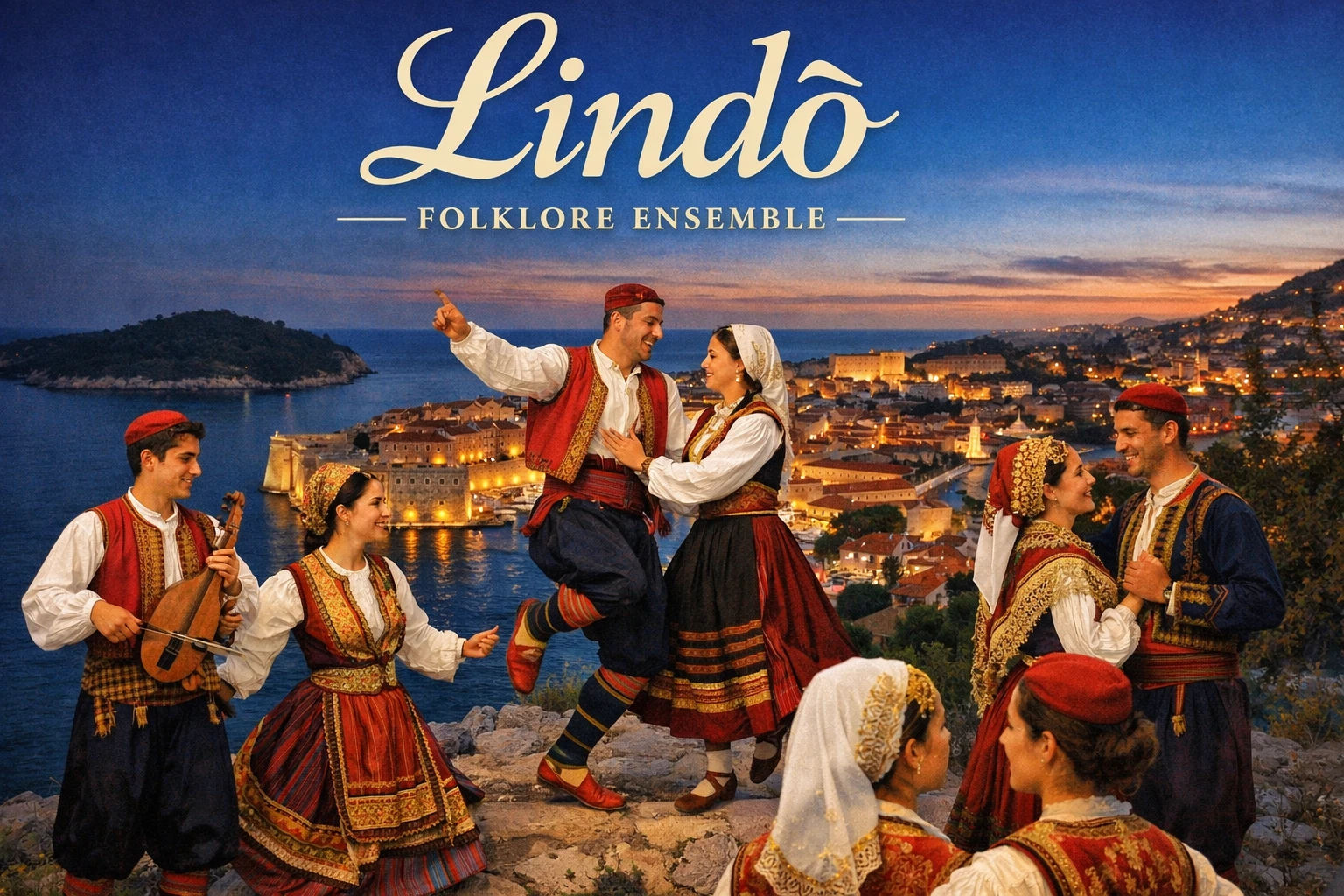
Event Has Passed - See You Next Time!
Event Details
Date
to
Time
9:30 PM
Location
Lazareti, Ul. Frana Supila, Ploče, Dubrovnik
Dubrovnik, Croatia
Price
from €25
About This Event
Linđo Folklore Ensemble: Every Tuesday and Friday in Dubrovnik, Croatia's Living Heritage Takes the Stage
Some things in Dubrovnik are genuinely irreplaceable. The Old Town walls at sunset. The Stradun at night when the limestone paving stones glow white. And since 1965, twice a week throughout the summer season, a courtyard just east of the Pile Gate fills with the sound of the lijerica, the stamping of dancing feet, and the voices of an a cappella choir performing music that has belonged to the people of this coast for centuries. The Linđo Folklore Ensemble performs every Tuesday and Friday at 9:30 PM at the Lazareti complex in Dubrovnik, from May through October, for a ticket price of €25.
This is not a tourist show in the dismissive sense of that phrase. It is a performance by approximately 100 to 300 members of one of Croatia's most respected folklore ensembles — young performers between the ages of 12 and 28 who have trained for years in the dances, songs, and instrumental traditions of the Dubrovnik region and Croatia more broadly, wearing original handmade folk costumes from the specific regions whose traditions they represent, carrying instruments that in some cases are unique to this corner of Europe.
Total duration: 70 minutes. Tickets available at the door 30 minutes before the performance and online at ulaznice.hr.
What Is the Linđo? The Dance Behind the Name
The ensemble takes its name from a dance — and the dance itself has a story that runs deep into the social and musical history of the Dubrovnik coastline.
The Linđo is formally known as the Dubrovačka poskočica — the "Dubrovnik Wheel Dance" — a circle folk dance originating in the rural communities of Konavle (the fertile valley south of Dubrovnik extending toward Montenegro) and the coastal region of Župa Dubrovačka (the bay and settlements immediately east of the city). It is characterised by its fast-paced rhythm, energetic footwork, and the distinctive accompaniment of the lijerica — a three-stringed instrument played with a bow, producing a bright, rasping sound that is entirely specific to this region and found almost nowhere else in Croatian folk music.
The name "Linđo" itself comes from a person: Nikola "Lale" Linđo, a celebrated lijerica player from the Župa Dubrovačka region who became so associated with the dance that his nickname gradually became the dance's common name, displacing the formal "Dubrovačka poskočica" in popular usage. The ensemble that carries his name was founded in his city's honour.
The dance is a communal circle form: participants join hands or link arms and move through figures directed by a central leader (the linđo) whose calls and movements guide the circle through its patterns. The energy of a full Linđo circle — with the lijerica driving the rhythm, the dancers' footwork creating percussive counterpoint, and the voices of the singers weaving above — is a sensory experience that captures something essential about the character of the Dubrovnik coast: warm, energetic, communal, and deeply rooted in the landscape from which it grew.
The Ensemble's History: Sixty Years on the Dubrovnik Stage
The Linđo Folklore Ensemble was founded in 1965 on the initiative of the Atlas Travel Agency in Dubrovnik — one of the earliest examples of cultural tourism infrastructure in Yugoslavia, and a sign that Dubrovnik's tourism community understood even then that authentic cultural performance was one of the city's greatest visitor attractions.
From that origin as a tourism-adjacent cultural project, the ensemble grew quickly into something much more significant: a genuine cultural institution with artistic ambitions that extended far beyond the regular season performances at home. The ensemble's first international tour was Italy in 1966 — barely a year after its founding — and from that point it developed a touring programme that has taken its performers to stages across Europe, the Americas, Asia, and beyond.
Across its history, Linđo has accumulated:
- More than 3,500 performances attended by over 2 million visitors
- More than 200 promotional tours across the world
- More than 3,000 members in total across its sixty-year history
- 1,500 folk costumes — most of them original, many rare, purchased with the ensemble's own funds — representing folk heritage from across Croatia
- 50 different traditional instruments in the ensemble's collection
- More than 30 choreographies in the active repertoire, covering folk traditions from multiple Croatian regions
- 263 performances at the Dubrovnik Summer Festival between 1967 and 2012 alone, with regular continued participation since
The ensemble celebrated its 60th anniversary at the 76th Dubrovnik Summer Festival in 2025 with four performances described by The Dubrovnik Times as full of "vibrant folkloric creations" — a milestone season for an institution that has become, as Valamar Experience puts it, "the good spirit of the city."
The Performance: What to Expect on a Tuesday or Friday Evening
The regular Tuesday and Friday performances at the Lazareti complex represent the ensemble at its most accessible: a 70-minute programme that moves through multiple choreographies drawn from the ensemble's 30+ repertoire pieces, with each section representing a different regional tradition from Croatia.
The programme typically includes:
The signature Linđo dance: The circle dance from Konavle and Župa Dubrovačka that gives the ensemble its name; performed to the sound of the lijerica with the full company, it is always a centrepiece of the programme and consistently draws the most immediate audience response — the rhythm is infectious, the energy physical and immediate, and the communal nature of the circle form translates across any language barrier
Klapa singing: The Croatian a cappella tradition — multipart unaccompanied male vocal harmony singing, originating in Dalmatia and the islands — is performed as a distinct section within the programme. Klapa was inscribed on the UNESCO Representative List of Intangible Cultural Heritage of Humanity in 2012, recognising it as one of the most significant living oral traditions in European culture. Hearing it performed live, in Dubrovnik, with the specific acoustic resonance of the Lazareti's stone architecture, is one of those experiences that demonstrates exactly why the UNESCO process exists
Dances from other Croatian regions: The broader choreographic repertoire includes Posavina (the Sava River plain, north of Zagreb), Bunjevac (the ethnic Croatian communities of the Vojvodina region), Prigorje (the hills around Zagreb), and dances from other regions — each performed in the original costumes of that region, demonstrating the extraordinary diversity of Croatian folk tradition within a country whose territory extends from the alpine north to the Adriatic coast
Traditional instruments: Alongside the lijerica, the ensemble uses instruments including the tamburica (the quintessential Croatian folk stringed instrument), traditional frame drums, and wind instruments specific to various regions — creating a sonic landscape that shifts character as the programme moves between regions
The costumes worn during each choreography are not reproductions. They are original folk garments from the regions whose traditions the ensemble represents — collected over sixty years with genuine archival care. The embroidery patterns, textile techniques, and colour combinations of each costume represent specific village and regional craft traditions, and the ensemble's costume holdings of 1,500 pieces constitute one of the most significant folk textile collections in Croatia.
The Lazareti: A Performance Space With 400 Years of History
The Lazareti complex — the venue for the regular Tuesday and Friday performances — is not a theatre or a purpose-built performance space. It is a series of interconnected quarantine buildings erected in the early 17th century just outside the Ploče Gate (eastern entrance to the Old Town), where merchants and travellers arriving from plague-affected regions were required to spend 30–40 days in isolation before being permitted to enter the city.
The Republic of Ragusa was one of the first states in the world to develop a systematic quarantine protocol — the word "quarantine" itself derives from the Venetian/Italian "quarantina" (forty days), but Dubrovnik's 14th-century isolation requirements predate Venice's and are among the earliest institutionalised public health responses to epidemic disease in recorded history.
The Lazareti's long, low stone buildings arranged around a central courtyard have been repurposed since the end of the Republic into a cultural and community space — today hosting performances, art events, clubs, and the regular Linđo shows in the courtyard. The physical setting — stone walls, open sky, the sound of the Adriatic a few steps away — gives each performance an atmospheric quality specific to this place.
The Lazareti sits at the foot of the hill that leads up to the Ploče Gate, one of the Old Town's two main entrances, and is a five-minute walk from the Old Town walls and the Dominican Monastery whose cloisters are one of Dubrovnik's finest Gothic architectural spaces.
Practical Guide: Attending a Linđo Performance in Dubrovnik
Regular season: May 1 through October 2026
Performance days: Every Tuesday and Friday
Start time: 21:30 (9:30 PM)
Duration: 70 minutes
Venue: Lazareti complex, Frana Supila (near Ploče Gate), Dubrovnik
Ticket price: €25
Where to buy tickets:
- At the door: Tickets available 30 minutes before the performance at the Lazareti entrance; on busy nights (July–August weekends) the venue can sell out, so arriving early is advisable
- Online: ulaznice.hr (official Croatian ticketing platform); lindjo.hr (ensemble's own booking page)
Arriving at the venue:
- The Lazareti complex is located just outside the Ploče Gate — the eastern entrance to the Old Town, a 10-minute walk from the Stradun (main street) through the Old Town
- From the Old Port (Stara Luka), walk east along the waterfront; the Lazareti is visible on your left before the Ploče Gate
- Arrive 20–30 minutes before the 21:30 start to collect tickets, find seating, and settle before the performance begins
When to go:
- Any Tuesday or Friday between May and October
- July and August performances occur during the high season and coincide with the Dubrovnik Summer Festival period — the atmosphere in the city is at its most festive; book tickets online in advance for this period
- May, June, September, and October offer quieter crowds and the same quality of performance; late September in particular offers warm weather, a much less crowded Dubrovnik, and the full Linđo programme still running
Additional appearances:
- Linđo performs at the 77th Dubrovnik Summer Festival on August 4, 2026 at 21:30h as part of the festival's official programme — a separate event from the regular Lazareti series
- The ensemble has historically participated in additional Summer Festival dates; check dubrovnik-festival.hr for the full 2026 schedule
Note on 2026 season: The ensemble's artistic director announced a new programme for 2026 — described as "something big" — suggesting the 2026 Lazareti season may include updated or expanded choreographies alongside the established repertoire.
Why Tuesday or Friday Evening Should Already Be on Your Calendar
There is a logic to how Dubrovnik has kept its cultural heritage alive across centuries: not by placing it behind museum glass but by performing it in living spaces, before living audiences, week after week. The Linđo Folklore Ensemble has been doing exactly that since 1965.
Tuesday and Friday, 9:30 PM, May through October, Lazareti complex, €25. Sixty years of Croatian folk tradition, in the same city where it has always belonged, performed by 300 young people who have made it their own. The Adriatic night, the lijerica, the Klapa voices, and the Dubrovnik Wheel Dance turning in a 400-year-old courtyard. This is what Dubrovnik sounds like when no one is performing for the cameras.
Verified Information at a Glance
| Detail | Information |
|---|---|
| Event | Linđo Folklore Ensemble — Regular Season Performances |
| Category | Traditional Croatian Folk Dance, Song, and Folklore Performance |
| Season | May 1 – October 2026 |
| Performance days | Every Tuesday and Friday |
| Start time | 21:30 (9:30 PM) |
| Duration | 70 minutes |
| Venue | Lazareti complex, Frana Supila (near Ploče Gate, eastern entrance to Old Town), Dubrovnik, Croatia |
| City | Dubrovnik, Dalmatia, Croatia |
| Ticket price | €25 |
| Ticket purchase | Door (30 min before); ulaznice.hr (online); lindjo.hr |
| Ensemble size | 300 performers, age 12–28 |
| Founded | 1965, Dubrovnik (initiative of Atlas Travel Agency) |
| Programme content | Linđo (Dubrovačka poskočica) — Dubrovnik Wheel Dance; Klapa multipart a cappella singing (UNESCO Intangible Heritage 2012); regional choreographies including Posavina, Bunjevac, Prigorje; traditional instruments including lijerica, tamburica |
| Costume collection | 1,500 original folk costumes from Croatian regions |
| Instrument collection | 50 traditional instruments |
| Choreographies in repertoire | 30+ |
| Career stats | 3,500+ performances; 2 million+ visitors; 200+ international tours; 3,000+ members across history |
| 60th anniversary | Celebrated at 76th Dubrovnik Summer Festival, 2025 |
| 2026 Summer Festival appearance | August 4, 2026, 21:30h (Dubrovnik Summer Festival 77th edition) |
| 2026 note | New programme announced for 2026 season |
| Official website | lindjo.hr |
| UNESCO | Dubrovnik Old Town — UNESCO World Heritage Site; Klapa singing — UNESCO Intangible Cultural Heritage |
More Events in Dubrovnik
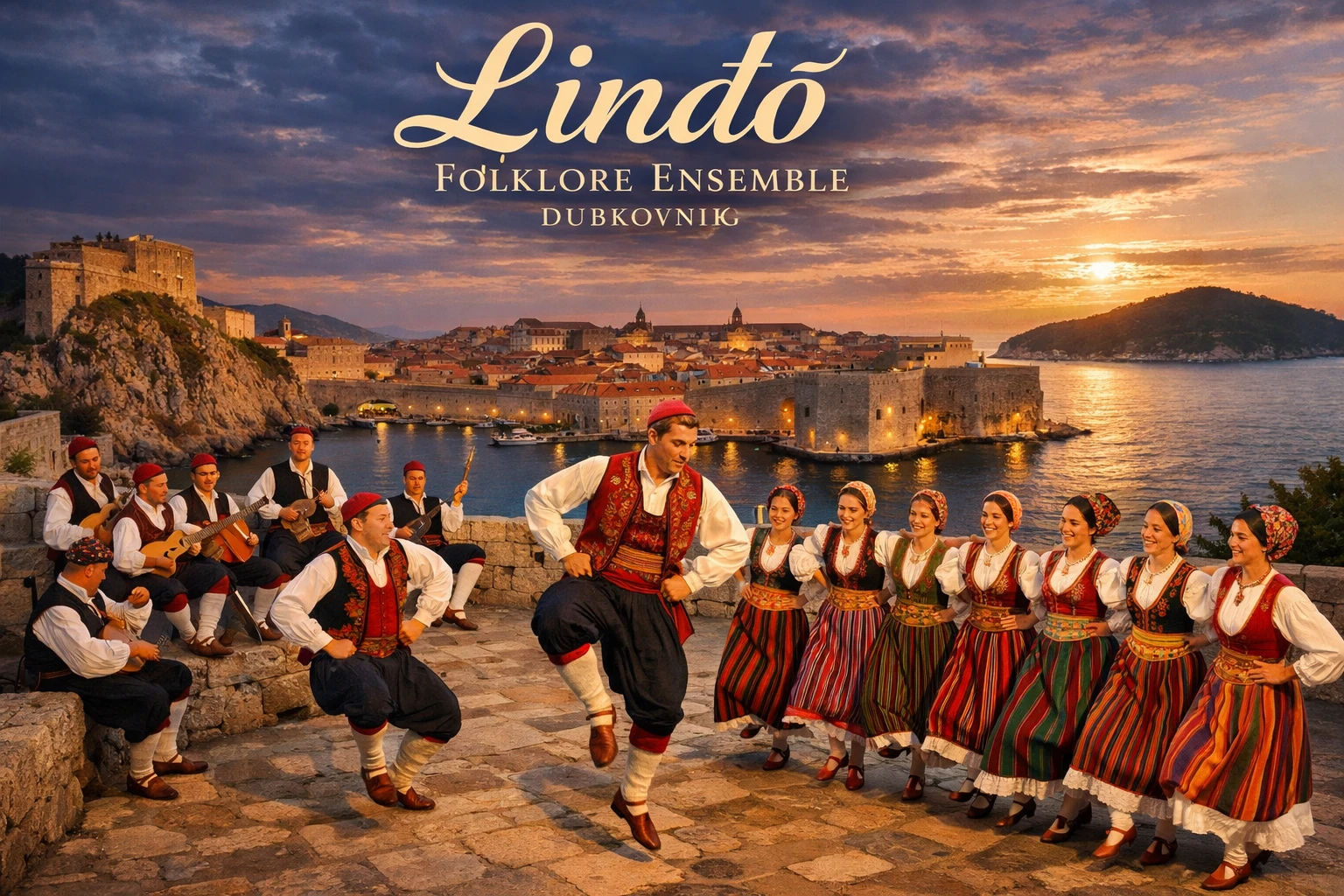
Event Has Passed - See You Next Time!
Event Details
Date
to
Time
9:30 PM
Location
Lazareti, Ul. Frana Supila, Ploče, Dubrovnik
Dubrovnik, Croatia
Price
from €25