
Event Has Passed - See You Next Time!
Event Details
Date
to
Location
Peristyle of Diocletian's Palace, Croatian National Theatre (HNK Split), and open-air stages across Split Old Town (UNESCO World Heritage Site)
Split, Croatia
Price
Not Available
About This Event
Split Summer Festival 2026: Opera, Ballet, and Drama Under the Stars in Diocletian's Palace
Most festivals need to build a setting. They install temporary stages in fields, parks, or repurposed industrial spaces and hope that the combination of good sound, good production, and warm weather will create an atmosphere that feels like somewhere worth being. The Split Summer Festival does not have this problem. When the orchestra tunes up on the Peristyle — the open-air courtyard of a Roman Emperor's palace built in 305 AD — and the first notes of the evening carry across stone that has been standing for 1,700 years, the atmosphere is not manufactured. It is simply where the festival is, and where it has been every summer since 1954.
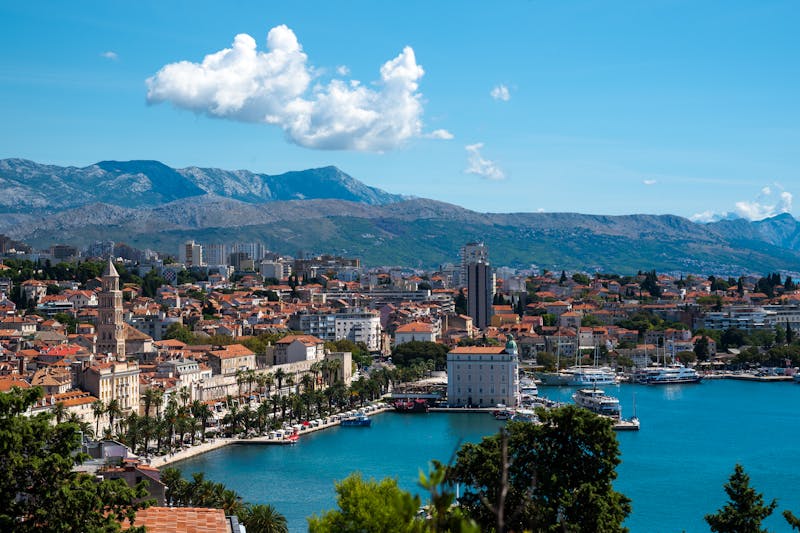
The Split Summer Festival 2026 (Splitsko ljeto 2026) is the 72nd edition of one of the longest-running classical performing arts festivals in Croatia — running from July 14 to August 14, 2026 across more than 14 stages in Split's historic old town and its surroundings. Opera, ballet, drama, concerts, jazz, film, and art exhibitions across the extraordinary settings of Diocletian's Palace, the Meštrović Gallery, Sustipan, and the hidden bays of Marjan Hill. Dozens of performances. Local and international artists. And an opening night on the Peristyle on July 14 that remains, after seven decades, one of the most atmospheric ways to begin a cultural festival anywhere in the world.
Tickets and full 2026 programme at splitsko-ljeto.hr.
A Festival With 72 Years of History at Its Foundations
The Splitsko ljeto was founded in 1954 — at a moment when Split was a Yugoslav city rebuilding its cultural life in the post-war decade, and when the idea of staging professional theatre, opera, and music in the open air of the ancient Diocletian's Palace courtyard was both a practical decision (the space was there, it was free, and it was spectacular) and a statement about the relationship between the city's living culture and its ancient inheritance.
That founding decision — to use the Peristyle, the central courtyard of the Roman Emperor Diocletian's retirement palace, as an outdoor performance space — is the one that defines everything the Split Summer Festival has been in 72 editions. The Peristyle is not a park or a repurposed industrial site or a temporary arena. It is the heart of a UNESCO World Heritage Site that has been continuously inhabited for seventeen centuries, where the columns, the mausoleum that became a cathedral, the Egyptian sphinx, and the stone arcade of the palace have been used for every purpose imaginable by every generation that has lived in or passed through Split. Opera performed here does not feel like a festival event. It feels like the city using its own room.
Next to the Dubrovnik Summer Festival — its older sibling in the world of Croatian open-air classical arts — the Split Summer Festival carries the longest and most distinguished tradition of classical performing arts in the country, with a reputation that extends well beyond Croatia's borders and draws audience members, critics, and international performers from across Europe every July and August.
The 2026 Programme: Opera, Ballet, Drama, Concerts, and More Across 14 Stages
The 72nd Splitsko ljeto follows the festival's established format of presenting a month-long programme across Split's historic spaces — combining the flagship productions (the season's new opera and drama premieres, the major ballet programme, the symphonic concerts) with an accompanying programme of jazz, film, visual art, exhibitions, and literary events that turn a single month in Split into a complete cultural season.
Based on the 71st edition's scale as a reference, the 2026 festival is expected to offer:
- More than 60 performances of opera, drama, ballet, and concerts
- More than 14 stages across Split and its surroundings
- Film screenings, art exhibitions, and literary events as part of the accompanying programme
- New premiere productions from the Croatian National Theatre Split (HNK Split)
- Performances by both local and international artists, orchestras, and ensembles
The management of the festival by the Croatian National Theatre Split means that the Splitsko ljeto is not simply a summer event grafted onto the city — it is the extension of the permanent, year-round work of Split's national theatre into the outdoor spaces of the city, using the same ensemble, the same artistic leadership, and the same institutional ambition that drives HNK Split's indoor season.
Full 2026 programme is available and regularly updated at splitsko-ljeto.hr.
The Venues: Performing in the City's Most Remarkable Spaces
The Split Summer Festival uses venues that no other festival can replicate — because they are not festival venues in any conventional sense, but specific, historically charged spaces that belong to the ordinary life of the city and that the festival borrows for extraordinary purposes.
The Peristyle — Diocletian's Palace
The Peristyle is the sacred and ceremonial heart of the Roman palace — the open-air courtyard between the Emperor's living quarters and his mausoleum (now the Cathedral of Saint Domnius), flanked by Corinthian columns and presided over by a black granite Egyptian sphinx that Diocletian himself brought from Egypt around 305 AD. In the modern city, the Peristyle is a public square surrounded by café tables, with locals and tourists sharing coffee in the shade of the Roman colonnade throughout the day.
At night, during the Split Summer Festival, the café tables are cleared, temporary seating is installed, and the Peristyle becomes an outdoor auditorium with one of the most dramatic natural backdrops in the performing arts world. The acoustic properties of the enclosed Roman courtyard — stone walls on three sides, the cathedral facade directly ahead of the stage area — create a warmth and intimacy that many purpose-built concert halls cannot match.
The Opening Night of the 72nd Split Summer Festival on July 14, 2026 will take place here, as it has at every edition since 1954 — a ceremony that combines artistic performance with civic ritual, drawing the citizens of Split and their summer visitors together in the space that has been at the city's heart for seventeen hundred years.
The Meštrović Gallery
The Meštrović Gallery — the former home, studio, and personal gallery of Croatia's greatest sculptor, Ivan Meštrović (1883–1962) — sits on a clifftop above the sea on Split's western shore, overlooking the islands of Šolta and Brač. The building itself is a masterwork of 20th-century Croatian architecture: a white stone villa with arcaded terraces, a formal courtyard, and interior spaces filled with Meštrović's monumental sculptures.
During the Split Summer Festival, the Meštrović Gallery's courtyard and terraces serve as an outdoor performance space for chamber concerts, recitals, and smaller-scale productions. The combination of the white stone architecture, Meštrović's sculptures as stage backdrop, and the view out over the Adriatic makes these performances among the most intimate and visually distinctive of the entire festival.
Sustipan
Sustipan is the clifftop peninsula at the western end of Split's old town — a small, wooded park on a headland above the sea that was historically the site of a Benedictine monastery and has been a public park since the 19th century. The views from Sustipan take in the open Adriatic to the west, the islands of Šolta and Brač on the horizon, and the boats in Split's harbour below.
As a festival venue, Sustipan hosts open-air performances under the conditions that make outdoor theatre in Dalmatia in July so compelling: warm evening air, the sea visible beyond the stage, and a landscape that has no winter equivalent. Evening performances here, with the sun setting over the Adriatic while the performance begins, are among the most sought-after Splitsko ljeto experiences.
Marjan Hill and the Hidden Bays
Marjan Hill — the forested peninsula that forms the western lung of Split, with pine woods, walking trails, and small coves accessible by path from the clifftop — provides the festival's most genuinely surprising venue strand: performances in the hidden Marjan bays, small rocky inlets reachable only on foot, where the audience assembles in the warmth of a July evening in a setting that feels far removed from any city.
Jazz concerts, chamber performances, and experimental or site-specific works use these bays for their combination of natural acoustic properties and extraordinary setting. These are not performances with amplification and lighting rigs — they are intimate encounters between music and landscape.
HNK Split (Croatian National Theatre Split)
The Croatian National Theatre Split — the permanent indoor stage from which the festival is managed — is also part of the festival programme, hosting productions that require the controlled environment of an indoor theatre, or serving as rain cover if the outdoor programme is affected by weather. The HNK Split is a significant building in its own right, designed in a historicist style and representing Split's permanent institutional investment in the performing arts.
The Cultural Fabric of Split in July and August
The Split Summer Festival runs during the weeks when Split is at its most alive — when the Riva promenade is full until midnight, when the restaurants in the lanes of Diocletian's Palace are booked weeks in advance, when the ferries to Hvar, Brač, and Vis are carrying maximum passenger loads, and when the combination of Adriatic heat and summer cultural programming makes the city feel like a place that has absorbed several millennia of Mediterranean living and has still not run out of things to celebrate.
The broader Split summer calendar runs alongside the Splitsko ljeto:
- Ultra Europe Festival: July 10–12, Park Mladeži — the 12th edition of Europe's leading EDM destination festival; the opening weekend of Splitsko ljeto on July 14 falls immediately after Ultra Europe, creating a handover from one of the world's largest electronic music events to one of the oldest classical arts festivals in Croatia
- Mediterranean Film Festival Split: June 11–20 (pre-festival)
- Theatre by the Sea: June through mid-September; weekly comedy, stand-up, and children's performances
- Bačvice Summer Cinema: End of June/early July; open-air cinema at Split's famous Bačvice beach (home of picigin, the traditional Dalmatian water sport played in the shallows)
What to do in Split alongside the festival:
- Walk the Riva promenade in the morning; the seafront palm-lined boulevard along the south wall of Diocletian's Palace is the social heart of the city at every time of day and particularly at dusk
- Swim at Bačvice beach — the famous pebble-and-shallow-water beach a 10-minute walk east of the Riva; home of picigin, the traditional Dalmatian shallow-water ball game; busy, social, and quintessentially Split
- Climb Marjan Hill via the steps from Varoš (the old western neighbourhood of Split) for the best panoramic views over the city, the harbour, and the Dalmatian archipelago
- Visit the Cathedral of Saint Domnius (built inside Diocletian's mausoleum) and the Jupiter Temple (now a baptistery) in the palace complex — both accessible with a modest entry fee
- Day trip to Hvar (1 hour by catamaran), Brač and Zlatni Rat beach (50 minutes by ferry), or Trogir (20 minutes by local bus along the coastal road to the UNESCO World Heritage town)
Practical Guide to the Split Summer Festival 2026
Event: Split Summer Festival 2026 (Splitsko ljeto 72nd Edition)
Category: International Performing Arts Festival (Opera, Ballet, Drama, Concerts, Film, Visual Art)
Edition: 72nd (founded 1954)
Dates: July 14 – August 14, 2026
Opening Night: Peristyle, Diocletian's Palace, July 14, 2026
Scale: 60+ performances; 14+ stages
Programme: Opera, ballet, drama, symphonic concerts, jazz, film screenings, art exhibitions, literary evenings, street theatre
Management: Croatian National Theatre Split (HNK Split)
Venues:
- Peristyle, Diocletian's Palace (main stage; opening night)
- Meštrović Gallery (courtyard and terraces)
- Sustipan (clifftop; outdoor)
- Hidden Marjan bays (intimate outdoor)
- HNK Split — Croatian National Theatre Split (indoor)
- 14+ additional stages across Split and surroundings
Admission: Individual event tickets; prices vary by performance; available at splitsko-ljeto.hr
City: Split, Croatia (UNESCO World Heritage Site)
Getting to Split:
- By air: Split Airport (SPU) — direct summer flights from London, Amsterdam, Frankfurt, Vienna, Zurich, Paris, and 50+ European destinations; bus to Split city centre approximately 30–40 minutes; taxi approximately 25 minutes
- By ferry: Split is Croatia's main Adriatic ferry hub; Jadrolinija and SNAV/BlueLine connect Split to Ancona (Italy, approximately 9–10 hours) and to the Dalmatian islands (Hvar, Brač, Vis, Korčula)
- By bus: Split Bus Terminal on the Riva waterfront; Flixbus and Croatian carriers connect Split to Zagreb (5 hours), Dubrovnik (4.5 hours), and other Croatian and regional cities
Getting around Split during the festival: The Peristyle, Meštrović Gallery, Sustipan, and Marjan are all within a 20-minute walk from the Riva and from each other; Split's compact old town is best navigated on foot; taxis and Uber serve the city for longer distances
July–August weather: 28–33°C days; 20–24°C evenings; essentially zero rainfall in July–August; the July evenings when the festival's outdoor performances take place are typically warm, dry, and calm — standard Dalmatian summer; light layers or a thin jacket may be useful for late-evening performances
Official website: splitsko-ljeto.hr
July 14 to August 14, 2026: A Month of Performing Arts in Europe's Most Beautiful Open-Air Setting
Seventy-two years in, the Split Summer Festival has not run out of reasons to exist. If anything, the combination of the Peristyle's Roman grandeur, the Meštrović Gallery's sculptural serenity, and the Adriatic setting that no architect ever designed — the sea, the islands, the summer sky — makes it more rather than less compelling each edition. This is what it looks like when a city's culture and its geography are perfectly matched: a month of opera, ballet, drama, and concert music in settings that the entire rest of the world can only see on stage.
July 14 to August 14, 2026. The Peristyle. The Meštrović Gallery. Sustipan. The hidden Marjan bays. 60+ performances. Split, Croatia. Tickets at splitsko-ljeto.hr. Seven decades of performing in one of the most extraordinary places in the world — and the 72nd edition is about to begin.
Verified Information at a Glance
| Detail | Information |
|---|---|
| Event | Split Summer Festival 2026 (Splitsko ljeto 2026; 72nd Edition) |
| Category | International Performing Arts Festival — Opera, Ballet, Drama, Concerts, Film, Art, Jazz, Street Theatre |
| Edition | 72nd (founded 1954) |
| Dates | July 14 – August 14, 2026 |
| Opening Night | Peristyle, Diocletian's Palace, July 14, 2026 |
| Scale | 60+ performances; 14+ stages across Split and surroundings |
| City | Split, Croatia (UNESCO World Heritage Site, Diocletian's Palace) |
| Venues | Peristyle (Diocletian's Palace); Meštrović Gallery; Sustipan; Hidden Marjan bays; HNK Split (Croatian National Theatre); 14+ total stages |
| Programme | Opera, ballet, drama, symphonic concerts, jazz, film screenings, art exhibitions, literary evenings, street theatre |
| Management | Croatian National Theatre Split (HNK Split) |
| Admission | Individual performance tickets; prices vary by event |
| Tickets and programme | splitsko-ljeto.hr |
| Concurrent Split events (same period) | Ultra Europe July 10–12 (immediately before festival); Theatre by the Sea (June–September); Bačvice Summer Cinema (late June/early July) |
| Nearest airport | Split Airport (SPU) — 25–40 min to city centre |
| July–August weather | 28–33°C days; 20–24°C evenings; essentially zero rain; ideal outdoor performance conditions |
| Official website | splitsko-ljeto.hr |
Event Has Passed - See You Next Time!
Event Details
Date
to
Location
Peristyle of Diocletian's Palace, Croatian National Theatre (HNK Split), and open-air stages across Split Old Town (UNESCO World Heritage Site)
Split, Croatia
Price
Not Available