

Event Has Passed - See You Next Time!
Event Details
Date
to
Location
Open Air Museum of Ethnography (Tbilisi Ethnographic Museum), near Turtle Lake (Kus Tba), Tbilisi
Tbilisi, Georgia
Price
Not Available
About This Event
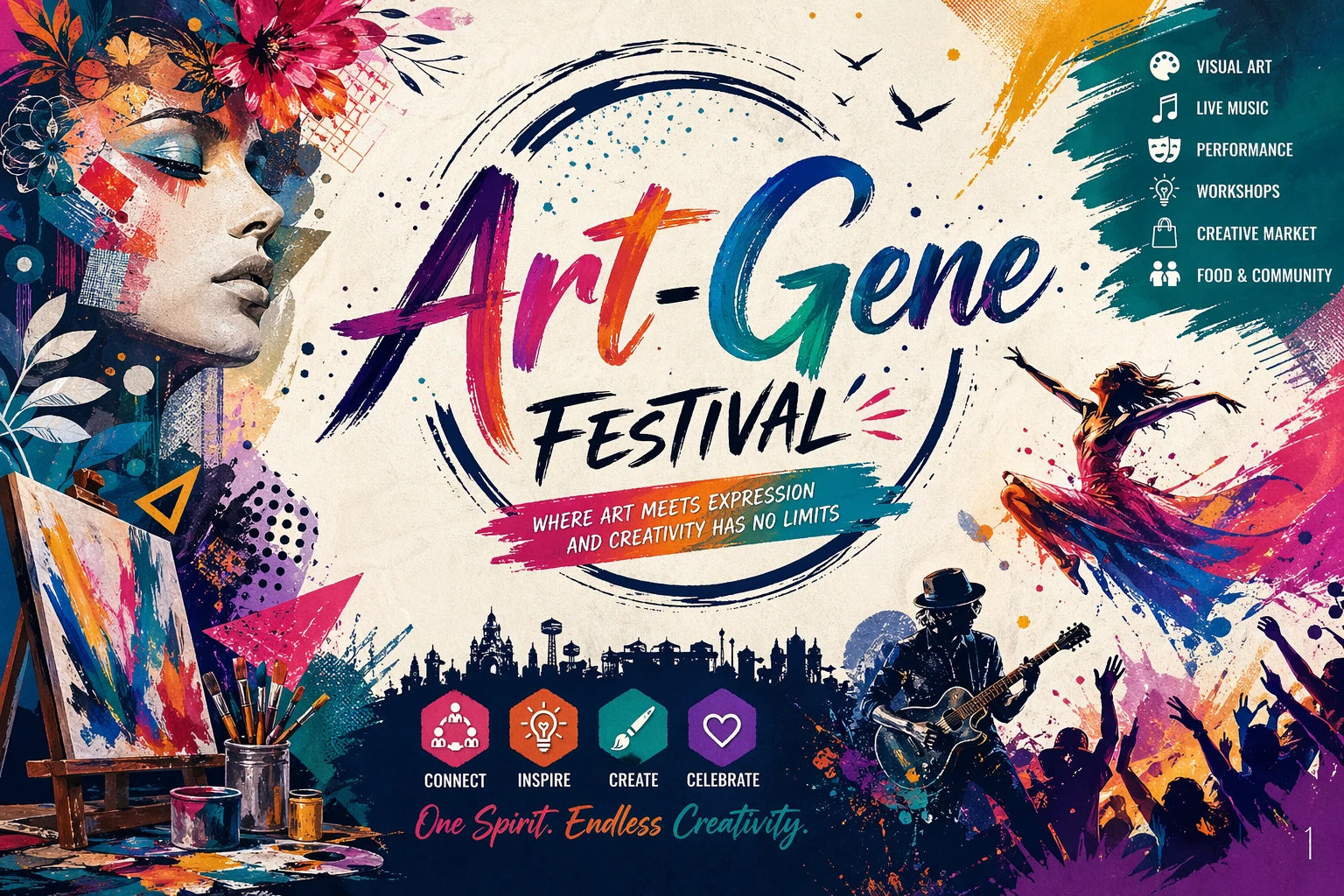
Art-Gene Festival 2026: Georgian Folk Culture, Music, and Craft at the Open Air Museum of Ethnography
There are festivals that present culture as performance, and there are festivals that present culture as lived reality. The Art-Gene Festival in Tbilisi belongs firmly in the second category. For a week each July, the Open Air Museum of Ethnography — a hillside park above Tbilisi where full-scale traditional houses from every region of Georgia have been reassembled on their original foundations — becomes the most concentrated expression of living Georgian folk culture in the world.
Art-Gene Festival 2026 runs from July 7 to July 14, 2026 at the Open Air Museum of Ethnography, 1 Turtle Lake Road, Tbilisi — eight days of folk music, traditional dance, artisan crafts, Georgian cuisine, wine tasting, blacksmithery, ceramics, wood carving, jewellery, weaving, and the kind of evening concerts that bring the biggest names in Georgian music to the same hillside where regional ensembles from Svaneti, Adjara, Kakheti, and Racha have been performing the polyphonic singing traditions of their ancestors all afternoon.
Founded in 2004, the Art-Gene Festival is now one of the longest-running and most beloved cultural festivals in Georgia — a gathering that covers every generation, every region of the country, and virtually every traditional Georgian art form in a single, extraordinary week.
Tickets at artgeni.ge. Family-friendly. No smoking or strong alcohol during the festival.
The Story Behind Art-Gene: Twenty Years of Living Georgian Culture
The Art-Gene Festival was founded in 2004 with a specific and practical mission: to use the Open Air Museum of Ethnography as a living stage for Georgian folk culture — bringing traditional folk ensembles, artisans, and cuisine from across the country's diverse regions to a venue that already contained the physical architecture of Georgian traditional life.
The founding logic was direct and clear. The Open Air Museum had extraordinary grounds and content — full-scale traditional buildings from Georgia's lowlands, highlands, western and eastern regions, gathered and preserved on a forested hillside above Tbilisi — but its visitors, particularly young Tbilisi residents, were few. The solution was to bring the culture to the space in the most immediate possible form: live folk ensembles from the regions whose buildings already stood there, artisans demonstrating the crafts that filled those buildings, and Georgian musicians whose media presence could attract a younger audience to a setting they would not otherwise visit.
In 2004, the first Art-Gene ran for five days. In the two decades since, it has grown to eight days, expanded its programme considerably, and established itself as a fixture on the Georgian cultural calendar that Tbilisi residents of every generation plan their July around. The festival's official description of its founding philosophy is precise: "We schedule shows by celebrated performers toward the end of each day, a gimmick of sorts to attract younger audiences, while visiting regional and Tbilisi-based representatives of traditional family folklore take the stage during the day."
That structure — morning and afternoon belonging to the living traditions of Georgia's regions, evening belonging to the Georgian contemporary artists who have grown up from those same roots — has made Art-Gene simultaneously a serious folk culture preservation event and a genuinely popular festival with an audience that cuts across every demographic.
The Open Air Museum of Ethnography: A Festival Venue Like No Other
Understanding the Art-Gene Festival requires understanding its venue — because the Open Air Museum of Ethnography at 1 Turtle Lake Road is not a conventional outdoor festival site but one of the most extraordinary cultural environments in the Caucasus.
The museum was established in the 1960s on a large forested hillside on the western edge of Tbilisi, near Turtle Lake (Kus Tba) — a popular recreational lake and park area approximately 20 minutes from the old town. The concept was unique: to gather traditional houses, churches, watermills, barns, wineries, and communal buildings from every distinct geographic and ethnic region of Georgia and rebuild them at full scale in a single outdoor setting.
The result is a hillside containing more than 70 traditional structures representing the architectural traditions of the Georgian highlands (Svaneti, Tusheti, Khevsureti), the eastern lowlands (Kakheti), the western coastal regions (Adjara, Samegrelo, Guria), and the diverse ethnic communities of the country — Armenian, Azerbaijani, and Jewish as well as Georgian. Walking through the museum is like walking through the physical memory of a country: every building was built and used by specific people, in a specific landscape, for specific purposes.
For the Art-Gene Festival, these buildings and their surroundings become the backdrop, the stage, and the setting simultaneously — folk ensembles from Svaneti perform in the shadow of Svan tower houses; blacksmiths demonstrate their craft near the forge buildings; potters work in open-air workshops among the agricultural structures. The festival does not import culture into a neutral space. It brings culture home to its own architecture.
What Happens at Art-Gene: Eight Days Across Every Dimension of Georgian Culture
The Art-Gene 2026 programme follows the festival's established format across eight days at the Open Air Museum — a daily rhythm of daytime traditional activity and evening concerts that builds across the week to the largest and most celebrated performances toward the final days.
Georgian Polyphonic Singing and Regional Folk Music
Georgian polyphonic singing is one of the most distinctive and technically complex vocal traditions in the world — a three-voice unaccompanied or minimally accompanied form of harmony that UNESCO inscribed on its Intangible Cultural Heritage list in 2001, recognising it as one of humanity's most significant living musical traditions. Georgia is home to multiple distinct regional polyphonic styles, each specific to its geography: the Svan style of the highland northwest, the Gurian style of the western lowlands, the Kakhetian style of the eastern wine country, and others that vary in scale, mode, and character.
Art-Gene is one of the primary places in the world where these regional styles are performed side by side by their living practitioners. The daytime concert programme brings folk ensembles directly from the communities where these traditions are still performed as part of daily and ceremonial life — not staged reconstructions, but working ensembles who sing these songs at weddings, harvests, and religious occasions at home.
Traditional Georgian Dances
Georgian traditional dance is as regionally diverse as its music — the warrior dances of the highland regions, the courtly dances of the lowland nobility, the lively circle dances of Adjara and Guria, and the extraordinary technical virtuosity of the Kartuli (the Georgian national dance form). Each regional style has its own costume, its own rhythmic structure, and its own story.
Art-Gene's dance programme brings together dance troupes from across these regional traditions, performing in a context where the geographic and cultural origins of each style are visible in the museum's own architecture.
Artisan Crafts: The Full Spectrum of Georgian Traditional Making
One of the most distinctive elements of Art-Gene — the one that most clearly distinguishes it from a music or dance festival — is the breadth and depth of its artisan programme. The festival covers virtually every traditional Georgian craft in live demonstration:
- Blacksmithery and metalwork: Traditional Georgian blacksmithing; decorative and functional metal objects produced live at the festival forge
- Cloisonné enamel: The intricate Georgian tradition of niello and enamel work on metal; jewellery and decorative objects produced by working goldsmiths and silversmiths
- Pottery and ceramics: Traditional Georgian pottery forms including the qvevri (the clay wine vessel whose production method is UNESCO-listed); demonstrations and purchase
- Wood carving: Georgian decorative wood carving traditions; furniture, household objects, and architectural ornament
- Weaving, kilims, felt-making: The textile traditions of Georgia's highland and lowland regions; demonstrations on traditional looms
- Basket making and wickerwork: Traditional Caucasian basket techniques still practiced in rural Georgia
- Jewellery: Georgian traditional jewellery forms; silver filigree work, enamel pieces, natural stone settings specific to Georgian aesthetic traditions
- Traditional medicine: Demonstrations and discussion of Georgian herbal medicine traditions — one of the most developed traditional medical systems in the Caucasus
- Martial arts (Taoba): The traditional Georgian martial art, known as "Taoba" or "Qidaoba" (wrestling); demonstrations by practitioners
- Apiculture and beekeeping: The Georgian highland tradition of mountain honey; live demonstration
- Tannery: Traditional leather working processes
The artisan exhibition and demonstration area of Art-Gene is essentially a working craft village — not a museum display but active production, where skilled practitioners make things using traditional tools and methods, and where visitors can watch, ask questions, participate, and purchase.
Georgian Cuisine and Wine Tasting
Food is inseparable from Georgian culture — and Art-Gene reflects this fully. The culinary programme includes:
- Traditional food demonstrations: Regional specialties prepared live; khinkali (the giant hand-folded dumplings of the highland traditions), churchkhela (the walnut-and-grape-juice confection strung on a thread), shotis puri (the traditional Georgian bread baked in a tone clay oven), pkhali (the walnut and vegetable appetisers central to the Georgian table)
- Wine tasting: Georgian natural wine poured from qvevri — Georgia's ancient winemaking method using clay vessels buried in the earth for fermentation; the white wines made using skin contact in qvevri (the "amber" wines) are one of the most distinctive wine experiences in the world and are central to Georgian cultural identity
- Regional cuisine diversity: The extraordinary range of Georgian regional food — from the butter and cheese dishes of Svaneti to the walnut-heavy cuisine of western Georgia to the distinctive spice combinations of Adjara
Art-Gene has a strict policy banning strong alcoholic beverages during the festival — the wine tasting is about cultural education and appreciation, not consumption. Smoking is also banned throughout the festival grounds.
Evening Concerts: Contemporary Georgian Artists
The evening concert programme is the element of Art-Gene that draws younger Tbilisi audiences who might not otherwise spend a day at an ethnographic museum. Each day's programme concludes with performances by celebrated Georgian musicians — artists working in contemporary Georgian music who have roots in or explicit connections to the folk traditions being celebrated during the day.
The relationship between Georgian folk music and contemporary Georgian popular and alternative music is unusually close — the polyphonic tradition, the specific scales and modal structures of Georgian traditional music, and the vocal style developed over centuries have all found their way into Georgian contemporary music in ways that make the boundary between folk and contemporary less rigid than in many other musical cultures. Art-Gene's evening programme celebrates this continuity.
The Broader Tbilisi Context: Georgia's Cultural Capital in July
Art-Gene takes place in the middle of Tbilisi's summer cultural season — a period when the Georgian capital is operating at its most lively and accessible for international visitors.
What to combine with Art-Gene in Tbilisi in July 2026:
- Tbilisi Open Air Festival: July 4–5 at Lisi Wonderland (taking place in the week immediately before Art-Gene opens on July 7) — the two events together provide a complete summer music experience, from the largest EDM outdoor festival in the Caucasus to the most comprehensive celebration of Georgian traditional culture
- ZEG Storytelling Festival: June 19–21 at the Marjanishvili district — for those arriving in Tbilisi ahead of Art-Gene
- Tom Odell at Loco Park: June 21 — another option for the same June week
- Old Town Tbilisi: The Abanotubani sulfur bath district; the Narikala fortress; the Metekhi Church; the wooden balconied houses of Dzveli Tbilisi — essential Tbilisi and a natural complement to the ethnographic context of Art-Gene
- Turtle Lake (Kus Tba): The recreational lake immediately adjacent to the Open Air Museum of Ethnography — Tbilisi's most popular outdoor swimming and walking destination; combine with festival attendance for a full day
- Rustaveli Avenue: Georgia's great central boulevard, running past the National Parliament, the State Museum of Fine Arts, the Rustaveli Theatre, and the Georgian National Museum — a morning's walk before heading to Art-Gene in the afternoon
Practical Guide to Art-Gene Festival 2026
Event: Art-Gene Festival 2026 (Art-Geni Fest / ფესტივალი არტ-გენი)
Category: Georgian Folk Culture, Music, Dance, and Craft Festival
Founded: 2004 (first 5-day edition; 2026 is in the festival's third decade)
Dates: July 7–14, 2026 (tentative; confirm at artgeni.ge and @FestivaliArtgeni before travel)
Duration: 8 days
Venue: Open Air Museum of Ethnography (Ethnographic Museum), 1 Turtle Lake Road, Tbilisi, Georgia
Admission: Ticketed; confirm current ticket prices at artgeni.ge
Programme:
- Daytime: Regional folk ensembles from across Georgia; artisan craft demonstrations; traditional food making; wine tasting; children's activities
- Evening: Contemporary Georgian musicians and celebrated performers
Artisan categories: Blacksmithery; cloisonné enamel; apiculture; basket making; knitting; sewing; embroidery; gobelin; cloth and felt making; musical instruments; pottery and ceramics; kilims; weaving; carpentry; stonemasonry; wood carving; jewellery; culinary arts; traditional medicine; martial arts
Rules: No smoking; no strong alcoholic beverages permitted during festival
Suitable for: All ages; all generations; families; international visitors; folk music enthusiasts; craft lovers; food and wine travellers
City: Tbilisi, Georgia
Getting to the Open Air Museum of Ethnography: The museum is at Turtle Lake Road, approximately 20 minutes from the Tbilisi old town by Bolt or Yandex Taxi; public bus also serves the Turtle Lake / Vake Park area; affordable and widely available transport
Nearest airport: Tbilisi International Airport (TBS) — approximately 30–35 minutes by taxi from the festival venue area; direct flights from Istanbul, Frankfurt, Amsterdam, Tel Aviv, Vienna, Warsaw, and major European cities
July weather in Tbilisi: 30–35°C days; 20–22°C evenings; dry and clear; sunscreen, hat, and water essential for daytime festival hours; evenings are warm and comfortable
Visa: Citizens of EU, UK, USA, Canada, Australia, and most Western nations can enter Georgia visa-free for up to 365 days
Currency: Georgian Lari (GEL); very affordable by Western standards
Official sources: en.artgeni.ge; Facebook @FestivaliArtgeni
July 7 to July 14, 2026: Eight Days of Living Georgian Culture on a Hillside Above Tbilisi
The folk traditions of Georgia — the polyphonic singing that UNESCO recognised as one of humanity's most significant cultural inheritances; the ceramics and metalwork and weaving that have been made in these mountains and valleys for thousands of years; the table traditions and the wine and the cuisine that are inseparable from Georgian identity — are not museum pieces. They are living, practiced, and loved by the people who carry them. The Art-Gene Festival is the place and the week each year where that living reality becomes visible to anyone who arrives at 1 Turtle Lake Road with a ticket and an open afternoon.
July 7–14, 2026. Open Air Museum of Ethnography, Tbilisi. Eight days. Folk music from every region of Georgia. Artisans, food, wine, dance, evening concerts. All ages. All generations. This is where Georgian culture is most itself — and it is open to anyone who wants to be in the same room with it.
Verified Information at a Glance
| Detail | Information |
|---|---|
| Event | Art-Gene Festival 2026 (Art-Geni Fest / ფესტივალი არტ-გენი) |
| Category | Georgian Folk Culture, Music, Dance, Craft, and Culinary Festival |
| Founded | 2004 (first 5-day edition) |
| Dates | July 7–14, 2026 (tentative; confirm at artgeni.ge before travel) |
| Duration | 8 days |
| Venue | Open Air Museum of Ethnography, 1 Turtle Lake Road, Tbilisi, Georgia |
| Admission | Ticketed; confirm current pricing at artgeni.ge |
| Programme format | Daytime (regional folk ensembles; artisan craft demonstrations; food and wine; children's programme) + Evening (contemporary Georgian musician concerts) |
| Cultural content | Georgian polyphonic singing (UNESCO Intangible Heritage, 2001); regional folk dances; 15+ artisan craft categories; traditional Georgian cuisine; qvevri wine tasting; martial arts; traditional medicine |
| Rules | No smoking; no strong alcoholic beverages |
| Suitable for | All ages; families; international visitors; folk culture enthusiasts |
| City | Tbilisi, Georgia |
| Getting there | Bolt/Yandex Taxi approximately 20 min from old town; public bus to Turtle Lake area |
| Nearest airport | Tbilisi International Airport (TBS) — 30–35 min taxi from venue area |
| July weather | 30–35°C days; 20–22°C evenings; dry and clear |
| Visa | Visa-free entry for EU, UK, USA, Canada, Australia, and most Western nationals (up to 365 days) |
| Currency | Georgian Lari (GEL); affordable by Western standards |
| Official sources | en.artgeni.ge; Facebook @FestivaliArtgeni |
More Events in Tbilisi
.webp)
Event Has Passed - See You Next Time!
Event Details
Date
to
Location
Open Air Museum of Ethnography (Tbilisi Ethnographic Museum), near Turtle Lake (Kus Tba), Tbilisi
Tbilisi, Georgia
Price
Not Available