
%202026%20in%20Cusco.webp)
Event Has Passed - See You Next Time!
Event Details
Date
to
Location
Various sacred sites & hilltops around Cusco and the Sacred Valley
Cusco, Peru
Price
Free Entry
About This Event
Andean New Year 2026 (Machaq Mara): The Winter Solstice Sunrise Ceremony in Cusco
Before Inti Raymi fills Sacsayhuamán with 700 performers and 100,000 spectators, before the theatrical reenactment of the Inca ceremony draws its international audience, there is a quieter and in many ways more profound moment at the same site. On Sunday June 21, 2026, at approximately 6:15 AM when the sun rises over the Andes, the Andean New Year begins.
Machaq Mara — the Aymara name — or Willka Raymi — the Quechua name — is the indigenous celebration of the winter solstice, the first day of the new Andean year, and the annual moment at which the Andean agricultural and cosmological calendar resets. The sun, at its lowest point in the Southern Hemisphere sky, begins its return journey. The community gathers at dawn at the highest and most sacred sites they can reach, faces east, extends open hands to receive the first light, and welcomes a new year with offerings, prayers, and the kind of collective silence before sunrise that no amount of theatrical staging can manufacture.
In Cusco, the primary gathering place is Sacsayhuamán — the same Inca fortress at 3,701 metres where Inti Raymi will be staged three days later on June 24. But the June 21 ceremony is different in character: communal rather than theatrical, participatory rather than performed, and rooted in a living indigenous tradition rather than a 20th-century cultural reconstruction.
All public elements of the Andean New Year ceremony are free to attend.
What Is the Andean New Year? Understanding Machaq Mara
The Andean New Year is the beginning of a new cycle in the cosmological calendar maintained by the Quechua and Aymara peoples of the Andes — a calendar built around agricultural seasons, celestial observations, and the relationship between human communities and the natural world. The winter solstice (June 21 in the Southern Hemisphere) marks the moment at which the sun — Inti in Quechua, Inti in Aymara, the most powerful deity in the Andean pantheon — reaches its southernmost point and begins its return to the zenith.
For Andean agricultural communities, this moment is everything: the return of the sun means the approaching end of the dry, cold season; the beginning of warming; the preparation of the earth for the first planting of the coming agricultural year. Every element of the ceremony is oriented toward this transition — from the cold, dark, vulnerable season toward the warm, productive, abundant one.
The Andean cosmological year that begins on June 21, 2026 is year 5534 in the Andean calendar — a count that some communities maintain based on the ancient agricultural and astronomical traditions that predate the Inca Empire by centuries. The number itself is less important than the continuity it represents: these communities have been counting their years from this moment for thousands of years, and they continue to do so regardless of what the Gregorian calendar says.
The celebration has several names across the Andean cultural region:
- Machaq Mara ("new year" in Aymara) — the name used most commonly in Bolivia, particularly at Tiwanaku
- Willka Raymi ("Festival of the Sacred Sun" in Quechua) — used in Peruvian Andean communities
- Muxu Machaq Mara — a variant used in some Aymara communities
- Inti Raymi Qhapaq ("Royal Sun Festival") — distinguishing the solstice ceremony from the theatrical reenactment
In Bolivia, the Andean New Year was officially declared a national holiday in 2010 under President Evo Morales, with the main ceremony held at Tiwanaku — the pre-Inca archaeological site near Lake Titicaca whose civilization predates the Inca Empire by more than a thousand years. Bolivia's official Machaq Mara ceremony draws tens of thousands of participants and is broadcast nationally.
In Peru, and specifically in Cusco, the celebration is a community and cultural event rather than an official national holiday — but it is observed annually with growing public participation, particularly at Sacsayhuamán and the sacred sites of the Sacred Valley.
The Ceremony at Sacsayhuamán: What Happens Before Sunrise
The Sacsayhuamán Fortress is the natural center of the Cusco Andean New Year celebration — the largest and most accessible sacred Inca site in the city, positioned on the hillside immediately north of the historic center with an unobstructed eastern horizon from which the sunrise is visible.
The gathering begins well before dawn. Participants — Andean community members, Quechua-speaking families from Cusco and the surrounding villages, indigenous leaders (curanderos, paqos, altomisayoqs) from across the Cusco region, and an increasing number of national and international visitors — begin arriving at Sacsayhuamán from approximately 4:00–4:30 AM, in the full dark and cold of a Cusco winter night at high altitude.
The temperature in Cusco on the June 21 solstice morning can fall to 0–3°C — bringing warm layers is not optional. The darkness of the pre-dawn hours at Sacsayhuamán, with the stone terraces of the fortress visible against the stars and the lights of Cusco spread below, is part of the experience that visitors describe as among the most affecting moments of their time in the Andes.
As sunrise approaches, the ceremony intensifies. Traditional spiritual leaders (paqos and curanderos) conduct their mesa offerings — elaborately prepared ritual tables of sacred objects including coca leaves, seeds, flowers, llama fat, incense, and symbolic items representing the four cardinal directions (suyus) of the Inca Empire — and burn them as offerings to Pachamama and the Apus (the sacred mountain spirits).
The Apus are central to the Andean New Year ceremony in Cusco. The four great Apus that are visible from or associated with Cusco — Ausangate (the highest peak in the region, 6,384 metres), Salcantay (5,964 metres), Veronica (5,682 metres), and Pikol (the hill immediately east of Cusco, visible from Sacsayhuamán) — each receive specific prayers and offerings as the community asks for their protection and blessing in the new year.
As the eastern sky begins to lighten, the assembled crowd turns east and extends open hands — palms upward — in the gesture of receiving the first light of the new year. The first rays of the sun cross the horizon at approximately 6:15–6:20 AM on June 21 in Cusco. The moment of first light, received in silence or in prayer by thousands of people on the Sacsayhuamán esplanade, is consistently described by those who have witnessed it as one of the most powerful human experiences available anywhere in South America.
Sacred Sites Across the Cusco Region
While Sacsayhuamán is the largest and most accessible gathering site, the Andean New Year is observed at multiple sacred locations throughout the Cusco region simultaneously.
Pisac — the Inca fortress and ritual site above the town of Pisac in the Sacred Valley, 30 kilometres northeast of Cusco; the astronomical alignments of the Pisac site include solar observation points specifically oriented to the solstice sunrise, making it one of the most spiritually significant Andean New Year locations. A popular alternative for visitors staying in the Sacred Valley.
Moray — the extraordinary circular agricultural terracing site in the Sacred Valley, whose concentric rings create microclimates that researchers believe were used for agricultural experimentation; on the solstice morning, the site's circular geometry frames the sunrise in a way that reinforces its astronomical connection.
Qenqo — the rock shrine immediately outside Sacsayhuamán, with carved channels, niches, and an underground chamber whose alignments with the solstice sun have been documented by archaeologists. A more intimate and less crowded site for the ceremony than the main Sacsayhuamán esplanade.
Tambomachay — the ceremonial water fountains and platforms on the road north from Cusco; associated with water rituals and offerings to Pachamama that are particularly relevant on the solstice.
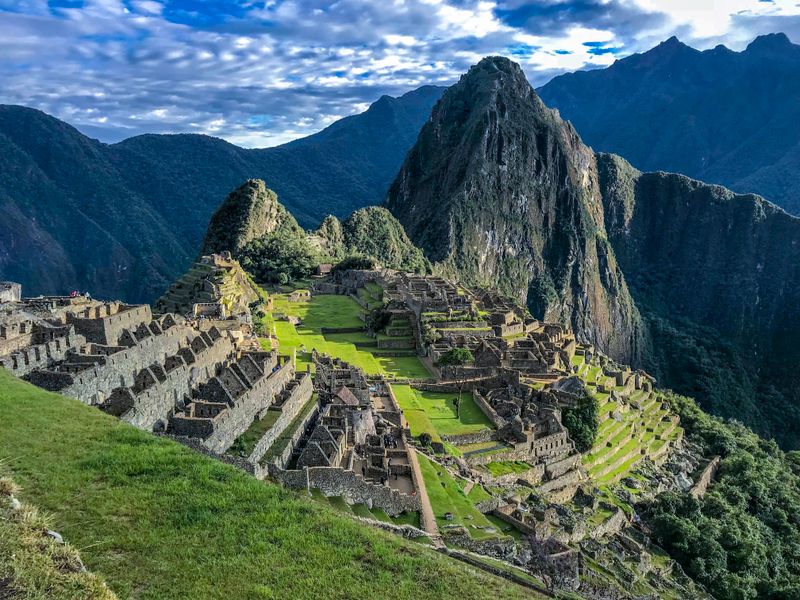
Machu Picchu — the Intihuatana ("hitching post of the sun") at Machu Picchu casts no shadow at the winter solstice — it was specifically calibrated to mark this astronomical moment. Witnessing the solstice sunrise at the Intihuatana is considered one of the most profound Andean New Year experiences available; practical access requires advance ticket booking and an overnight stay in Aguas Calientes.
The June 21–24 Sequence: Andean New Year to Inti Raymi
Visitors to Cusco in late June 2026 have the extraordinary opportunity to experience three related but distinct events across four days:
June 21 — Andean New Year (Machaq Mara / Willka Raymi):
The community sunrise ceremony at Sacsayhuamán and sacred sites; participatory, indigenous-led, free, beginning before dawn.
June 23 — Vigilia:
The evening bonfire gathering at Sacsayhuamán — thousands of people lighting fires on the esplanade and hillsides in anticipation of Inti Raymi; free, open to everyone.
June 24 — Inti Raymi:
The theatrical reenactment of the Inca Festival of the Sun — 700 performers, 100,000+ spectators, staged ceremony at Qoricancha (9 AM), Plaza de Armas (10:30 AM), and Sacsayhuamán (1:00–5:00 PM); ticketed at Qoricancha and Sacsayhuamán (Tribuna and General seating); free at Plaza de Armas.
These three events together form the most concentrated and complete encounter with Andean solar and cosmological tradition available anywhere. Each complements and contextualises the others: the intimacy of June 21 gives the theatrical scale of June 24 a depth of meaning that spectators without the earlier experience cannot fully access.
Traditional Practices and Ceremony Elements
The specific ritual practices observed at the Andean New Year ceremony vary by community and spiritual tradition, but certain elements are consistent across Cusco's June 21 celebrations:
Coca leaf offerings (kintu): The ritual arrangement of three perfect coca leaves, held between the thumb and forefinger, blown with a prayer, and presented to the Apus and Pachamama. Coca is the sacred plant of the Andes — stimulant, appetite suppressant, altitude remedy, and spiritual medium simultaneously — and no significant Andean ceremony occurs without it. Coca leaves are sold throughout Cusco and Sacsayhuamán for a few soles (pennies) and visitors are warmly welcomed to participate in this element of the ceremony.
Mesa offerings: The ritual table of sacred objects prepared by paqos and burned as offerings at sunrise — typically including coca leaves, dried flowers, seeds, incense (copal and other resins), llama fat, candy, miniature figures representing the things being asked for (house, car, child, health), and coloured wool yarn.
Chicha libation: Pouring the traditional Andean fermented maize drink on the earth as an offering to Pachamama — the most direct physical expression of the reciprocal relationship between humans and Mother Earth that is central to Andean cosmology.
Andean cross (chakana): The stepped diamond cross that is the primary geometric symbol of Andean cosmology — representing the three worlds (Hanan Pacha, Kay Pacha, Ukhu Pacha), the four cardinal directions, and the symmetrical organization of the universe. The chakana appears in offerings, in costumes, and in the orientation of the ceremony itself.
Practical Guide for Attending the Andean New Year 2026
When: Dawn on Sunday June 21, 2026; arrive at Sacsayhuamán no later than 5:00 AM (4:00–4:30 AM for the best positions and the full pre-dawn experience); sunrise at approximately 6:15–6:20 AM
Cost: Free (hillside areas around Sacsayhuamán and other public sites)
What to wear:
- Multiple warm layers — minimum 0–3°C at altitude at pre-dawn hours
- Good walking shoes (the Sacsayhuamán site is uneven stone terrain)
- Rain layer (June is dry but altitude weather can surprise)
- Warm hat, gloves; the wind at 3,700 metres before dawn is sharp
Getting to Sacsayhuamán from Cusco:
- Walk: 30–40 minutes uphill from the Plaza de Armas through the San Cristóbal neighbourhood — a well-marked route that passes several Inca street sections
- Taxi from central Cusco: 10–15 minutes; fare approximately 10–15 soles
- Organised tour: Several Cusco operators run dedicated Andean New Year sunrise tours from central hotels, including transport and a guide who explains the ceremony in English
Altitude: Sacsayhuamán at 3,701 metres is higher than central Cusco (3,400 m). Visitors should be properly acclimatised before attending — spend at least 2 days in Cusco before the June 21 early morning. The combination of altitude, cold, and early hour makes preparation more important than for daytime events.
Coca tea: Available everywhere in Cusco from hotel breakfasts to street stalls — the standard Andean remedy for altitude effects; ideal for the pre-dawn hours before the ceremony.
Photography: The pre-dawn and sunrise moments at Sacsayhuamán on June 21 are extraordinary photographic opportunities. Bring a camera capable of low-light performance for the pre-dawn gathering and the first light. The moment of sunrise itself — with the assembled crowd extending hands toward the horizon — is among the most visually and emotionally powerful images available in Andean South America.
June weather in Cusco: Dry season; virtually no rain; strong sun from mid-morning; cold nights and mornings. Pack for a wide temperature range across the same day.
A New Year That Predates the Inca
The Andean New Year in Cusco on June 21, 2026 is not a festival created for tourism, not a reenactment designed by a playwright, not a UNESCO-designated cultural heritage performance. It is an indigenous community gathering to mark the moment the sun turns — a moment that human beings have gathered at in the Andes for thousands of years before the Inca Empire was formed, and that they continue to gather at in the former Inca capital with unbroken cultural continuity into the 21st century.
The sun will rise over Cusco at 6:15 AM on June 21, 2026. Sacsayhuamán will be full of people facing east with open hands. The new Andean year — 5534 — will begin. Nothing is required of you except to be present and to watch the same sky that Andean people have been watching from these stones for longer than any recorded history accounts.
Verified Information at a Glance
| Detail | Information |
|---|---|
| Event | Andean New Year 2026 — Machaq Mara / Willka Raymi / Winter Solstice Celebration |
| Category | Indigenous / Ancestral Cultural Ceremony; Cosmological Celebration; Community Gathering |
| Date | Sunday June 21, 2026 (Southern Hemisphere winter solstice) |
| Andean calendar year beginning | 5534 |
| Sunrise time (Cusco, June 21) | Approximately 6:15–6:20 AM local time |
| Recommended arrival time | 4:00–5:00 AM at Sacsayhuamán |
| Primary venue | Sacsayhuamán Fortress, Cusco (3,701 m above sea level) |
| Additional Cusco region sites | Pisac, Moray, Qenqo, Tambomachay, Machu Picchu (Intihuatana) |
| City | Cusco (Qosqo), Peru |
| Admission | Free (hillside public areas at Sacsayhuamán and other open sites) |
| Ceremony elements | Receiving first sunlight with open hands; coca leaf offerings (kintu); mesa ritual table burning; chicha libations for Pachamama; Apu prayers; chakana symbolism; communal music and food |
| Languages | Quechua, Aymara; guided experiences available in Spanish and English via tour operators |
| Temperature at ceremony time | 0–3°C at Sacsayhuamán pre-dawn; warm layers essential |
| Related June events | Vigilia (June 23, free, bonfires at Sacsayhuamán); Inti Raymi theatrical reenactment (June 24, ticketed) |
| Getting to Sacsayhuamán | 30–40 min walk uphill from Plaza de Armas; taxi 10–15 min (~10–15 soles); organised tours from central Cusco hotels |
| Altitude note | Sacsayhuamán 3,701 m — acclimatise for 2+ days in Cusco before attending |
| July 24 context | Inti Raymi (theatrical reenactment) at same site 3 days later — different event, ticketed |
| Weather | Dry season; cold nights/mornings; warm days; virtually no rain in June |
| Getting to Cusco | Alejandro Velasco Astete Airport (CUZ); Lima–Cusco flights ~1.5 hrs; Lima is main international gateway |
| UNESCO | Cusco Historic Centre — UNESCO World Heritage Site (1983) |
| Boleto Turístico | Standard Cusco tourist pass for Sacsayhuamán; normal entry requirements may be waived on the morning of June 21 but confirm with local sources on arrival |
Event Has Passed - See You Next Time!
Event Details
Date
to
Location
Various sacred sites & hilltops around Cusco and the Sacred Valley
Cusco, Peru
Price
Free Entry