
Event Has Passed - See You Next Time!
Event Details
Date
to
Location
Plaza de Armas & Avenida El Sol, Cusco city centre
Cusco, Peru
Price
Free Entry
About This Event
Cusco Jubilee Month 2026: A Full Month of School and Institution Parades in the Imperial City
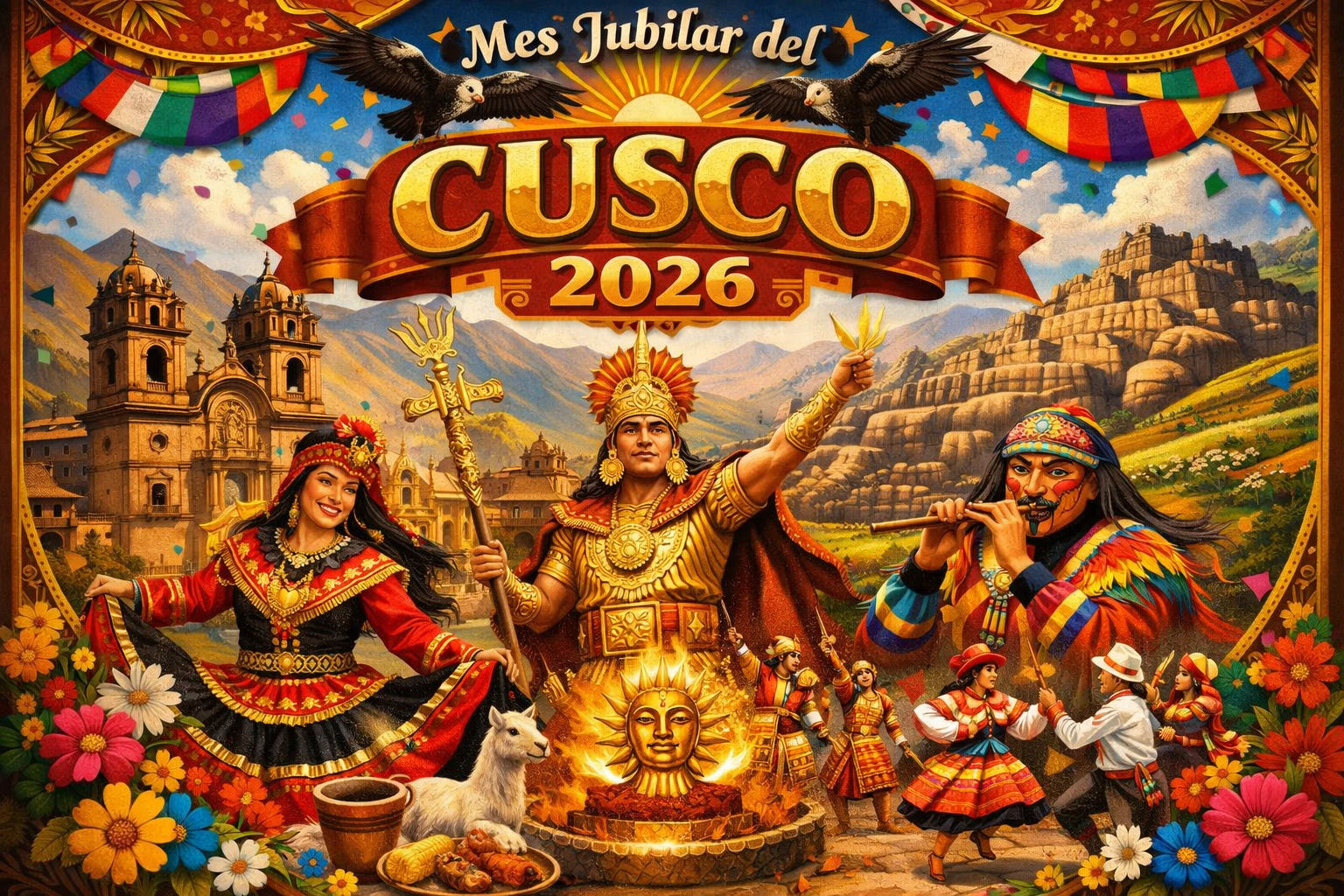
Most cities mark their birthday with a single celebration. Cusco marks it with an entire month. June 2026 is the Mes del Cusco — the Jubilee Month of the Inca capital — a four-week programme of daily parades, ceremonial dances, light shows, food festivals, and communal celebrations that fills the Plaza Mayor (Plaza de Armas) with colour and movement from the first of the month through to the June 24 city day.
The celebrations are organised by EMUFEC (Empresa Municipal de Festividades del Cusco — the Municipal Festivities Company of Cusco), and the full programme covers every layer of Cusco's educational and civic institutions: preschool children, primary school students, secondary students, university and technical institute delegations, professional associations, and finally the representatives of all 13 provinces of the Cusco department — each taking their turn in the Plaza Mayor in a parade format that has no equivalent in terms of sustained community participation anywhere else in Peru.
Every public event in the Plaza Mayor during June's Jubilee Month is free to attend.
Why Cusco Celebrates Its Birthday in June
The formal Spanish colonial foundation of Cusco occurred on March 23, 1534 — the date that, strictly historically, would be the city's birthday in the Western calendar tradition. Cusco authorities in the 20th century made a deliberate decision to move the official jubilee celebration to June 24 — aligning it with Inti Raymi, the ancient Inca Festival of the Sun, and with the winter solstice that was the most important date in the Inca ceremonial calendar.
This was not simply an administrative change. It was a statement about which foundation mattered more — the Spanish colonial act of 1534 or the thousands of years of Andean civilisation that preceded it. By placing the city's birthday celebration on the same day as the Inca solar festival, Cusco asserted the primacy of its Inca identity in a way that has shaped the character of the Jubilee Month ever since.
The result is a June that layers civic pride, Andean cultural expression, Catholic festivals, indigenous ceremony, and an extraordinary parade programme into the most densely populated cultural month on the Cusco calendar. For visitors arriving in Cusco any time during June 2026, the daily parades in the Plaza Mayor are among the most immersive and authentic cultural encounters available anywhere in South America.
The Full Jubilee Month Programme: Day by Day
June 1: Opening of the Jubilee — Andean Tribute to the Earth
The Jubilee Month begins on June 1 with a formal Andean Tribute to the Earth — a ceremony of gratitude to Pachamama (Mother Earth) held at the Plaza Mayor, organised by EMUFEC and attended by both local community members and visitors.
Offerings of coca leaves, flowers, and sacred items are made in the central plaza as the city formally opens its month of celebration. The ceremony draws on the same Andean cosmological tradition that animates the June 21 solstice gathering and the Inti Raymi ceremony — an expression of gratitude and reciprocity toward the earth that underpins all of Cusco's great festivals.
June 7: Corpus Christi and Chiriuchu
Corpus Christi is, alongside Inti Raymi, the most visually spectacular event of Cusco's June calendar — and it falls before Inti Raymi, making June 7 one of the busiest days of the month.
The 15 patron saints of Cusco's main churches are brought out of their sanctuaries and carried in formal procession to the Cathedral of Cusco, where they are received and remain for eight days before being returned to their home churches. The streets of the historic center fill with brass bands, incense, and the elaborate palanquins (andas) on which the saints are carried — each one decorated with silver, gold, and cloth according to the traditions of its specific parish.
Chiriuchu — the traditional cold platter of Cusco that is specifically associated with Corpus Christi — becomes the essential food of the day. The dish combines cuy (guinea pig), gallina (chicken), cecina (dried meat), moraya (freeze-dried potato), choclo (corn), morcilla (blood sausage), tortilla de maíz (corn flatbread), queso (cheese), caviar de río (river algae treated as a Andean "caviar"), and cancha (toasted corn) in a cold presentation that is the most complete single-plate expression of Cusco's culinary heritage.
Vendors selling Chiriuchu fill the streets and plaza throughout the Corpus Christi period, and trying it for the first time — accepting the guinea pig, understanding the combination — is one of the most distinctly Cusqueño gastronomic experiences June offers.
June 9–14: University and Institute Parades
The university parade sequence runs from June 9 to June 14 at the Plaza Mayor, with a different higher education institution taking center stage each day:
- June 9: Andean University of Cusco (UAC)
- June 10: Technological University of the Andes (UTEA)
- June 11: National University of San Antonio Abad del Cusco (UNSAAC) — the region's largest and most historic university, founded in 1692, one of the oldest in the Americas
- June 12: Continental University
- June 14: National University of Art Diego Quispe Tito — Parade of Allegories
The university parades are characterised by creative and colourful presentation — each institution deploys its students in traditional dances, contemporary choreography, artistic allegories, and musical performances that reflect the institution's academic identity and its relationship to Andean culture. The UNSAAC parade, given the university's size and historical prestige, is typically the most elaborate.
June 14 also features the famous Dog Parade — one of Cusco's most beloved and genuinely joyful events. Dogs from across the city participate dressed in traditional Andean costumes (ponchos, chullo hats, miniature traditional textile outfits), accompanied by their owners. The event promotes responsible pet care while providing an unmissable moment of collective delight. Families with children line the plaza perimeter for this one, and it is as warmly attended as any of the formal institutional parades.
June 15–16: Preschool and Primary School Parades
The youngest participants in the Jubilee Month take their turn from June 15 to June 16:
- June 15: Preschool institutions — children as young as three and four years old, in full traditional Andean costume, marching with their teachers and the marching bands of their schools
- June 16: Primary schools — children aged 6 to 11, whose parade preparations represent months of rehearsal and costume preparation by their families
These are the parades that consistently produce the most emotional response from visitors and locals alike. Watching hundreds of small children in handmade traditional costumes marching through the Plaza Mayor of the former Inca capital, their schools' bands playing alongside them, is the kind of experience that is difficult to prepare for emotionally and impossible to forget.
The primary school parade in particular demonstrates the extraordinary commitment of Cusco's families to the transmission of cultural heritage. Every costume represents hours of weaving, sewing, and preparation; every child represents a family that has decided that knowing how to wear their culture and move within it is as important as any academic subject.
June 19: Secondary School Parade
June 19 brings the secondary school students — ages 12 to 16 — to the Plaza Mayor in what is described by the organisers as one of the most technically accomplished parades of the entire month:
The secondary parade demonstrates a level of dance coordination, costume sophistication, and musical precision that reflects years of preparation rather than months. Specific schools are known for their excellence in particular traditional dances — the rivalries between institutions are genuinely competitive, and the teenage performers bring an intensity of effort to the parade that goes beyond the simple enthusiasm of the younger children.
Also on June 19: the Inca Garcilaso de la Vega Educational Institution parade — a specific tribute from the institution named after the famous mestizo Inca historian Inca Garcilaso de la Vega (1539–1616), whose works were among the first written accounts of Inca history and who was born in Cusco.
June 20: Lights and Sound at the Cathedral
June 20 brings one of the most technologically spectacular events of the Jubilee Month: the Luces y Sonido Cusco 2026 (Lights and Sound) show at the Plaza Mayor, produced by EMUFEC.
For approximately four hours — beginning in the late afternoon and running until approximately 10:00 PM — the facade of the Cathedral of Cusco is illuminated with light mapping projections, accompanied by live music and fireworks that fill the plaza. The combination of the 17th-century baroque cathedral facade, one of the most architecturally significant buildings in South America, with contemporary light technology and the sound design of the performance creates an experience that brings together centuries of Cusco history in a single visual presentation.
June 22: Grand Parade of the 13 Provinces
The Grand Parade of the 13 Provinces of Cusco on June 22 is the single most comprehensive parade of the Jubilee Month — and arguably the most culturally rich public event in Cusco outside of Inti Raymi itself.
Representatives from all 13 provinces of the Cusco department parade through the Plaza Mayor, each delegation presenting the traditional dances, music, costumes, and cultural expressions specific to their geographic and cultural community:
Cusco, Calca, Canas, Canchis, Chumbivilcas, Espinar, La Convención, Paruro, Paucartambo, Quispicanchis, Urubamba, Anta, and Acomayo — provinces that together span from the high-altitude puna grasslands above 4,500 metres to the cloud forest valleys at 2,000 metres; from the highland pastoralists of Espinar to the Amazon-adjacent agricultural communities of La Convención.
Each province's delegation is identified by its specific costumes, its flag, and the particular dances associated with its local festive tradition — many of which are not seen in Cusco city outside of this parade. The cultural distance between provinces is substantial: the Chumbivilcas tradition of Qhaswas (communal circle dances of the high puna) looks and sounds completely different from the jungle-influenced dances of La Convención, which looks different again from the colonial-era Spanish-influenced dances of Paruro. The provinces parade puts all of this regional diversity into the same square at the same time, creating a panorama of Cusco-region cultural life that no museum or guidebook can replicate.
June 23: Civic Parade of Private Institutions
The day before Inti Raymi, June 23, sees the Civic Parade of Private Institutions of the Cusco Region — professional associations, private companies, civic organisations, and private educational institutions making their formal contribution to the Jubilee Month. This parade is both a civic celebration and a formal farewell to the month's parade sequence before June 24's main event.
The evening of June 23 also marks the Vigilia at Sacsayhuamán — bonfires lit on the esplanade of the Inca fortress as the community gathers to spend the night before Inti Raymi. The Vigilia is free, open to everyone, and one of the most atmospherically powerful evenings of the Cusco calendar — the fires burning on the Inca stones visible from the city below.
Practical Visitor Guide: Watching the Parades
Admission: All Jubilee Month parades at the Plaza Mayor are completely free. The square and its perimeter streets are open public space throughout.
Best viewing positions:
- Along the stone arcades (portales) surrounding the plaza — these provide some elevation above street level and protection from sun; arrive early to secure a position
- The steps of the Cathedral and La Compañía de Jesús church on the plaza's north side
- The grassy central area of the plaza — less suitable for parade viewing but fine for the general atmosphere
- The upper floors of restaurants and cafés around the plaza — most charge for seating during the major parades; call ahead to reserve
Arrive early: For the major parades (June 11 UNSAAC, June 16 primary schools, June 19 secondary, June 22 provinces), arrive at the plaza at least 60–90 minutes before the announced start time. The plaza fills completely for the largest events.
Altitude and weather: Cusco in June is dry season — clear sunny days (15–20°C), cold nights (1–5°C). Morning parades start in the cool of the day; afternoon events can be warm. Bring sun protection; the UV intensity at 3,400 metres is significantly higher than at sea level.
Food during the month: June is one of the best times to eat in Cusco. Chiriuchu (the Corpus Christi cold platter) is available at vendors throughout the month. Chicha de jora (fermented maize drink), anticuchos (beef heart skewers), tamales, and the full range of Peruvian Andean cuisine fill the market stalls and restaurants around the plaza during the jubilee period.
A City That Celebrates With Everything It Has
Cusco's Jubilee Month in June 2026 is the most complete expression of what this city is — a community that carries 3,000+ years of unbroken cultural continuity into the present through the specific mechanism of putting it in the street, costuming it, dancing it, and watching it together.
From June 1 through June 24, 2026 — something happens in the Plaza Mayor of Cusco every single day. All of it is free. All of it is real. And every parade, from the smallest preschooler in a handmade poncho to the delegations of the 13 provinces in their full traditional regalia, is a living demonstration that 500 years of colonial history did not succeed in separating this city from its identity.
Verified Information at a Glance
| Detail | Information |
|---|---|
| Event | Cusco Jubilee Month 2026 — Daily School and Institution Parades (Mes del Cusco) |
| Category | Civic / Cultural Festival; Educational Parades; Traditional Dance Performances; Community Celebration |
| Season | June 1–24, 2026 (Jubilee Month; main parade programme June 1–24) |
| Main venue | Plaza Mayor (Plaza de Armas) of Cusco — all parades |
| City | Cusco (Qosqo), Peru |
| Organiser | EMUFEC (Empresa Municipal de Festividades del Cusco — Municipal Festivities Company of Cusco) |
| Admission | FREE — all Plaza Mayor parade events are open to the public |
| Official Jubilee Day | June 24, 2026 (Día del Cusco) — coinciding with Inti Raymi |
| Confirmed 2026 parade schedule | — |
| June 1 | Andean Tribute to the Earth (opening ceremony) — Plaza Mayor |
| June 7 | Corpus Christi (15 saints; Chiriuchu food festival) — Plaza Mayor |
| June 9 | UAC (Andean University of Cusco) parade — Plaza Mayor |
| June 10 | UTEA (Technological University of the Andes) parade — Plaza Mayor |
| June 11 | UNSAAC (National University of San Antonio Abad del Cusco) parade — Plaza Mayor |
| June 12 | Continental University parade — Plaza Mayor |
| June 14 | National University of Art Diego Quispe Tito (Allegories Parade) + Dog Parade — Plaza Mayor |
| June 15 | Preschool institutions parade + Allegories — Plaza Mayor |
| June 16 | Primary school parade — Plaza Mayor |
| June 19 | Secondary school parade + Inca Garcilaso de la Vega Institution — Plaza Mayor |
| June 20 | Lights and Sound Show (Luces y Sonido Cusco 2026) — Plaza Mayor Cathedral; starts afternoon, ends ~10:00 PM |
| June 22 | Grand Parade of the 13 Provinces of Cusco — Plaza Mayor |
| June 23 | Civic Parade of Private Institutions + Vigilia (bonfires) at Sacsayhuamán (evening) |
| June 24 | Inti Raymi — separate event (ticketed stages at Qoricancha and Sacsayhuamán; free at Plaza de Armas) |
| Altitude | Cusco 3,400 metres (11,152 feet) |
| June weather | Dry season; 15–20°C days; 1–5°C nights; clear skies; no rain |
| Traditional food | Chiriuchu (guinea pig, chicken, freeze-dried potato, corn, river algae, blood sausage, corn flatbread — cold platter); chicha de jora; anticuchos |
| Getting to Cusco | Alejandro Velasco Astete Airport (CUZ); Lima–Cusco flights ~1.5 hrs; Lima main international gateway |
| Accommodation | Book 3–4 months in advance for June; entire month is peak season |
| UNESCO | Cusco Historic Centre — UNESCO World Heritage Site (1983) |
Event Has Passed - See You Next Time!
Event Details
Date
to
Location
Plaza de Armas & Avenida El Sol, Cusco city centre
Cusco, Peru
Price
Free Entry