
%202026%20in%20Cusco.webp)
Event Has Passed - See You Next Time!
Event Details
Date
to
Location
Plaza de Armas & Historic Centre, Cusco
Cusco, Peru
Price
Free Entry
About This Event
Peruvian Independence Day (Fiestas Patrias) 2026 in Cusco: The 205th Anniversary Celebrations in the Imperial City
When Peru declared independence from Spain on July 28, 1821, it did so at a moment that had been centuries in the making — a break from colonial rule that the Inca peoples of the Andes, the mixed-heritage mestizo communities, and the creole elite had been working toward since at least the rebellion of Túpac Amaru II in 1780. Two hundred and five years later, Fiestas Patrias 2026 marks that anniversary across the entire country, and no city in Peru celebrates it with more historical weight and cultural depth than Cusco.
July 28 and 29, 2026 are the national holidays at the heart of Fiestas Patrias — but in Cusco, the celebration extends across the full month of July, a period known as the Mes Patrio (Patriotic Month) that turns the city's streets into a continuous festival of parades, traditional dances, flag-waving, and civic ceremony.
For international visitors, Fiestas Patrias in Cusco represents one of the most compelling encounters with living Peruvian culture available anywhere in South America — a celebration that layers Incan heritage, colonial history, and contemporary national identity into a street-level spectacle that no purpose-designed tourist event can replicate. And all of it is free.
The Historical Foundation: Why Independence Day Hits Differently in Cusco
Cusco is not simply the most historically significant city in Peru. It is the former capital of Tawantinsuyu — the Inca Empire that at its peak in the 15th century stretched 4,000 kilometres along the western coast of South America, governing a population of between 10 and 12 million people through one of the most sophisticated administrative systems the pre-Columbian Americas ever produced.
When Francisco Pizarro's Spanish forces entered Cusco in 1533 and executed the Inca Atahualpa, they did not simply conquer a city. They dismantled the physical and spiritual center of an empire — tearing down Inca temples and palaces to build colonial churches and civic buildings on the same foundations, creating the layered architectural reality visible in Cusco's streets today, where massive Inca stone blocks form the base of Spanish baroque facades.
Fiestas Patrias in Cusco carries this history in every element of its celebration. The marching bands that parade through the Plaza de Armas on July 28 march over ground where Inca festivals once took place in the Huacaypata (the central plaza of Tawantinsuyu). The Cathedral of Cusco — where the Independence Day Mass is held every year before the flag-raising ceremony — was built beginning in 1560 on the foundations of the palace of Inca Viracocha, using stones taken from the nearby Inca fortress of Sacsayhuamán.
The 205th anniversary in 2026 adds a specific weight to the usual Fiestas Patrias commemorations. The bicentennial celebrations of 2021 (the 200th anniversary) were shaped by the pandemic, which significantly curtailed public gatherings. The 2026 anniversary is both a natural moment for extended reflection and one of the first "round" anniversaries since the bicentennial with full public celebrations available.
July 28 in Cusco: The Civic-Military Parade at Plaza de Armas
The Plaza de Armas — the magnificent central square of Cusco, measuring approximately 160 by 100 metres and enclosed by the Cathedral, the Church of La Compañía de Jesús, and the colonial arcades that house the city's restaurants and shops — is the stage for everything that matters on July 28.
The day's programme begins with a Mass at the Cathedral of Cusco — the imposing Spanish baroque structure that took nearly a century to complete (1560–1654) and houses one of the most significant collections of colonial religious art in South America, including the famous painting of the Last Supper by Marcos Zapata (c. 1753), which depicts Christ and the apostles eating a traditional Andean meal including cuy (guinea pig).
Following the Mass, the solemn raising of the Peruvian flag takes place in the plaza — a formal ceremony attended by regional authorities, military officers in ceremonial dress, and thousands of Cusqueños and visitors who gather along the plaza's perimeter and in the arcades above.
The Civic-Military Parade then fills the plaza and its approach routes with one of the most colourful processions in the Peruvian annual calendar:
- Educational institutions from across the Cusco region — schools and colleges whose students march in uniform with their school standards, many competing for the honour of best parade presentation. High school students dance in front of the official reviewing stand, and the competition between institutions is fierce and enthusiastic.
- State entities and civil organisations representing the civic life of the Cusco department
- Police and military forces in ceremonial uniforms, with marching bands providing the rhythmic backbone of the parade
- Representatives from the 13 provinces of the Cusco department, each bringing their own traditional dances and cultural expressions — Calca, Canas, Canchis, Chumbivilcas, Espinar, La Convención, Paruro, Paucartambo, Quispicanchis, Urubamba, Anta, Acomayo, and Cusco province itself
The traditional dances that accompany the provincial representations are among the parade's most compelling elements:
- Capac Chuncho — a dance representing the warriors of the jungle, performed in elaborate feathered headdresses and representing the contact between Andean and Amazonian cultures
- Mestiza Qoyacha — a mestizo dance combining Spanish and Andean elements in a graceful, colourful procession
- Ukuku — performed by masked, bear-like figures (ukuku are mythological creatures of Andean tradition, associated with the sacred mountains) who play a comic but spiritually significant role in processions
- Negritos — a colonial-era dance that dramatises the history of African slavery and liberation in Peru, performed with specific costumes and rhythms that preserve the historical memory of African-Peruvian cultural contribution
Marching bands from schools, military units, and civil organisations provide the continuous musical accompaniment, with a specific acoustic texture that is entirely different from European parade traditions — the brass and percussion combinations create a sound that owes as much to Andean musical conventions as to the Spanish colonial band tradition.
The Plaza de Armas fills to capacity for the main parade events, and the best viewing positions along the perimeter and in the cathedral's shadow are claimed early by locals who understand the square's geography. Visitors should arrive at least 90 minutes before the parade begins to secure a good standing position.
July 29: The Military Parade on Avenida de la Cultura
July 29 — the Day of the Armed Forces and National Police — shifts the celebratory focus from civic to military, and shifts the location from the Plaza de Armas to the Avenida de la Cultura, the broad modern boulevard that runs through the contemporary part of Cusco and provides sufficient space for the kind of military hardware and formation marching that the plaza's historic geometry cannot accommodate.
The military parade on Avenida de la Cultura features:
- Multiple divisions of the Peruvian Army: infantry, paratroopers, artillery, and engineering units
- Tanks and armoured combat vehicles that would be impossible to manoeuvre through the cobblestone lanes of the historic center
- Cavalry units in ceremonial dress
- Air Force representation
- National Police delegations in formal uniform
- Military bands providing precision marching accompaniment
The military parade is a specifically different experience from the civic-cultural parade of July 28 — more formal, more precisely choreographed, focused on institutional pride rather than cultural expression. For visitors interested in the full scope of Fiestas Patrias, attending both days provides a complete picture of how Peru commemorates its independence from both civic and military perspectives.
Patriotic concerts at the Plaza de Armas round out the July 29 programme — live performances of Peruvian folk music, criollo music, and popular music in the public square, continuing well into the evening.
The Mes Patrio: A Month of Celebrations Before the Main Days
Understanding Fiestas Patrias in Cusco requires understanding that July 28–29 is the concentrated heart of a month-long celebration. The Mes Patrio (Patriotic Month) begins at the start of July and fills the city with an escalating sequence of events that builds toward the independence anniversary.
The key July events leading up to and surrounding Fiestas Patrias:
July 15–17: Festival de la Virgen del Carmen, Paucartambo
Three and a half hours from Cusco, the town of Paucartambo hosts one of the most extraordinary festivals in South America — masked dancers representing devils, jungle spirits, condors, and colonial figures fill the streets in a three-day celebration that is simultaneously religious, theatrical, and genuinely wild. Many Cusco visitors specifically time their trip to combine this festival with Fiestas Patrias in the following week. Paucartambo is accessible by bus or private transfer from Cusco.
Throughout July: Flag-Waving and Civic Preparation
Cusco's streets fill with Peruvian flags on every building, balcony, and market stall. School marching bands practise in the streets in the weeks before July 28 — the sound of brass and drums drifting through the historic center is a consistent feature of Cusco in early to mid-July.
July 28 Eve: Local Community Events
The evening of July 27 typically sees smaller community-level celebrations in Cusco's neighbourhoods — San Blas, the artisan quarter on the hillside above the Plaza de Armas; San Pedro, the market district; Wanchaq, the contemporary urban district to the south — each with their own local festivities, food stalls, and music.
Where to Watch and How to Experience It Best
Cusco's geography concentrates the main Fiestas Patrias events in ways that make planning straightforward:
Plaza de Armas (Plaza Mayor):
The center of everything on July 28. Arrive before 8:00 AM to secure a good standing position along the plaza perimeter. The elevated arcades around the square's edge — above the restaurants and cafés — offer sightlines over the crowd but require you to be inside a café or shop that has terrace access. The best public standing positions are along the north and east sides of the plaza.
Avenida de la Cultura:
The July 29 military parade benefits from a different approach — the boulevard is long and wide, meaning viewers can position themselves at multiple points and typically find good sightlines without the compression of the plaza. Mid-boulevard positions near the reviewing stand (set up near the intersection with Avenida Collasuyo) are the most popular.
Sacsayhuamán:
The Inca fortress on the hillside immediately above Cusco offers extraordinary views over the city and the Plaza de Armas during the July 28 celebrations — the sight of the packed plaza and the parade from the Inca stone terraces above is one of those perspectives that makes Cusco's layered history physically visible. Admission to Sacsayhuamán is included in the Boleto Turístico (tourist pass, available at multiple offices in Cusco).
Practical Information for Visiting Cusco During Fiestas Patrias 2026
Cost: All parade and ceremony events are completely free to observe.
Accommodation: July is Cusco's high season (dry season, peak tourism month, Fiestas Patrias week). Book accommodation at least 3–4 months in advance. Prices rise significantly for July 27–30. The city's accommodation options range from budget hostels (from $15–25/night) through mid-range guesthouses and boutique hotels (from $60–120/night) to luxury options (from $200+/night).
Altitude: Cusco sits at 3,400 metres (11,152 feet) above sea level. Altitude sickness (soroche) affects a significant proportion of visitors, particularly in the first 24–48 hours. Recommendations include:
- Rest for the first day after arrival
- Drink coca tea (available everywhere in Cusco) — a traditional Andean remedy
- Avoid alcohol for the first 48 hours
- Stay hydrated
- Consider acetazolamide (Diamox) if your doctor recommends it
July weather in Cusco: July is the height of Cusco's dry season — clear blue skies, very little rain (virtually zero precipitation in July), cold nights (down to 2–5°C), and warm sunny afternoons (15–18°C). The parade days are typically sunny and pleasant during the day; bring a warm layer for the morning ceremony and for the evening.
Getting to Cusco:
- By air: The Alejandro Velasco Astete International Airport (CUZ) in Cusco serves domestic flights from Lima (approximately 1.5 hours; Lima is the international hub for flights from North America, Europe, and Australasia with LAN Peru, Latam, and others)
- By train from Lima: 20–22 hours by bus/train combination — not typical for international visitors
- By bus from Lima: Approximately 20–22 hours — budget overnight option via Cruz del Sur or Oltursa
- Most international visitors fly Lima–Cusco as part of their Peru itinerary
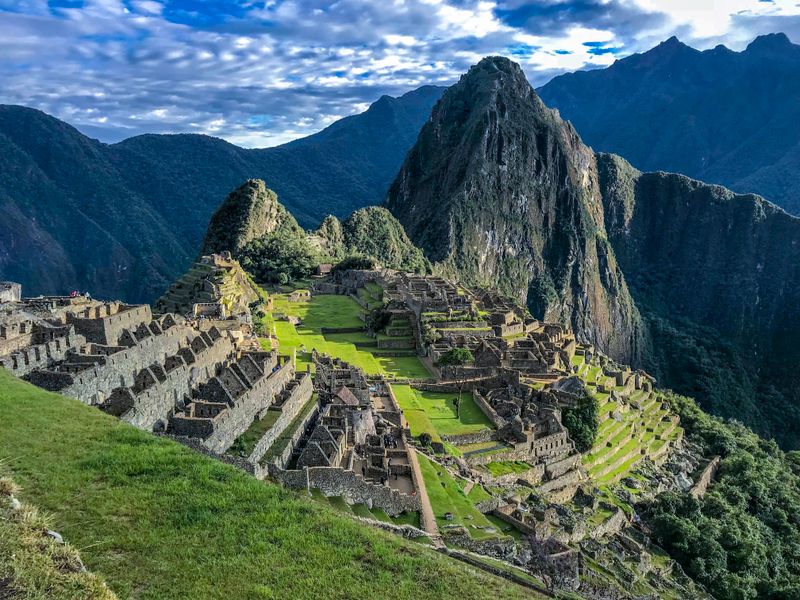
Visiting Machu Picchu during Fiestas Patrias: The Inca Trail and Machu Picchu are fully booked months in advance for July 28–29. Fiestas Patrias is one of the highest-demand periods for Machu Picchu entry permits. Book the Inca Trail permit (which sells out months ahead under any circumstances) and Machu Picchu entrance tickets (limited daily capacity of 4,000 visitors) as early as possible — ideally 4–6 months before travel.
A City That Celebrates With Its Full History
Fiestas Patrias in Cusco is the most complete experience of Peruvian national identity available anywhere in the country. Lima may host the Grand Military Parade and the presidential address on July 28, but Cusco adds something that Lima cannot — the specific gravity of a city whose stones predate the Spanish conquest by centuries, and whose people carry the inheritance of the Inca Empire alongside the inheritance of independence.
The 205th anniversary of Peruvian independence falls on July 28, 2026. The Plaza de Armas will fill before dawn. The Cathedral bells will ring. The flag will rise. The dances of 13 provinces will fill the square. And in the stone foundations beneath the colonial plaza, the Inca world will be present as it has always been. Fiestas Patrias in Cusco is completely free, completely extraordinary, and completely unlike anywhere else on earth.
Verified Information at a Glance
| Detail | Information |
|---|---|
| Event | Peruvian Independence Day (Fiestas Patrias) — Cusco 2026 |
| Category | National Holiday / Civic-Military Parade / Cultural Festival |
| Main dates | Tuesday July 28 and Wednesday July 29, 2026 |
| July 28 — Independence Day programme (Cusco) | — |
| Traditional dances from 13 provinces | Capac Chuncho, Mestiza Qoyacha, Ukuku, Negritos, and more |
| July 29 — Armed Forces Day programme (Cusco) | — |
| Admission | Free (all public parade and ceremony events) |
| Key venues | — |
| City | Cusco (Qosqo), Peru |
| Altitude | 3,400 metres (11,152 feet) above sea level |
| Pre-holiday context | Mes Patrio throughout July; Festival de la Virgen del Carmen in Paucartambo July 15–17 |
| July Cusco weather | Dry season; 15–18°C days; 2–5°C nights; virtually no rain; sunny |
| Getting to Cusco | Alejandro Velasco Astete Airport (CUZ); flights from Lima ~1.5 hrs; Lima is main international gateway |
| Accommodation note | Book 3–4 months in advance for Fiestas Patrias week; July is peak season |
| Machu Picchu tickets | Book 4–6 months in advance for July dates; very limited availability during Fiestas Patrias |
| UNESCO | Cusco historic center — UNESCO World Heritage Site (listed 1983) |
| Boleto Turístico (tourist pass) | covers Sacsayhuamán and multiple archaeological sites |
Event Has Passed - See You Next Time!
Event Details
Date
to
Location
Plaza de Armas & Historic Centre, Cusco
Cusco, Peru
Price
Free Entry